| OCR Text |
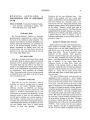
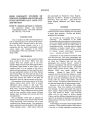
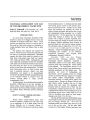
Show WHAT CAN GREAT BASIN ARCHAEOLOGISTS LEARN FROM THE STUDY OF SITE STRUCTURE? AN ETHNOARCHAEOLOGICAL PERSPECTIVE James F. O'Connell, Department of Anthropology, University of Utah, Salt Lake City, Utah 84112 ABSTRACT Prehistoric site structure is commonly seen as a promising source of information about past human behavior. Ethnoarchaeological studies indicate that research on site structure may require costly adjustments in conventional approaches to data recovery, with no commensurate increase in real knowledge except under narrowly defined circumstances, none of which are common in the Great Basin. Nevertheless, it should still be pursued whenever possible, partly to assess the validity of predictions based on ethnoarchaeological analogies, partly (andprobably more importantly) as a means of controlling differences in assemblage composition related to the widespread practice of size sorting in secondary refuse disposal. INTRODUCTION Broadly speaking, the term "site structure" pertains to the horizontal distribution of artifacts, faunal and floral remains, hearths, structures, and other features deposited at about the same time within an archaeological site. Often, it is applied more narrowly to patterns in the distribution of refuse and features on well-defined "living surfaces" or "floors." Archaeologists began searching for these patterns as early as the 1920s. Standard elements of the work now include large-scale areal exposures and precise distribution maps (so-called "piece-plots") of features and debris, the latter often subjected to complex statistical analyses. Familiar examples are found in reports on Olduvai Gorge (Leakey 1971), Star Carr (Clark 1954), Pincevent (Leroi-Gourhan andBrezillon 1972), and the dry caves of Tehuacan (MacNeish et al. 1972). Aspects of the excavations at Gatecliff Shelter (Thomas 1983), Orbit Inn (Simms and Heath 1990), Nawthis Village (Metcalfe and Heath 1990), and the Diamond Valley complex (Zeier and Elston 1992) illustrate recent interest in the topic among Basin specialists. Most research on site structure assumes the existence of a direct, fairly simple relationship between the nature and distribution of activities, the refuse they produce, and its distribution within sites. If this assumption is accurate, then it should be possible to reconstmct past activities from careful description and analysis of prehistoric site stmcture. In practice, this often turns out to be more difficult- and less rewarding-than one might expect. Archaeologists working on the problem often find themselves in the position of the apocryphal "TV-watching dog," captivated by the patterns they discover but not at all sure how to interpret them. Ethnoarchaeological research provides a potential solution in that it enables one to observe human behavior and its archaeological reflection simultaneously. If consistent relationships between the two exist, then it should be possible to identify them in the living world, learn why they occur, and predict the range of circumstances under which they should be present. More precisely, given some well-supported expectations about past behavior, one should be able to make predictions about related patterns in prehistoric site stmcture. To the degree these predictions are met, confidence in one's understanding of the past may be increased. Even if they are falsified, one is at least more certain about what the past was not like. Despite their potential utility, ethnoarchaeological investigations of site stmcture have so far produced mixed results. Many of the specific assumptions that once commonly guided archaeological research on the topic have been shown to be inaccurate; but beyond that there is no clear consensus among ethnoarchaeologists about what to expect regarding site stmcture in strictly archaeological contexts or about how to look for it. Nor is it obvious in many cases how patterns already discovered on ancient "floors" or "surfaces" might best be explained. This situation may (or may not) be improved by further ethnoarchaeological research. UTAH ARCHAEOLOGY 1993 pp. 7-26 UTAH ARCHAEOLOGY 1993 0 0 0 O UMBEAB 13 Apr 86 0 0 10M o Household Areas f - Nuclear Family w- Older Women ad - Adolescents Large Circles and Ellipse - Communal Areas Figure 1. The distribution of household and communal activity areas at a Hadza residential site (Umbea B). Household compositions vary as indicated in the legend. Communal areas A and B were used by both men and women but in sexually segregated groups; C and D were used almost exclusively by men. The only special activity areas were defecation zones 20-30 m offsite, mainly to the northwest. SITE STRUCTURE: AN ETHNOARCHAEOLOGICAL PERSPECTIVE Pending such improvement, how should Great Basin archaeologists proceed? Should they spend more time and resources on the study of site stmcture; and if so, what precisely should they do? What questions can they address most productively, and how? Alternatively, should they see the current uncertainty among ethnoarchaeologists as a reason to avoid the study of site stmcture entirely, at least for the moment, and devote their attention to other aspects of the prehistoric record until guidelines for research on past site stmcture are better developed? To answer these questions, I briefly review the history and current status of research on site stmcture, with special attention to aspects most likely to be of interest to Great Basin archaeologists, notably the nature of patterns likely to be encountered in local prehistoric sites and the scales at which they may be apparent. Four implications for local research follow, three for investigations of site stmcture, one-probably the most important-for assessments of assemblage composition. I then identify the kinds of research needed to pursue these implications and review some results of work already undertaken along these lines. ETHNOARCHAEOLOGICAL RESEARCH ON SITE STRUCTURE Ethnoarchaeological interest in site stmcture dates to the 1960s, and was provoked in part by the recognition of patterning in debris scatters on ancient land surfaces at sites like Star Carr and Olduvai. Investigators assumed that these patterns were "maps" of past human activity and interpreted them accordingly. Several assumptions were inherent in most treatments: (1) humans routinely divide sites into discrete, activity-specific areas; (2) each activity is associated with a distinctive set of artifacts; (3) artifacts in each set are discarded at their location of use along with other refuse generated by the activity; (4) proportions of artifacts discarded in connection with each activity are constant; (5) artifact frequency varies directly with the frequency of the associated activity. Ethnoarchaeological research was undertaken partly as a means of testing these assumptions, and partly to broaden the basis for inference about ancient site stmcture. In the past 30 years, well over 100 studies have been reported (see O'Connell 1995 for review and recent references; also Gamble and Boismier 1991; Kroll and Price 1991; MacEachern et al. 1989 for critical commentary, case studies and comprehensive references to the pre-1988 literature). Most are concerned with residential sites occupied by hunter-gatherers and small-scale farmers. Societies in the Americas, Africa, and Australia are relatively well represented in the sample. Behavioral data on site use have been obtained from informant reports, direct observations, or both. Informant reports pertain to periods up to 30 years prior to the interviews. Direct observations cover spans ranging from a few hours to several months. Most have been informal and unstructured, but a few are more systematic, some involving periodic "scan samples" of all activities in progress at a site. Related archaeological observations are equally variable in kind and quality, ranging from general descriptions of individual sites to detailed piece-plots of all refuse items and features recovered at many locations. Analyses typically take behavior as a given and focus on its relationship with the resulting archaeology, especially with the size, form, and content of refuse concentrations and their relationship with household or task-group size and composition, duration of use, and nature of associated activities. Many treat these relationships in broad descriptive terms, but some involve comprehensive quantitative treatments. Only a few undertake cross-cultural comparisons. SOME RESULTS OF RESEARCH PERTINENT TO THE GREAT BASIN Many studies of hunters (e.g., Bartram et al. 1991; Binford 1983, 1986, 1987, 1991a; Fisher and Strickland 1989, 1991; Janes 1983; Jones 1993; O'Connell 1987; O'Connell et al. 1991; Yellen 1977) and, to some extent, those of small-scale farmers and pastoralists (e.g., Arnold 1990; Dodd 1993; Graham 1989; Hayden and Cannon 1983; Killion 1990; Siegal 1990; Simms 1988; Staski and Sutro 1991) suggest a common residential site plan, consisting of three types of activity areas: household, communal, and special (Figure 1). Household areas are used by nuclear families or sets of adolescents and/or older adults of the same sex (Figures 2-4). They witness a wide range of domestic activities, including food preparation and consumption, tool manufacture and maintenance, and sleep. They usually contain a main shelter and in some cases secondary structures, such as sunshades or meat drying racks. Hearths and sometimes roasting pits are commonly associated with household areas. Hearths are typically located in or at 10 UTAH ARCHAEOLOGY 1993 Figure 2. Household areas at a Hadza residential site (Umbea D, September 1988). Each hut is occupied by a single household; each contains a hearth just inside the entrance. Refuse sometimes accumulates in small patches at the side of entrance, sometimes called "door dumps" (Binford 1983:165). The open, refuse-free zone in front of the huts is used by members of several households as a communal activity area. Left of center is a rock-lined hearth; right of center a simple meat drying rack. Plant material in the right foreground marks a secondary disposal zone. the entrance to the main shelter, but are sometimes found elsewhere in the area as well. Communal areas are used for the same range of activities as are household areas, but generally by members of several different households (Figure 5). Often they are segregated by sex. In some cases, household areas may play the additional role of communal activity areas in that they routinely witness activities involving people from other households, especially during the daylight hours. For example, Alyawara men from throughout a residential base typically congregate daily at a men's household; Alyawara and Hadza women often come together in a particular nuclear family area or at a women's household (see O'Connell 1987, O'Connell etal. 1991 for additional details). Communal areas located away from household areas are distinctive in that they usually contain hearths but not stmctures. As the name suggests, special activity areas are restricted to the performance of particular activities, usually those that require exclusive use of space for long periods of time or space with characteristics unsuitable for the performance of other activities (Figure 6). Examples include pit roasting, food storage, hide preparation, bedrock seed or nut grinding, motor vehicle repair, and defecation. Expression of this general pattern varies in several dimensions, the first involving the distribution of tasks within activity areas. Among "foragers" (sensu Binford 1980; e.g., Alyawara, !Kung, Ache, Efe), activities are relocated frequently as a function of changes in the physical and social conditions of performance, including shifts in light, shade, wind direction, and the number and identity of actors present. The cost of such relocation is usually low. Other groups, including both "collectors" (e.g., Nunamiut, Mackenzie Basin Dene) and farmers (e.g., Raramuri, Guarijio), are more consistent in the positioning of activities, probably because of increased investment in shelters and other facilities, greater SITE STRUCTURE: AN ETHNOARCHAEOLOGICAL PERSPECTIVE 11 ta -9 *a ,a 12 UTAH ARCHAEOLOGY 1993 Figure 4. Household area at an Alyawara residential site (Gurlanda C, September 1973). Occupied by three adults (one man, two women). Main shelter is the tarp-roofed bmsh windscreen at right. Note hearth area marked by white ash at left side of entrance. Further left is a flat-topped sun shade. Scatter of metal cans and other large objects at margin of cleared space (center and right foreground) marks secondary disposal zone. Dark stain in center foreground marks a small roasting pit. Figure 5. Communal activity area at a Hadza residential site (Dubunghela, May 1986). This area is located at the margin of the site and is used by men from several different households. The man at left shapes a metal arrowhead on a rock anvil using a metal hammer; the man at top works on a wooden arrow shaft; man at right sews a leather bag. Others recline, watching. SITE STRUCTURE: AN ETHNOARCHAEOLOGICAL PERSPECTIVE 13 Figure 6. Special activity area at an Alyawara residential site (Bendaijemm, 1975). Woman and child have placed two kangaroo in a roasting pit; woman adds the tails before covering the animals with coals and earth. The fire that produced the coals was kindled to the left of the pit; the scatter at the right marks coals and earth from previous cooking episodes. In the background left is a sunshade, background right a single family household area. Both areas have been cleared of rocks and swept clean of larger refuse items. stability in physical circumstances (more consistency in the distribution of light and shade, less interference from wind or other elements), and higher costs associated with rearranging space. It is often assumed that among hunters, households are independent or at least semi-independent economic units. This implies that household areas will be the main centers of activity within residential camps, and that they will be broadly similar in terms of spatial organization and the composition of associated refuse and feature assemblages. This is apparently so in many cases (e.g., Yellen 1977), but the Hadza show a surprisingly different pattern. Systematic quantitative observations indicate that at some camps, 85 percent of all refuse-producing activities are performed in daylight are carried out in communal areas, and less than 15 percent in household areas (O'Connell et al. 1991). The reason for this pattern and the apparent contrast with other groups is not clear, but its existence has obvious implications for variation in the spatial distribution of refuse at residential sites. The situation is further complicated by indications that more, and more varied, special activity areas may be found among collectors, farmers, and pastoralists. Activity areas vary greatly in size within and between groups. At the extremes, individual Ache household areas in short-term forest camps are no more than 2 m in diameter while Alyawara household areas at long-occupied sites are up to 30 m (Figure 7). Variation in the size of communal and special activity areas is equally substantial. Among low latitude foragers, household area is determined in part by household size and duration of occupation. Interestingly, in the two best described groups, !Kung and Alyawara, household area increases with household size and span of occupation at about the same rates (O'Connell 1987:Figures 17 and 18). Why this should be so is not clear, although Binford (1983:144-192) has suggested that consistency in 14 UTAH ARCHAEOLOGY 1993 SITE STRUCTURE: AN ETHNOARCHAEOLOGICAL PERSPECTIVE 15 Figure 8. Abandoned household area at a Hadza residential site (Tsipitibe, September 1985). Grass-covered main shelter (height ca. 1.5 m) at top of photograph; cleared open activity area right foreground; margin of secondary refuse disposal zone at left. Note also hearth marked by white ash at margin of activity area, just outside entrance to main shelter. 16 UTAH ARCHAEOLOGY 1993 Figure 9. Abandoned household area at Hadza residential site (Tsipitibe, September 1985). Secondary disposal zone immediately to left of activity area shown in Figure 8. Note large pile of plant refuse amid rocks at right center, broken bones of large animals at left center. human body size and the range of activities performed may be a factor. If so, relationships between household size, duration of occupation, and household area may be similar across many cases. Activity areas may be flanked by spots (so-called "secondary disposal zones") where refuse produced in the course of various activities is dumped (Figures 2-4, 6-9). The presence of these features is probably explained by several factors, including the size of refuse items produced, the production rate, the investment in facilities (e.g., hearths, drying racks, storage stmctures) associated with the activity area, and the length of time the area is in use. In general, the larger the refuse items produced, and the faster they are produced, the more they interfere with continued use of the area. Sooner or later occupants face the choice of moving the refuse (especially the larger, more troublesome items) or the activity that produced it, a decision that probably turns on the relative costs of these alternatives, including the cost of repositioning facilities. The longer an area is in use (even discontinuously), the more likely refuse accumulation will become a problem. Spacing between activity areas also varies greatly within and between groups (Figures 1 and 10). This has implications for the relative positions of different types of activity areas. Among the Ache, nearest neighboring household areas average about 3 m apart (Jones 1993); among the Hadza and !Kung 4-7 m (O'Connell et al. 1991; Yellen 1977). In these cases and others like them, separate communal and special activity areas are often at the margins of sites, just outside the array of household areas. In base camps occupied by the Alyawara and other central Australian groups (e.g., Gargett and Hayden 1991, Gould and Yellen 1987; O'Connell 1987), nearest neighbors are 25-40 m apart; among the Nunamiut up to 200 m apart, depending on the season (Binford 1991a). In these cases, households are often grouped in well-defined clusters which may themselves be dispersed SITE STRUCTURE: AN ETHNOARCHAEOLOGICAL PERSPECTIVE 17 - 4 00 t 200 2 JO 1 1 • 3t • 6 • • • 3 10 5 B • • • • i • • )0 m w • • • 4( 4i )0 700- 50 Meters 4- 1 1 - N - 1 I I CLUSTER H FAMILY HOUSEHOLD 9 WOMEN'S HOUSEHOLD A MEN'S HOUSEHOLD 1 _ • )0 500 • • • 5( • 4 0 0 - 0 Figure 10. Distribution of household activity areas at an Alyawara residential site (Bendaijemm, September 1974). Note scale and contrast with interhousehold spacing at the Hadza site shown in Figure 1. 18 UTAH ARCHAEOLOGY 1993 up to several hundred meters apart (Figure 10; see also Marshall 1994). Communal and special activity areas may be located within the clusters, at their margins, or at the margins of the site itself. Factors suggested as possible contributors to variation in household spacing include the degree of inter-household food sharing and the presence or absence of predators, proximity being correlated with high frequencies of sharing, high predator threat, or both (Binford 1991a, 1991b; Fisher and Strickland 1991; Gargett and Hayden 1991; Gould and Yellen 1987, 1991; O'Connell 1987; Whitelaw 1991). Finally, overall site size varies with site population, inter-household spacing, and duration of site occupation. Observed on any given day, occupied parts of residential sites range from about 10-50 m2 among the Ache to 104-105 m2 among the Alyawara and Nunamiut. Okiek residential localities are even larger, though many archaeologists would identify different household areas as separate sites (Marshall 1994). The relationship between site area, site population, and inter-household spacing is intuitively obvious. Consistent relationships between population and site area have been observed within groups (e.g., O'Connell 1987; Yellen 1977); but are not evident between them, largely because of differences in inter-household spacing. The link between site size and span of occupation reflects the relocation of activity areas for various reasons and at various time scales. At Alyawara sites, for example, occupants routinely move activity areas in response to such factors as changes in camp population and refuse buildup. These shifts are usually apparent over periods of several weeks. Over the longer term, such movement may create very large archaeological sites, covering several hundred thousand square meters or more, depending on the terrain (Figure 11). IMPLICATIONS, ESPECIALLY FOR GREAT BASIN ARCHAEOLOGISTS Cautionary Points Applying these observations to the prehistoric record is problematic in two respects. First, they are based on a small data set; only about half a dozen cases are well-described and analyzed. This suggests that the range of within- and between-case variation now evident is low relative to that likely to be encountered in a larger sample, especially one that includes more sedentary, storage-dependent groups. Second, with some exceptions, neither behavior nor its patterned reflection in site stmcture is explained in these studies, in the sense that either could be confidently predicted outside the situations in which they are described (see O'Connell 1994 for extended discussion). For example, most treatments of residential site stmcture note the existence of households that vary in size and composition. Factors that might account for the existence of "households" or their variability are not an object of inquiry; the analyst simply takes them as given. This begs a central question for archaeologists: When does one expect "households" to be a basic unit of organization? How should they vary in composition, and why? What other forms of residential organization are possible, and when should they be anticipated? Similarly, though !Kung and Hadza camps are essentially identical at first look (compare Figure 2 with Lee and DeVore 1976: 47, 73; Yellen 1977: 79), closer inspection reveals real differences in the spatial distribution of activities and resulting archaeological site stmcture (household vs. sex-specific communal activity foci). Until these are accounted for in broadly applicable terms, there is little basis for predicting one or the other pattern or interpreting its significance if discovered archaeologically. Recently there have been attempts to address this general problem (e.g., through investigations of relationships between interhousehold spacing, sharing and predator pressure [see references above], and of the factors that affect size sorting and secondary disposal [Metcalfe and Heath 1990]) but much remains to be done. Until it is, the current literature on site stmcture provides a basis for little more than cautionary tales and empirical generalizations. Predictions about Site Structure in the Great Basin Granting this limitation, but also recognizing that archaeological research on site stmcture and related phenomena will proceed regardless, it is useful to discuss the patterns that might be present in prehistoric Great Basin site stmcture, the information about past behavior that might be gained from investigating them, and the risks that are probably associated with ignoring the issue entirely. This exercise requires three important assumptions: (1) prehistoric Basin populations were grouped into households like those reported from the !Kung, Hadza, Alyawara, and many other ethnographically SITE STRUCTURE: AN ETHNOARCHAEOLOGICAL PERSPECTIVE 19 GURLANDA B grid pott D Structure. • animal shelter A. ash and charcoal concentration I car body (^) occupation area around structure •;''.') area of vcqetatton change .- Q I Figure 11. Distribution of stmctures, major ash and charcoal concentrations and certain other features at Gurlanda B. North at top. Rough circles and irregular circular patches indicate approximate limits of refuse and disturbed vegetation surrounding each household activity area. Hatched squares are sample quadrats in which surface refuse was mapped and collected. Note the size of this site. Note also that it represents only one of four localities all similar in size, all used as residential sites, all located on exposed sand ridges at distances of 200-400 m from the same central water source. All are part of the same site. 20 UTAH ARCHAEOLOGY 1993 known hunter-gatherers; (2) they spent much of their time in more or less well-established residential base camps; (3) these camps were divided into household, communal, and special activity areas, just as they are among the !Kung, Hadza, Alyawara, and at least some other ethnographically known groups. Given these assumptions, one can develop some general expectations about the spatial organization of activities at these sites and its archaeological implications. For instance, one can predict that most on-site activities took place in household and communal areas and that both types of locations witnessed roughly the same range of activities. Household areas might be distinguished by the presence of structural remains, though in a region like the Basin, where shelters were often ephemeral, this may not be a useful marker. Distinctions may be complicated to the degree that activities were spatially segregated by sex of actor(s) as well as along household lines, as they are among the Hadza and Alyawara but not the !Kung. If the !Kung model were operative, one might expect to see mostly household areas, all broadly similar in form and in the composition of associated assemblages, except where differences in household size and duration of occupation influence variation in assemblage size and composition (e.g., Jones et al. 1983). If the Hadza model were operative, the most obvious archaeological features might be communal areas, distinguished in some but not all cases by sex-related differences in associated refuse (see O'Connell et al. 1991: Table 3 and related discussion). At present, there is no basis for predicting either of these models or any as yet undescribed alternatives in any given archaeological situation. Special activity areas might be identified by distinctive, activity-specific sets of refuse and features. They may be especially common at sites where food storage and related processing activities were common; for example, at pinyon processing camps, Fremont rancherias, or winter residential sites in general. The degree to which any of these areas were stmctured internally should depend in part on investment in facilities, including hearths and stmctures. Where this was high, stability in the physical circumstances affecting the performance of activities should also be high, as should the cost of moving the facilities. Activities should be spatially segregated and performed redundantly at the same locations, yielding an internally patterned area (see Binford 1983:144-192 for discussion). Fremont domestic and storage stmctures might both display such patterns, as might pit dwellings in general. Where facilities were more ephemeral, as they apparently were over most of the Basin through most of the Holocene, less internal patterning might be anticipated. Size sorting and secondary disposal should be expected under the circumstances outlined above: in general, where the presence of refuse interferes with continued use of an area and where the cost of shifting the activity exceeds that of moving the refuse. These conditions should be very common. They might be expected at sites occupied for long periods of time, in recurrently used situations where space was limited (e.g., caves and rockshelters), in cases where investment in facilities was substantial (e.g., Fremont residential sites), and even in relatively short term occupations where the rate of refuse output was high (e.g., in connection with bulk plant processing or lithic reduction). Activity areas should vary with the nature of associated activities, the number of people involved, and in some cases the length of time the area was in use; but there is no firm basis for predictions about the quantitative aspects of these relationships. One might suggest from inspection of ethnographic photographs that individual areas might have varied widely in size, from several to several hundred square meters in extent. Spacing between areas is equally difficult to predict. Although arguments have been offered concerning links between interhousehold spacing, local predator pressure and/or food sharing, only the Ache case provides even a partial basis for quantitative assessment of these relationships. Ethnographic photos (e.g., Fowler and Fowler 1971; Merriam 1955) may be read to suggest patterns comparable to those reported for the mobile Hadza and !Kung (O'Connell et al. 1991; Yellen 1977). Since these vary situationally, probably as a function of differences in interhousehold food sharing (e.g., Brooks et al. 1984), prehistoric Basin patterns may also vary, perhaps over a sizeable range. In summary, this line of argument suggests fairly weak spatial patterning at most residential sites, with refuse clustered at relatively large scales, few consistent differences between clusters distinguishable from sample size effects, and little consistent SITE STRUCTURE: AN ETHNOARCHAEOLOGICAL PERSPECTIVE 21 patterning within clusters except commonly as a function of size sorting in connection with secondary disposal. Exceptions may include situations in which greater investment was made in stmctures and facilities, especially where food storage and related processing were important. Fremont residential sites are among the obvious possible examples. Research Implications Four very general implications follow from this. The first is methodological and involves several elements: 1. Research designed to investigate site stmcture must be pursued at very large spatial scales. The available ethnographic data suggest potentially informative patterns will be apparent only in exposures in the high 102-103 m2 range, not only in residential sites but in other locations as well (e.g., O'Connell et al. 1992). Where material is clustered, many clusters must be sampled as the basis for comparative analysis. By definition, no statement about patterns in distribution, size, or internal organization is possible from examination of one or two clusters. 2. Such research must often attend simultaneously to the distribution of small-sized refuse items. (Available data [e.g., Metcalfe and Heath 1990; O'Connell 1987] suggest that "small" means a maximum diameter < 20 mm.) Micro-refuse dropped at or near the point of production is less subject to cleanup and secondary disposal than larger debris, and is most likely to reveal spatial segregation within activity areas. 3. Both observations point to a necessary trade-off with respect to precision in data recovery. Current research on site stmcture often entails the routine practice of piece-plotting. The more effort devoted to this, the less spent on increasing the scale of exposure. Emphasizing one or the other in any particular case depends entirely on the archaeological situation and the question(s) being asked. In my view, piece-plotting is often practiced only because the investigator considers it the conservative, "scientific" approach. In some instances, it may well be the right one. On the other hand, ethnoarchaeological work indicates that where questions of site stmcture are at issue, effort is better directed at gaining a sense of the larger picture. In such situations, recording provenience more precisely than, say, nearest square meter will often be counter-productive. The second implication pertains directly to the Great Basin. Site stmcture research will be most informative where the archaeological record is intact and relatively fine-grained chronologically, most tractable where little excavation is necessary. Situations that meet both criteria are rare in the Basin. The best possibilities include undisturbed surface or near-surface sites with brief occupation histories (Zeier and Elston 1992), buried sites planed by erosion (e.g., Raven and Elston 1988; Simms et al. 1991), and sites with substantial stmctures. Deep stratified sites with complex histories are not good candidates, except in unusual circumstances (e.g., Thomas 1983). Third, and also directly pertinent to the Basin: Even where it can be pursued, research on site stmcture may not be particularly revealing if the major dimension of patterning in most local sites is size-sorting within refuse clusters. Some may object that this is a potential index of household size or the length of time a site, or at least an activity area, was in use. This presumes household areas can be identified consistently, that a representative sample of areas can be investigated, that consistent quantitative relationships pertain between all pertinent variables, and that the zone of primary deposition can be measured accurately. All are problematic. With respect to the area-time relationship, note that if size-sorting and secondary disposal are prompted by "interference" considerations, they may be initiated over very short time spans depending on the immediate circumstances. At Hadza bedrock grinding stations, size-sorted piles of plant food waste can be seen at the end of a single afternoon's work. In other situations, where refuse output is slow, it may take days or weeks for an archaeologically recognizable pattern of size sorting to develop. For reasons already indicated, pursuing other traditional targets of site stmcture research such as activity-specific areas and associated "toolkits" seems an unlikely prospect in most local contexts. Exceptions may include the floors of substantial stmctures. Again, Fremont residential sites are a possible example. This leads to the fourth and most important implication. Given the preceding, one might well be tempted to ignore the issue of site stmcture entirely, 22 UTAH ARCHAEOLOGY 1993 focusing instead on some version of archaeological "business as usual." This would be a mistake. Size-sorting and secondary disposal are widespread phenomena. Depending on the patterns they produce and the ways these are sampled, they may affect the relative frequencies of refuse items recovered, the characterization of assemblage composition derived, and the resulting inferences drawn about past activities. Samples from secondary disposal areas may be very different from unsorted debris or size-sorted primary deposits. Treating any of them as representative of the site as a whole is clearly inappropriate; mixing them uncritically runs the risk of creating artificial, potentially quite misleading patterns. Investigators must be aware of this at all stages of sampling and analysis, even where site stmcture is not a central focus of inquiry. An example from my own work may illustrate the point. Excavations at several sites in Surprise Valley produced evidence of significant differences between mid- and late Holocene faunal assemblages (O'Connell 1975; O'Connell and Hayward 1972; see also James 1983). Ungulates comprised more than 50 percent of total MNI in the former; less than 20 percent in the latter. In both periods, waterfowl and small mammals made up the balance. The original reports (O'Connell 1975; O'Connell and Hayward 1972) took this as evidence of an important change in diet. If I were reanalyzing these data today, I would note that although the late Holocene materials were recovered from a variety of depositional contexts, including shallow house floors and undifferentiated midden, the mid-Holocene fauna came almost entirely from deep, semi-subterranean pithouse fill. The investment made in these building stmctures suggests that they were probably kept clean of animal bones and other large refuse items while in use. Once abandoned, however, the open pits apparently attracted secondary refuse, as indicated by the presence of many large metate and mortar fragments, both on floors and in overlying fill (O'Connell 1971: Table 20). Some of the animal bones recovered from these deposits, including all the larger ones, may also be products of secondary discard. If so, interpretation of the difference between mid-and late Holocene faunas becomes problematic. It could measure a change in diet, as originally suggested. It could also reflect the effect of size sorting in connection with clean-up and secondary disposal. Large animal bones may have been more likely to be collected and dumped in unoccupied housepits than were small bones; housepit fills contributed a much greater fraction of mid- than late Holocene remains recovered and analyzed; hence, large animal bones may be more common in the mid- Holocene sample, independent of any real pattern in diet through time. Large animals might have been more important, less important, or similarly important relative to small animals in mid-versus-late Holocene times. From the data available, it is impossible to tell. At a minimum, resolving this issue requires a better sample of. mid-Holocene materials. Obtaining it requires developing some expectations about the range of depositional contexts that might be anticipated, the scales at which they might be identified, and the proportions in which they might be sampled in order to yield an accurate indication of overall assemblage composition. In fact, the same exercise ought to be conducted for the late Holocene deposits as well. Both necessitate an understanding of factors likely to affect site stmcture. This example is probably not unique. I would expect that many arguments about assemblage composition based on data collected without regard to the effects of size sorting and secondary disposal are open to question on similar grounds. Both phenomena will be important wherever sites are occupied (continuously or recurrently) over long periods of time, where refuse output rates are high, where some fraction of the refuse produced includes large items, and/or where activities are tied to particular places within a site. Many local sites-caves, rockshelters, hunter-gatherer base camps, Fremont rancherias-fit one or more of these criteria. Many have been sampled in ways that do not permit the analyst to control for the effects of size sorting: excavations have been too small relative to the "grain" of patterning in site stmcture commonly produced by size sorting and secondary disposal. Quantitative treatments of these samples are meaningless with respect to potentially important arguments about past behavior unless the samples adequately reflect the composition of assemblages from which they were drawn. SOME PRELIMINARY TESTS Despite my skepticism about the insights on past behavior potentially available from the study of local site stmcture, further inquiry on the topic is important for at least two reasons. First, my predictions are based on descriptive generalizations from a small SITE STRUCTURE: AN ETHNOARCHAEOLOGICAL PERSPECTIVE 23 ethnoarchaeological data set. The local picture could be quite different. The only way to tell is by direct examination. Second, the ethnoarchaeological research needed to further our understanding of site stmcture, here and elsewhere, will be prompted by the identification of recurrent patterns in the archaeology. Good ethnoarchaeology develops initially from the recognition of specific archaeological problems. Local research has produced few if any in the realm of site stmcture; hence the need for exploratory work. For a start, one might assess my predictions by appeal to local ethnography. Although direct observation of traditional foraging and farming groups is no longer possible, there should be enough photo-archival data to test them. Specifically, one might examine a range of nineteenth and early twentieth century photographs to see whether Paiute, Shoshone or Washoe residential sites are organized along the same lines as those of !Kung, Hadza, or other foragers, whether similar ranges of activities are indicated, whether they are distributed in similar ways, and at what scales whatever patterning is indicated might be evident. One might do the same with photos of full or part-time horticultural groups such as the Southern Paiute. Second, one might test the predictions archaeologically. In fact some work along the lines suggested above has already been undertaken. Three sites illustrate its potential and some of its limitations (see also Simms and Heath 1990; Zeier and Elston 1992). Simms (1989) reports the distribution of refuse and features at the Bustos site, a short-term residential base southwest of Ely, Nevada. Raven (1992) analyzes refuse distribution over two large tracts at the Tosawihi quarry, north of Battle Mountain, Nevada. Metcalfe and Heath (1990) report the distribution of micro-refuse on the floors of a large, multi-roomed, adobe-walled Fremont stmcture at the Nawthis site, near Salina, Utah. All three sites display patterns in site stmcture at least partly consistent with expectations developed above. All contain spaces readily interpreted as household and special activity areas. Household areas are marked by relatively diverse refuse assemblages; at Bustos and Nawthis by the remains of domestic stmctures. Special areas contain more restricted assemblages: at Bustos and Nawthis, food processing tools and food debris respectively, both associated with probable storage facilities; at Tosawihi, quarry pits, and toolstone extraction and reduction debris. None of the three showed any area that might be interpreted as "communal," but given the ambiguity of key criteria, this should not be surprising. Activity areas at the open sites are unpattemed internally (Robert Elston, Christopher Raven, Steven Simms, personal communication). The absence of size sorting and secondary disposal may reflect short spans of occupation, low rates of durable refuse output, and/or small numbers of large refuse items. At Nawthis all rooms analyzed display internal variation in the density of micro-refuse; the largest room shows clear patterns in the distribution of different kinds of refuse, probably indicating the consistent spatial separation of certain, possibly sex-related activities. At Nawthis activity areas of all kinds are relatively small and contained within the same stmcture; at the open sites they are large and widely dispersed. At Bustos household areas cover roughly 20-40 m2 each and are separated from special activity areas by distances of several hundred meters. Special activity areas cover 30,000-150,000 m2 and are not readily subdivided on the basis of the published illustrations. Total site area measures about 500,000 m2. At Tosawihi all activity areas are large features, most in the 103-105 m2 range, up to two orders of magnitude larger than predicted above. Bustos and Tosawihi are so large that parts have been assigned separate site numbers. The potential for confusion about assemblage composition is obvious. These studies also illustrate some general problems associated with study of site stmcture, notably that of interpreting the patterns recognized. At Nawthis and Bustos, investigators rely heavily on a combination of local ethnographic analogy and common sense in assessing behavioral significance. Their interpretations are probably correct but none are in any sense tested nor are potential alternatives evaluated. At Tosawihi Raven appeals to a series of optimality arguments in developing predictions about the locations of residential areas relative to possible subsistence resources, and about extraction and processing areas and their associated assemblage characteristics relative to toolstone extraction points. The argument is testable but unusual in studies of site stmcture in terms of the questions addressed and the availability of an appropriate, well-developed theoretical framework (see Metcalfe and Barlow 1992 for additional development). In a sense, the exercise is more a study of settlement pattern than site stmcture. It illustrates the potential utility of a 24 UTAH ARCHAEOLOGY 1993 theoretically-driven approach while implicitly underlining its absence in most research on this topic. SUMMARY Despite the existence of a large ethnoarchaeological literature on site stmcture, the absence of a coherent theoretical framework makes its lessons difficult to apply broadly except in cautionary terms or as empirical generalizations. Neither contributes much to learning anything new about the past. Ethnoarchaeologists may be able to improve this situation by focusing more on site-related behavior and its determinants. This is the only way to develop well-warranted expectations about behavior and its archaeological implications in situations not observed ethnographically. Until this happens Basin archaeologists interested in site stmcture are stuck with highly speculative predictions and interpretations grounded in some combination of local ethnography, exotic ethnoarchaeology, and their own intuition. Limited as these sources of information are and cautious as one must be in developing arguments from them, the returns they suggest may emerge from local research are slim indeed, except in a very few cases. Identifying and investigating those few will be expensive. Recognizing these limits does not imply this line of inquiry ought be abandoned. Quite the contrary. Given both the speculative nature of my predictions and the importance of their implications for the assessment of assemblage composition, further investigation of local site stmcture is important. It will succeed to the degree it takes advantage of the lessons of ethnoarchaeology while recognizing their current limitations. ACKNOWLEDGMENTS Much of the research on which this paper is based has been supported by the Research School of Pacific Studies/ Australian National University, University of Utah, University of California at Los Angeles, Australian Institute of Aboriginal Studies, and the US National Science Foundation, as well as by private donors, notably Bettina Bancroft. I thank Kevin Jones and Steven Simms for encouragement and critique; Renee Barlow, Douglas Bird, Robert Elston, Donald Grayson, Kristen Hawkes, Kenneth Juell, Duncan Metcalfe, Christopher Raven, Dave Schmitt, and David Zeanah for useful comments on earlier drafts; and Jennifer Graves for valuable editorial contributions. The analogy with the TV-watching dog comes from Robert Kelly. REFERENCES CITED Arnold, P. J. Ill 1990 The Organization of Refuse Disposal and Ceramic Production within Contemporary Mexican Houselots. American Anthropologist 92:915-932. Bartram, L. E., E. M. Kroll, and H. T. Bunn 1991 Variability in Camp Structure and Bone Refuse Patterning at Kua San Hunter-Gatherer Camps. In The Interpretation of Archaeological Spatial Patterning, edited by E. M. Kroll and T. D. Price, pp. 77-148. Plenum Press, New York. Binford, L. R. 1980 Willow Smoke and Dogs' Tails: Hunter- Gatherer Settlement Systems and Archaeological Formation Processes. American Antiquity 45:4-20. 1983 In Pursuit of the Past. Thames and Hudson, London. 1986 An Alyawara Day: Making Men's Knives and Beyond. American Antiquity 51:547-562. 1987 Researching Ambiguity: Frames of Reference and Site Structure. In Method and Theory for Activity Area Research, edited by S. Kent, pp. 449-512. Columbia University Press, New York. 1991a When the Going Gets Tough, the Tough Get Going: Nunamiut Local Groups, Camping Patterns and Economic Organization. In Ethnoarchaeological Approaches to Mobile Campsites: Hunter-Gatherer and Pastoralist Case Studies, edited by C. S. Gamble and W. A. Boismier, pp. 25-138. International Monographs in Prehistory, Ann Arbor. 1991b Is Australian Site Structure Explained by the Absence of Predators? Journal of Anthropological Archaeology 10:255-282. Brooks, A., D. Gelburd, and J. Yellen 1984 Food Production and Culture Change Among the !Kung San: Implications for Prehistoric Research. In From Hunters to Farmers, edited by J. D. Clark and S. A. Brandt, pp. 293-310. University of California Press, Berkeley. Clark, J. D. 1954 Excavations at Star Can: An Early Mesolithic Site at Seamer near Scarborough, Yorkshire. Cambridge University Press, Cambridge. Dodd, W. A. 1993 Organizational Aspects of Spatial Structure in Guarijio Sites. Unpublished Ph.D. dissertation, SITE STRUCTURE: AN ETHNOARCHAEOLOGICAL PERSPECTIVE 25 Department of Anthropology, University of Utah, Salt Lake City. Fisher, J. W., and H. C. Strickland 1989 Ethnoarchaeology Among the Efe Pygmies, Zaire: Spatial Organization of Campsites. American Journal of Physical Anthropology 78:473-484. 1991 Dwellings and Fireplaces: Keys to Efe Pygmy Campsite Structure. In Ethnoarchaeological Approaches to Mobile Campsites: Hunter- Gatherer and Pastoralist Case Studies, edited by C. S. Gamble and W. A. Boismier, pp. 215-236. International Monographs in Prehistory, Ann Arbor. Fowler, D. D., and C. S. Fowler 1971 Anthropology of the Numa: John Wesley Powell's Manuscripts on the Numic Peoples of Western North America, 1868-1880. Smithsonian Contributions to Anthropology No. 14. Smithsonian Institution, Washington, D.C. Gamble, C. S., and W. A. Boismier (editors) 1991 Ethnoarchaeological Approaches to Mobile Campsites: Hunter-Gatherer and Pastoralist Case Studies. International Monographs in Prehistory, Ann Arbor. Gargett, R., and B. Hayden 1991 Site Structure, Kinship and Sharing in Aboriginal Australia: Implications for Archaeology. In The Interpretation of Archaeological Spatial Patterning, edited by E. M. Kroll and T. D. Price, pp. 11-32. Plenum Press, New York. Gould, R. A., and J. E. Yellen 1987 Man the Hunted: Determinants of Household Spacing in Desert and Tropical Foraging Societies. Journal of Anthropological Archaeology 6:77-103. 1991 Misreading the Past: A Reply to Binford Concerning Hunter-Gatherer Site Structure. Journal of Anthropological Archaeology 10:283-298. Graham, M. 1989 Raramuri Residential Site Structure: An Ethnoarchaeological Approach to Settlement Organization. Unpublished Ph.D. dissertation, Department of Anthropology, University of New Mexico, Albuquerque. Hayden, B., and A. Cannon 1983 Where the Garbage Goes: Refuse Disposal in the Maya Highlands. Journal of Anthropological Archaeology 2:117-163. James, S. R. 1983 Surprise Valley Settlement and Subsistence: A Critical Review of the Faunal Evidence. Journal of California and Great Basin Anthropology 5:156-175. Janes, R. R. 1983 Archaeological Ethnography Among the Mackenzie Basin Dene, Canada. Technical Paper 28. Arctic Institute of North America. Jones, G. T., D. K. Grayson, and C. Beck 1983 Artifact Class Richness and Sample Size in Archaeological Surface Assemblages. In Lulu Linear Punctated: Essays in Honor of George Irving Quimby, edited by R. Dunnell and D. K. Grayson. Museum of Anthropology Anthropological Papers No. 72. University of Michigan, Ann Arbor. Jones, K. T. 1993 The Archaeological Structure of a Short Term Camp. In From Bones to Behavior: Ethnoarchaeological and Experimental Contributions to the Interpretation of Faunal Remains, edited by J. Hudson, pp. 101-114. Center for Archaeological Investigations, Occasional Paper 21. Southern Illinois University, Carbondale. Killion, T. W. 1990 Cultivation Intensity and Residential Site Structure: An Ethnoarchaeological Examination of Peasant Agriculture in the Sierra de los Tuxtlas, Vera Cruz, Mexico. Latin American Antiquity 1:191-215. Kroll, E. M., and T. D. Price (editors) 1991 The Interpretation of Archaeological Spatial Patterning. Plenum Press, New York. Leakey, M. D. 1971 Olduvai Gorge, vol. D3. Excavations in Beds I and II, 1960-1963. Cambridge University Press, Cambridge. Lee, R. B., and I. DeVore (editors) 1976 Kalahari Hunter-Gatherers: Studies of the IKung San and Their Neighbors. Harvard University Press, Cambridge. Leroi-Gourhan. A., and M. Brezillon 1972 Foilles de Pincevent, Essai d'Analyse Ethnographique d'un Habitat Magdalenian. CNRS, Paris. MacEachern, S., D. J. W. Archer, and R. D. Gavin (editors) 1989 Households and Communities. Proceedings of the 21st Annual Chacmool Conference. Archaeological Association of the University of Calgary, Calgary. MacNeish, R. S., M. L. Fowler, A. G. Cook, F. A. Peterson, A. Nelken-Turner, and J. Neeley 1972 The Prehistory of the Tehuacan Valley, vol. V. Excavations and Reconnaissance. University of Texas Press, Austin. 26 UTAH ARCHAEOLOGY 1993 Marshall, F. 1994 Food Sharing and Body Part Representation in Okiek Faunal Assemblages. Journal of Archaeological Science 21:65-78. Merriam, C. H. 1955 Studies of California Indians. University of California Press, Berkeley. Metcalfe, D., and K. R. Barlow 1992 A Model for Exploring the Optimal Tradeoff Between Field Processing and Transport. American Anthropologist 94:340-356. Metcalfe, D., and K. Heath 1990 Micro-Refuse and Site Structure: The Hearths and Floors of the Heartbreak Hotel. American Antiquity 55:781-796. O'Connell, J. F. 1971 The Archaeology and Cultural Ecology of Surprise Valley, Northeast California. Unpublished Ph.D. dissertation, Department of Anthropology, University of California, Berkeley. 1975 The Prehistory of Surprise Valley. Ballena Press, Ramona, CA. 1987 Alyawara Site Structure and its Archaeological Implications. American Antiquity 52:74-108. 1995 Ethnoarchaeology Needs a General Theory of Behavior. Journal of Archaeological Research (in press). O'Connell, J., K. Hawkes, and N. G. Blurton Jones 1991 Distribution of Refuse Producing Activities at Hadza Residential Base Camps: Implications for Analyses of Archaeological Site Structure. In The Interpretation of Archaeological Spatial Patterning, edited by E. Kroll and T. D. Price, pp. 61-76. Plenum Press, New York. 1992 Patterns in the Distribution, Site Structure and Assemblage Composition of Hadza Kill- Butchering Sites. Journal of Archaeological Science 19:319-345. O'Connell, J. F., and P. S. Hayward 1972 Altithermal and Medithermal Human Adaptations in Surprise Valley, Northeast California. In Great Basin Cultural Ecology: A Symposium, edited by D. D. Fowler, pp. 25-41. Desert Research Institute, Reno. Raven, C. R. 1992 Spatial Relationships. In Archaeological Investigations at Tosawihi, a Great Basin Quarry, edited by R. G. Elston and C. R. Raven, pp. 739-773. Intermountain Research, Silver City, Nevada. Raven, C. R., and R. G. Elston (editors) 1988 Preliminary Investigations in Stillwater Marsh: Human Prehistory and Geoarchaeology. Cultural Resource Series No. 1. United States Fish and Wildlife Service, Portland, Oregon. Siegal, P. E. 1990 Demographic and Architectural Retrodiction: An Ethnoarchaeological Case Study in the South American Tropical Lowlands. Latin American Antiquity 1:319-346. Simms, S. R. 1988 The Archaeological Structure of a Bedouin Camp. Journal of Archaeological Science 15:197-211. 1989 The Structure of the Bustos Wickiup Site, Eastern Nevada. Journal of California and Great Basin Anthropology 11:2-34. Simms, S. R., and K. M. Heath 1990 Site Structure of the Orbit Inn: An Application of Ethnoarchaeology. American Antiquity 54:797-812. Simms, S. R., S. J. Loveland, and M. Stuart 1991 Prehistoric Human Skeletal Remains and the Prehistory of Great Salt Lake. Utah State University, Logan. Staski, E., and L. D. Sutro (editors) 1991 The Ethnoarchaeology of Refuse Disposal. Anthropological Research Papers No. 42. Arizona State University, Tempe. Thomas, D. H. 1983 The Archaeology of Monitor Valley 2: Gatecliff Shelter. Anthropological Papers Vol. 59, Pt. 1. American Museum of Natural History, New York. Whitelaw, T. 1991 Some Dimensions of Variability in the Social Organization of Community Space Among Foragers. In Ethnoarchaeological Approaches to Mobile Campsites .Hunter-Gatherer and Pastoralist Case Studies, edited by C. S. Gamble and W. A. Boismier, pp. 139-188. International Monographs in Prehistory, Ann Arbor. Yellen, J. E. 1977 Archaeological Approaches to the Present: Models for Reconstructing the Past. Academic Press, New York. Zeier, C. E., and R. G. Elston (editors) 1992 Changes in Washoe Land Use Patterns: A Study of Three Archaeological Sites in Diamond Valley, Alpine County, California. Monographs in World Archaeology No. 5. Prehistory Press, Madison. |