| OCR Text |
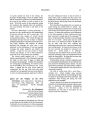
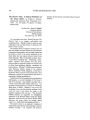
Show REPORTS 79 RUNNING ANTELOPE: A PALEOINDIAN SITE IN NORTHERN UTAH Dann J. Russell, Promontory /Tubaduka Chapter, Utah Statewide Archaeological Society, 2581 West 5000 South, Roy, Utah 84067 INTRODUCTION The Western-Stemmed Tradition of lanceolate projectile points is represented by a variety of styles. One style of this tradition is called a Haskett. The purpose of this report is to present information on a recently discovered Paleoindian site containing this style of the Western-Stemmed Tradition, next to present information on Haskett points and site locations where they have been found, and then to speculate on the value and relationship of this new site to these other Haskett sites. SITE DISCOVERY Years ago in Northern Utah a hunter found a large broken spear blade of unknown origin and material associated with an apparent prehistoric camp site. The broken blade and area where it was found was brought to my attention and I took the pieces to Mark Stuart, of the Utah Statewide Archaeological Society for identification. Mark identified it as a Haskett biface. Knowing the area, yet never having prepared an (IMACS) form, I took Mark to the area to assist me in recording the site. RUNNING ANTELOPE When this site was first discovered a herd of Antelope was observed running across its western edge, so it was named "Running Antelope." Officially recorded as 42Bo538, the Running Antelope site is located southwest of Snowville, Utah (Figure 1). It exists in a water-eroded area on a low beach terrace of the extinct Lake Bonneville. On-site materials consist of loose tan dirt combined with assorted gravel including tiny rounded particles of sheet obsidian. Scattered across the site were 200 + secondary and tertiary flakes of high quality obsidian. Concentrated at the northern and southern ends of the site were Haskett bases, most of which showed evidence of basal edge grinding. Scattered throughout the site were additional bases. Also located at the southern end were several chert scrapers, utilized flakes, and one obsidian flake knife. The whole Haskett was reportedly found at the northern end of the site. High quality obsidian, black and nearly opaque, seems to be the preferred material for the bifaces. However, several bases made of olive green chert were observed. The flake knife was manufactured from the same obsidian as the bifaces. Illustrations of the bifaces, flake knife, scrapers, and a utilized flake are shown in Figures 2 and 3. Tabularized information on each of these artifacts is provided in Table 1. HASKETT PROJECTILE POINTS Haskett points are so named after their discoverer, Parley Haskett of Pocatello, Idaho. Haskett found several points in the mid-1960s weathering out of a sand borrow area in an ancient sand dune on the Snake River Plain. The site is located 8 miles southwest of the American Falls Reservoir. Collectors reported finding many early point types in this sand dune, including both Clovis and Folsom points. After discovering the site, Haskett, with the help of members of the Upper Snake River Prehistoric Society of Idaho Falls, Idaho, and members of the geology faculty at Idaho State University, studied the area in detail and additional specimens of Haskett points were recovered in place (Figure 4). Along with the points, several flake knives and many pieces of bison tooth enamel were also recovered. Two types of Haskett points were recovered and designated as Type 1 and Type 2. Type 1 Haskett points are broadest and thickest near the tip, and this end accounts for only one-third of the overall length of the point. The stem 'portion of the Type 1 point tapers in and down to a thin, somewhat rounded end. The edges of the stem are ground or dulled, probably to facilitate socketing the point into a handheld spear shaft (Butler 1978:64). The Type 2 Haskett points are considerably longer and heavier than the Type 1 points. The edges are uniformly excurvate from the tip to the base, with the broadest and thickest part of the point midway between the two ends. The edges are ground or dulled near the basal end, possibly indicating that most of the point was exposed (Butler 1978:64). Type 1 points were the most common found. Because of the lack of suitable materials at the site, it was not possible to determine its age with 80 UTAH ARCHAEOLOGY 1993 I \ ^^ Rosette Valley / \ ^^'"T*-+ N "" X Kelt on Figure 1. Location of Running Antelope Site (42Bo538) in Northern Utah. REPORTS 81 3 cm Figure 2. Haskett Points from Running Antelope Site. 82 UTAH ARCHAEOLOGY 1993 3 cm Figure 3. Scrapers (a,b,c), Flake Knife (d), and Utilized Flake (e) from Running Antelope Site. REPORTS 83 Table 1. Biface and Scraper Descriptions Figure 2(a) 2(b) 2(c) 2(d) 2(e) 3(a) 3(b) 3(c) W) 3(e) Artifact Haskett (Type 1) Haskett (Type 1, Partial) Haskett Base Haskett Base Haskett Base Scraper Scraper Scraper Flake Knife Utilized Flake Material Obsidian Obsidian Olive Chert Obsidian Olive Chert Olive Chert Olive Chert Red Chert Obsidian Olive Chert Basal Grinding Yes Yes No Yes Yes N/A N/A N/A N/A N/A Dimensions ( Length 10.0 7.3 4.8 3.7 3.1 6.3 5.9 4.6 6.9 5.2 Width 2.9 2.6 3.0 2.3 2.0 4.3 3.4 3.9 2.4 3.1 cm) Thickness 1.0 1.0 0.9 0.9 0.7 1.4 1.3 1.7 0.9 0.7 N/A: Not Applicable any degree of certainty. During the summer of 1972 Haskett points were uncovered at Redfish Lake, which drains into the upper Salmon River in the high mountains of central Idaho (Butler 1978:65). A cache of Type 1 Haskett points was found enclosed in a sequence of geological deposits that had accumulated in a rockshelter near the lake outlet. No faunal or food remains were recovered from the deposits, however sufficient charcoal was present for radiocarbon dating. Charcoal from a rocklined hearth near the cache of points yielded a radiocarbon date of 9,860 + 300 B.P. while charcoal from an earlier layer overlying a layer containing a Haskett midsection yielded a radiocarbon date of 10,000 ± 300 B.P. A series of cave sites in the Fort Rock Lake Area of South-central Oregon also yielded Haskett points which were reported to be of the same cultural tradition (Butler 1978:65). In addition to these sites, Haskett points have also been found in Nevada in the Lake Tonapah Locality (Tuohy 1988:221), and in Jakes Valley (Price and Johnston 1988:240) and Sunshine Well (Hutchinson 1988:305) both south of the Long Valley Locality. DISCUSSION Paleoindian influence in Northern Utah could be large, especially when one looks at its association to the Snake River Plain in Idaho (Titmus and Woods 1988), and it needs more study. A Folsom point was found in the Curlew Valley on the Utah-Idaho border (Butler 1978:Figure 33; Schroedl 1991: Figure 6), a Scottsbluff was found at Hogup Cave (Schroedl 1991:8), and a Scottsbluff, Birch Creek, and Clovis points have all been found by rabbit hunters in the Locomotive Springs area (Mark Stuart, personal communication). Haskett points at Running Antelope are now added to the list. No other Haskett sites are known to have been reported in Northern Utah, although the author has seen one complete Haskett in a private collection that was said to be found north of Snowville. Also, one base (provenance unknown) was included in a group of projectile points that Fran Hassel, a local avocationalist, donated to Weber State University in the early 1980s (observation made by the author and Mark Stuart). The discovery of Running Antelope could be significant. According to Alan R. Schroedl of P-III Associates, the absence of Paleoindian kill sites has 84 UTAH ARCHAEOLOGY 1993 tf^ 3 cm Figure 4. Type 1 (b,c,d) and Type 2 (a) Haskett Points from Haskett Site. REPORTS 85 led researchers to assume an Archaic subsistence pattern for paleo sites. "Subsistence data from the earliest components at the three dated Paleoindian sites in western Utah, Danger Cave, Hogup Cave, and 42Md300, are limited but do seem to support the notion of Archaic or mixed hunting and gathering lifeway in a lakeside-marsh setting" (Schroedl 1991:7). The number of Haskett bases with basal grinding and hide scrappers would suggest that this site could have been a processing area with a kill site nearby. This site could add to that subsistence data if it was seriously studied by professionals. Running Antelope could also help define possible migration and hunting routes from the Snake River of Idaho to the shores of the Great Salt Lake in Utah and the pluvial lakes of Nevada. Note that Running Antelope is directly south of the original Haskett site. It is conceivable that a group of Paleoindian hunters could follow a herd of megafauna down the Raft River valley to the Great Salt Lake shoreline in a relatively short time span. From there travel would be across what is now the northern edge of the Great Salt Lake Desert and into Nevada. Surely one could deduce that there should be other Haskett sites between Running Antelope, the original Haskett site, and those in Nevada. Serious research and investigation with the local farmers and ranchers in the Raft River Valley of Idaho and those between Park Valley, Utah to Ely, Nevada could provide this information. This and investigation at Running Antelope could further our understanding of that transitional time between Paleoindian and the Archaic Period and provide subsistence data and possible skeletal remains of what was being hunted and butchered with these large stemmed bifaces. Price, B. A., and S. E. Johnston 1988 A Model of Late Pleistocene and Early Holocene Adaption in Eastern Nevada. In Early Human Occupation in Far Western North America: The Clovis-Archaic Interface, edited by J. A. Willig, C. M. Aikens, and J. L. Fagan, pp. 231-250. Anthropological No. Papers 21. Nevada State Museum Carson City. Schroedl, Alan R. 1991 Paleo-Indian Occupation in the Eastern Great Basin and Northern Colorado Plateau. Utah Archaeology 4(1): 1-15 Titmus, Gene L., and James C. Woods 1988 The Evidence of Paleo-Indian Occupation in Southern Idaho. Northwest Anthropological Society Conference Paper, Tacoma, Washington. Herrett Museum, College of Southern Idaho, Twin Falls, Idaho. Tuohy, D. R. 1988 Paleoindian and Early Archaic Cultural Complexes from Three Nevada Localities. In Early Human Occupation in Far Western North America: The Clovis-Archaic Interface, edited by J. A. Willig, C. M. Aikens, and J. L. Fagan, pp. 217-230. Anthropological Papers No. 21. Nevada State Museum, Carson City. REFERENCES CITED Butler, B. Robert 1978 A Guide to Understanding Idaho Archaeology, 3rd ed., The Upper Snake and Salmon River Country. Idaho State Historic Preservation Office, Boise, Idaho. Hutchinson, P. W. 1988 The Prehistoric Dwellers at Lake Hubbs. In Early Human Occupation in Far Western North America: The Clovis-Archaic Interface, edited by J. A. Willig, C. M. Aikens, and J. L. Fagan, pp. 303-318. Anthropological Papers No. 21. Nevada State Museum, Carson City. 86 UTAH ARCHAEOLOGY 1993 |