| OCR Text |
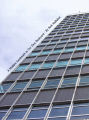
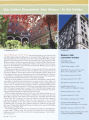
Show - oresence of its extraordina~ archltmisl his eighties, on hand to witness h e ap building For the second time. I greeted Wenceslas A. Sarrnientors a d Lake City with the great ~ nticipatian me feek ing someone whose work hetped shape the . communities. As the assistant director of the WI Foundation, I had worked for quite some time on tlon af his First Securitv Bank Building at 405 Saut knew Sarrniento was involved in ongoing eRorts to s~ r6s8 designed in California and was glad his visit ta Salt ~ a k e g successful rehabilitation project. In between the hustle arsd;' a 8 - pening ceremony, I hoped I could learn more about hb, and hfs design for First Security tyanlc, Sarmiento's design was one of several factors that shap& d7 y construction sf the First Security Bank Bullding, including tha Ge Depression, the rise of modern architecture, new technologies, and the distinctive personalities involved in the project. The building had its birth in George and MarrCrner Eccles' decision to move the ' I- headquarters of the First Security Bank Corporation from Ogden L\ to Salt Lake City in 1950. It is likely the Ecilei hoped their new building would depart ) from the stereotype of previ> ous monumental, CLassical Style . bank buildings. Bankers aroscnd the country were eager to shed the shadow of the Great Depre- ssion and embrace ; a new image wlapped in modernism. Ba? ks wanted the pub- . fk tb tr& t them again, to feel secure about their invest- ' ments, and to have confidence that banks were the future of America, They hoped a new modern style of bank I building would help extinguish the vision of bankers ' like Mr. Potter hunqhed over counting his money in it's a WonderJui Life from the mjnds of Americans. \ i j, 1, \ - 1. ' s \ UTAH P R E S E R V A T I O N 45 7 i , / \ ; k ' I ! . ? zgi 45 UTAH I'k't ' v A I I f l N .-> - - . - - The Eccles shared this vision of a modern, efficient, invit-ing, convenient, and economical bank building. Bank president George Eccles wanted his desk in the middle of the lobby to provide personal service to customers. What better way for the bank to sell itself and its money? In the 1950s, the Bank Building and Equipment Corporation was the largest designer of bank buildings in America. It was a major proponent of modern design and could provide all the services a bank would need to get going, except for the assets and employees. It was the perfect company to design the Eccles new building. Sarmiento was the design architect for the Bank Building and Equipment Corporation when the Eccles approached the com-pany with the First Security Bank project. Sarmiento was born in Peru and emigrated to the U. S. after World War I1 to take advan-tage of new opportunities in a growing job market. A student of modern design, Sarmiento worked as a draftsman in the office of Oscar Niemeyer before Niemeyer was appointed chief architect of Brasilia. As the design architect for the Bank Building and Equipment Corporation from 1950 to 1965, Sarmiento created cutting- edge buildings using new technologies and became one of the most prolific architects of the time. Modern Materials for the Modern World New technologies discovered during and after World War I1 enabled architects to experiment with an exciting new palette of materials. During the post- war era these materials were used together for the first time, creating some of the most astonishing and innovative architecture ever. The combination of new tech-nology and Sarmiento's design made the Eccles' vision a reality. Completed in 1955, the First Security Bank Building utilized cutting- edge technologies. It was only the second building in the country constructed with a true curtain- wall skin composed of panels hung over a steel framework. New York City's Lever House, designed by Gordon Bunshaft for Skidmore, Owings and Merrill in 1952, was the first. Curtain- wall construction is now common place for large buildings all over the world. The First Security Bank Building also pioneered the use of por-celain enamel steel panels in curtain walls. Porcelain enamel steel was considered a permanent material that could withstand many elements inside and out. The Lustron Corporation started using the panels in 1947 as an exterior sheathing on its prefabricated housing. Sarmiento worked closely with the panels' engineers and production staff at Cupples on the First Security project since both Cupples and the Bank Building Corporation were located in St. Louis. Cupples later produced curtain wall systems for some of the world's most prominent buildings, including Chicago's Sears Tower ( 1976), the World Trade Center ( 1977) in New York City, and the World Headquarters Buildmg of the Church of Jesus Christ of Latter- day Saints ( c. 1980) in Salt Lake City. Sarmiento went on to use the curtain wall system on other build-ings he designed, including the Glendale Federal Savings Bank in Glendale, California and the Newport Balboa Savings Bank in Newport Beach, California. The First Security Bank Building is by far the best representa-tive of International Style architecture in Utah. Sarmiento's design is a mix of horizontal and vertical rectangular masses pierced by horizontal ribbons of three- part windows and panels. The building's three main colors, gray, white, and sandstone red, cre-ate transitional accents to the vertical and horizontal elements. ( The red appears to have become a part of Sarmiento> s design 46 UTAH P R E S E R V A T I O N :. 1 1 - 1 Your business deserves an upgrade. Wasatch Property Management (" Wasatch") and its affiliated entities are pleased to announce the completion of the historic renovation and leasing of the Ken Garff Building located on Main Street in Salt Lake City. Wasatch was honored to have the opportunity to renovate a City landmark. This project allowed Wasatch to combine its expertise in historic tax credit financing with its exceptional renovation development team to revitalize one of Main Street's best addresses. Whether faced with seismic upgrades, environmental issues or matching historic marble finishes, Wasatch exceeds all expectation in property management, commercial leasing, development and construction. Upgrade your business location to one of the world- class offices provided by Wasatch Property Management. Wasatch Property Management, a higher standard of excellence in managing, leasing, and developing commercial real estate across the Wasatch Front and throughout the Western United States. 299 S. Main, Suite 2400 Salt Lake City, Utah 841 11 www. netwasatch. com The rehab team applied wer 80,000 linear feet of new caulk between the First Security Bank Building's porcelain enamel steel panels and then repainted the panels to match their original color. motif. He used the color on several later buildings.) Like the chrome tailfins on cars of the era, the building's aluminum provides the perfect amount of glimmer. The Eccles opened the First Security Bank Building with great public fanfare in 1955. A special newspaper insert touted all the building's exciting modern features, including three high- speed Otis Autotronic elevators, electric drinking- water coolers on every floor, dual- zone, high- velocity central air conditioning, and unbroken rows of windows with the latest aluminum frames. Hundreds of people came to admire and tour the building. Preserving the " Buildings of Tomorrow" Over the years, the allure of the First Security Bank Building began to fade in the minds of many Utahns. Today people often perceive the International Style buildings constructed during the post- war era as old and out- dated, but certainly not historic or important. Structures that once represented the " world of tomorrow" are now facing many of the same issues that once threatened Victorian and Craftsman Style buildings: perceived obsolescence, development pressure, deferred maintenance, and widespread lack of public appreciation. Thus Utah preservationists were worried when the First Security Bank Building went up for sale after First Security Bank merged with Wells Fargo in 2002. The future of the building was in ques-tion. For months, newspapers reported Salt Lake County's interest in acquiring the building for the county attorney's offices. These stories ran with renderings of a building completely re- skinned with seamless smoky mirrored glass that would have completely altered First Security's historic character. After the bidding process, however, Wasatch Property Management won the chance to pur-chase the site. Preservationists wondered what ownership by this private company meant for the building's future. Utah Heritage Foundation hoped Wasatch Property would be open to learning about the building's history and architecture as well as financial incentives for historic preservation. Not only was Wasatch Property interested, but the company actively sought out this information. The rehabilitation of the First Security Bank Building was exactly the kind of project preservationists wish for: the project team researched the history, physical components, and character- defining features of the building, developed designs to meet the Secretary of the A- I'I~ NTIOAYY T I ( . ~ ~ ! S~ -~ ~ OC: PFQS! Honest Jon's Hills House Antique Gallery " I he Astque Shop ill o museurn reitins in Le hm~ otf downtown." 126 South 200 West Awss from the Sob Polace next to the Expornopt Interior's Standards for Rehabilitation, and used a combination of preservation financial incentives. Much of the preservation work focused on the exterior of the building. For example, over 80,000 linear feet of new caulk was applied between the porcelain enamel steel panels, and new windows that match the color and reflectivity of the originals were installed. Architects at the Utah State Historic Preservation Office ( SHPO) worked with the project team on several window designs to find one that met Wasatch Property's needs for energy- efficiency and sound- damp-ening and the requirements in the Secretary's Standards. Most of the building's historic interior finishes were altered or removed long ago. However, Wasatch Property preserved the remaining historic features of the bank lobby, including terrazzo floors and a wonderful ball- type clock over the elevators. The rehab also included a seismic upgrade and a new telecommunications system. One of the challenges faced by the proj-ect team was preserving the cutting- edge materials Sarmiento employed. As post- war buildings approach their 50th birthdays, pres-ervationists around the country must learn to repair and restore a whole new vocabulary of materials. The procedures for restoring wood, 48 UTAH PRESERVATION flop Left] The steel skeleton of the first Security Bank Building rose on the Salt Lake City skyline in 1954. (( Bottom) Members of a new generation of the Eccles family, Spencer P. Eccles ( leh) and Lisa Eccles ( right), joined W. A. Sarmiento ( center) to celebrate the re- opening of the building their grandfather, George 5. Eccles, helped construct 50 years ago. UTAH PRESERVATION 49 brick, stone, terra cotta, concrete, and cast iron are well- established. But what do you do with porcelain enamel steel panels? Although porcelain enamel steel panels were touted as " never needing replacement" in the 1950s, the panels on the First Security Bank Building were definitely looking a bit dingy. It took research, time, discussion, and faith, but Wasatch Property Management reached a successful preserva-tion solution. Wasatch Property first considered completely re- skinning the exterior in a new material and then thought about simply painting all the panels white. However, research conducted by Utah Heritage Foundation established the original steel panels and their red color as significant historic features of Sarmiento's design. Wasatch Property and its architect, Peter duPont Emerson of Edwards & Daniels Architects, returned to the drawing board. With the assistance of the Utah SHPO, the project team identified a paint system that will neither ruin the original porcelain finish on the steel panels nor fail quickly. The color of the new paint matches the panel's original rich, warm sand-stone red. This successful solution to a modern preservation challenge gives the building the same crisp, clean appearance it had in 1955. Wasatch Property completed the $ 12 million rehabilitation of the building by Fall 2004. A partnership fund between the National Trust for Historic Preservation and Bank of America which invests in fed-eral and state rehabilitation tax credit projects enabled Wasatch Property Management to tap into investors interested in this kind of project. The First Security rehabilitation generated $ 2.3 maon in historic rehabilita-tion tax credits and $ 1.23 million in new- markets tax credits. Discovering A Modern Landmark On November 10, 2004, hundreds of people gathered to participate in the reopening of the First Security Bank Building. The celebration included a ribbon- cutting ceremony, public tours, a 1950s cheeseburger lunch, and a Marilyn Monroe look- alike. The owners of Wasatch Property Management happily announced the building's new tenants and introduced the rehab team. Salt Lake City Mayor Rocky Anderson proclaimed that anybody could see how important the First Security Bank Building is to downtown after this rehabilitation. W. A. Sarmiento spoke about his relationship with the Eccles, the cultural climate that influenced the design, and his thankfulness for the building's rehabilitation. " It looks like the day it opened in 1955," he said quietly as he walked across the terrazzo floor he designed over 50 years ago. In addition to preserving a Utah landmark, the First Security Bank Building rehabilitation opened an exciting new window on architectural history. Local architects and preservationists had long admired the beauty of the building's clean geometric design and knew of the building's signifi-cance in the history of downtown Salt Lake City. The research conducted during the rehab project, however, established the First Security Bank Building as a ground- breaking work of a major modern architect. The First Security Bank Building deserves its place in architectural history right along- side the Lever House. Sarmiento deserves his place along- s ide Oscar Niemeyer and Gordon Bunshaft, the architectural masters of the time. The First Security Bank Building has marked many " firsts" in its life-time: the first building constructed in downtown Salt Lake City after the Great Depression; the first International Style building in the state; the first use of porcelain enamel steel in a curtain wall; the first curtain wall manufactured by Cupples; and the first International Style landmark to be listed on the National Re- g ister of Historic Places in Utah. The building also gave me my first chance to be a champion. Upon leaving the opening celebration, Sarmiento turned to me and said in his Peruvian accent, " Thank you for being a champion for my building." You're welcome, Mr. Sarmiento. Anytime. an: Kirk Huffaker has been an advocate for historic preservation with Utah Heritage Foundation since 199% He spends his other time enjoying music, outdoor sports, and his brown lab, Cassidy. 50 UTAH PRESERVATION Dignitaries gathered on the roof of the First Security Bank Building in 1955 for the first lightlng of its sign With its original terrazzo floors and ball- type clock. the First Security Bank Building's lobby still possesses a 1950s " Building of Tomorrow" atmosphere. ( From Left to RighrJ Crowds gathered to watch W. A. Sarmiento, Paul Willey of Wasatch Property Management, and a member of the Salt Lake Chamber's Salt Shakers cut the ribbon at the second grand opening of the First Security Bank CORPORATE FUNCTIONS AND MEETINGS WEDDINGS HOLIDAY PARTIES MEMORIAL HOUSE Operated by Utah Heritage Foundation Diane Karwacki. Director 80 1.52 1.7969 P. O. Box 28 Salt Lake City, Utah 84 1 10 LAW OFFICE OF KYLE H. BARRICK PLA- NNI NG YOU CAN TRUST .- ~ p - - 7 ,.. - * 1 1 L!. bl17 77- s , , l - y . r --- . ?-- l----->-----. - :. - . .. - - I, r-. - L - . I- . .. 1 1 =,=- :., _ - . I . . , I I. 1 L I : I . : - BUSINESS PLANNING ESTAT TRUSTS I 5295 SOUTH COMMERCE DRIVE, SUITE 220, MURRAY, UTAH 1 www. UtahEstatePlanning. com UTAH P R E S E R V A T I O N 51 |