| OCR Text |
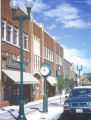
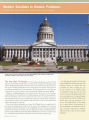
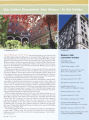
Show Populist Preservation: '~ rlectionsn n + he Success of Utah's Main Street Program Bim OYivar In the world of preservation, the Main Street Program has always been something of a different animal. While preservation has traditionally belonged to small groups of highly- dedicated volunteers, Main Street has involved a broad range of people who would hardly call themselves " preservationists." As Randall Shepard, Trustee Emeritus for the National Trust for Historic Preservation, recently observed, " Main Street has brought the message of preservation and put it to work in more places, involving more Americans, than any other effort in the entire history of the National Trust." UTAH PRESERVATION 21 ( Left) The " modernization" of the Crofi Building on Midvale's historic Main Street included removing the original storefront on the main level and covering the upper level with metal siding. ( Center) The owner was encouraged to rehabilitate his building when Midvale City improved the appearance of Main Street ( Right) The brick details and origi-nal window openings were restored on the upper level. The storefmnt was recreated to resemble a common storefmnt from the period when the building was constructed. . ere in Utah, the Main Street Program has taken this Johnny Appleseed approach to spreading the message of preservation - - since 1993. In my 12 years as the Utah Main Street coordina-tor, I have traveled to nearly 100 communities around the state to talk with property owners, merchants, city officials, and citizens about working collectively to preserve and sustain their historic downtowns. It is safe to say that many, if not most, of these people have never been involved in an initiative, or even a project, related to historic preservation. But where Main Street differs most from traditional preservation lies more in the how than in the who. While preservation efforts typically focus on restoring specific sites or compiling research, local Main Street organizations tackle entire districts. In fact, the " Main Street approach" was developed 25 years ago by the National Trust for Historic Preservation as a comprehensive, holistic strategy for pre-serving a community's historic commercial architecture by addressing the complex dynamics of downtown. Local Main Street organizations are like development companies with capabilities in design, market-ing, and business development. This effort has been so successful nationally that National Trust President Richard Moe called the Main Street approach " one of most successful economic revitalization pro-grams in America." Note the absence of the word " preservation" in his remark. I Zre~ anga Distir:. he Business Ide~+:~ q So it shouldn't be a surprise that " preservation" is often in the background, at least initially, when we talk with communities about how to revitalize their downtowns. One of our early goals is to encour-age property owners to rehabilitate their buildings and restore their historic character. But most property owners have not purchased ( or inherited) their buildings for their historic value. Most of them are simply looking to maximize their building's value as commercial space, regardless of whether the building looks " historic" or " mod-ern" or something in between. This mindset explains the inappropriate and sometimes downright bizarre treatments historic downtown buildings have been subjected to as property owners seek to adopt the " look du jour"- everything from aluminum siding to barn wood to sectional plastic- in a mis-guided attempt to enhance the marketability of their buildings. Rather than focusing on history for history's sake, we focus on the practical, commercial value of restoring a building's historic character. We encourage property owners to rehabilitate their buildings in order to: enhance their marketability, mitigate the damage caused by inap-propriate modifications, restore functional elements compromised by inappropriate modifications, and establish a distinctive identity for businesses occupying a building. 22 UTAH P R E S E R V A T I O N ( Lem Gary's Shoes was the victlm of several modernizations. First, the original architectur-al details were stripped away and the masonry was covered with stucco. Later, the facade was completely covered with metal siding and a billboard- scale mansard roof. ( Center) The first layer of stucco couldn't be removed without seriously damaging the masonry, so the building's owner created a new facade that harkens back to the original. Again, note the absence of " preservation" or " historic" in these objectives. It isn't that we're afraid to broach the subject. In fact, the architects with whom I have worked, Don Hartley of the Utah Division of State History and Kim Hyatt of Kim Hyatt Architects, are articulate and compelling in their arguments for preservation. But in working with people who are not " tuned in" to preservation, we come at it from a different direction. Scott Jensen is a good example. Scott owns Gary's Shoes, a suc-cessful family- owned business in downtown Richfield. Like many downtown buildings, Scott's had been " modernized" at some point. The fagade was covered in aluminum and stucco, and the sign on the storefront was out of scale for a downtown context. Scott decided to remodel his building after attending a workshop I conducted in Richfield. Scott is a savvy business owner who is always exploring new opportunities to increase business activity. A remodel represented just such an opportunity. Scott consulted with us about his design options and we discussed the value of restoring the building's historic character. As a business owner, he was particularly interested in establishing a distinctive identity for Gary's Shoes. Using historic photos as a guide, Scott reconstructed the building's faqade. ( Unfortunately, most of the building's original material had been destroyed over the years.) His project resulted in dramatic aesthetic and economic change. Scott's sales have increased significantly and his building now serves as an example for other property owners in Richfield. Scott's project, while extremely successful, is not a typical Main Street project. Most of the dozens of building rehabilitations I have seen over the past 12 years would not be considered " preservation" in the strict sense of the word. In fact, it is rare that a downtown com-mercial building is lovingly restored to its original condition. Herein lies a key distinction between the Main Street approach and more traditional preservation strategies. Most historic commercial buildings have undergone some sort of remodel that has diminished their historic character. To make mat-ters worse, many of these remodels have not been maintained so the buildings appear tired and dilapidated. They just don't look like they're worth investing in. Thus, most downtown property owners are unaware of the value of their buildings as historic places. Because these buildings serve a commercial purpose, any remodel has to be financially justifiable. The basic proposition for most down-town property owners is: How can I maximize my rent while mini-mizing my investment? Therefore, most of the rehabilitation projects ( Right) He also installed traditional fabric awning to limit ultra- violet damage to merchandise in the display windows. Utah Main Street has participated in are relatively simple, incremental efforts. Our goal is to encourage the building owner to restore the building to a condition that is as close to its historic character as we can get. ( Scott Jensen, of course, went well beyond that standard.) In order to promote this goal, Utah Main Street and the Division of State History at one time offered matching grants to stimulate reha-bilitation projects in downtowns across the state. A 2003 economic analysis of this program provided us with a powerful argument that preservation makes great economic sense. While the average cost of a project was only $ 12,000, the average project generated nearly $ 12 in economic impacts for each dollar invested. This return is all the more impressive considering the small size and lack of economic activity in the downtowns where many of these projects took place. These results demonstrate National Trust President Richard Moe's point: Main Street is a successful economic revitalization program. Preservation is the lynchpin of the effort, but we've learned that sustaining a downtown architecturally depends on sustaining it eco-nomically. It also depends on creating a broad- based, community- wide effort. Utah Main Street has accomplished just the kind of populist preservation Randall Shepard described. Local Main Street organiza-tions have expanded not only the numbers, but also the types of people who are getting involved in preservation. Main Street initiatives have also expanded the preservation agenda by addressing issues the preservation community previously saw as peripheral or unrelated. Infill development, for example, has become a key aspect of downtown revitalization. As a case in point, the Logan Downtown Alliance worked extensively with Cache County on the design of a new county administration building that would comple-ment Logan's existing downtown context. Like Main Street programs nationally, the Utah Main Street Program has also stimulated local discussions about preserving community character and identity through " smart growth." For example, Richfield has challenged the U. S. Postal Service to maintain its downtown post office rather than moving it to the edge of town, both to stem dispersed " sprawl" development and to retain the post office as a downtown anchor. And Heber City recently commissioned an analysis of the potential impacts of a proposed large- scale shopping center on local businesses and passed a zoning ordinance that allows the community to manage the size and scale of new commercial development. UTAH P R E S E R V A T I O N 23 l a,. ( Left) Casey's Cafe in Mt. Pleasant is typical of many of Main Street rehabilitation projects. The owner removed dilapidated. " maintenance- free" materials installed in the 1950' s and 60' s to reveal original architectural features. ( Right) The origi-nal features were then refurbished and painted in an appropriate historic paint scheme to show- off the unique architecture. e~ pt. ri. encde t: z. l) i~ cnob seri/ afior~' of or prticipntion in c ) xqctM. d ~ ol~& dgesk, i ll, or prutice dc~~ i! freo~ mi direct o parh& atyon ril events, something pcrsonuUj~ encouwtel. ed;. Some preservationists might argue that these cases don't exemplify " preservation," but I believe they de~ no~ lstraMte ain Street's success as a preservation program. Because of its comprehensive nature, the Main Street approach addresses don. nto\ x, n re\/ italization holistically. The natural extension is to address co~ ninunity development holistically. So, just as Main Street has expanded the roster of preservationists, it has also expanded the geography of preservation. Vlrhat's most encouraging to me is that more and inore Utahns in Inore and more places are speaking the language of " smart groblth" and, by associatioil, of preservation. They may not realize it, but they are. They are talking about sustaining corn-lnunity character and identity They are challenging the value of developme~ lt pririciples and practices that lead to spraliil. And they are focusing on sa\. ing the special places. Perhaps Utah Mail1 Street's greatest success is that it has served as a catalyst to s t i ~ n ~ ~ lcaotllee ctive con\~ ersationsa bout co~ ninunitgc haracter and has helped to coilvert these discussions into action. yi. Since 1993, Bim Oliver has been the state coordinator for the Utah Pioneer CommunitieslMain Street Program. Prior to assuming his current position, Bim worked in the Governor's Office of Planning and Budget as a planning and budget analyst. Originally from Virginia, Bim obtained degrees from the University of Virginia. West Chester University, and the University of Utah. 24 UTAH P R E S E R V A T I O N I- * I -----% - ( Left) Though the facade of the Aladdin Theater in Pamwan was covered with residential aluminum siding, many of its original architectural details were left intact underneath. ( Center) The theater's facade was refurbished using original photos and extant details as a guide. ( Right) A new marquee, designed in the spirit of the original marquee, was installed to highlight this important rehabilltation on Parowan's Main Street. 357 West Pierpor~: Avenue 5a! t L. ake City, IJt. a! i 84101 801.364.5161 r: l. 801 364.5167 t.~\.: w: vv, iinjC,,-! a <<):: I MJSA Ephrai: n i. ibrary Utah State Cdpitol Fort Douglas lheeter Alta Club P i ~ r p o r i tL ofts Wdlki+?- McCart! iry Mansion McCune Mansion Broadway Lofts Provo Library at Academy Square Governor's Mansion l l a v ~ dK eitl- i Llanslori & Carriage House Terry Gi! e Maris~ orl General Eng~ r? eeriricBj iiiidirig A R C H I T E C T U R E - - - INTERIOR DESIGN UTAH PRESERVATION 25 We're user- Honest! Do you sometimes get the feeling that you're bothering the librarians? Not at the Utah History Research Center! Whatever your Utah history question is, we're eager to help. Come look through millions of documents: photographs, newspapers, manuscripts, pamphlets, magazines, books, city directories, maps, court records, city and county government records, and state government records. With our help, you may learn more than you ever dreamed you could. utah history research center 300 S. Rio Grande St., SLC ( Rio Crande Depot) M- F 9- 4: 30, Sat 9- 1 historyresearch. utah. gov 801/ 533- 3535 DIVISION of STATE HISTORY UTAH STATE HISTORICAL SOCIETY Daniel Peterson - 479 West, 700 South Salt L; ike Ciq Utah 84x01 . . I . ? . .. i 1 - - - I . : 1:. A 1 -- I j - - -; I . . i . - - = 8, F.- *- T,-- * .- L ..- , _ lY-*- y~~~ y. j 5 ,, :: i( $%- , *, . d conservation, restoration, and decors-ive projects in & ne countries. In addition to field projects, rhe Salt Lakc studio has produced designs for carpets, wall cavering, art glass md varinus architectural details in wood and plas-ter. Smdio conservation projects include bniture and object, with an emphasis on painted and gilded ornament. Other senices include the writing of specifications, project documentation, project man-agement and consultation. I would like to invite architects, designers, and relap ed professionals to see " what we've done, what we're cIoing* and most importantly; what we would like to do in the future." Peterson adds, " I hope to open a dialogue with people who we active in the contem-porary market to see how & is traditional trade can be re- integrated into a kcontemparaey' contern. From tomb painting in Egypt to pestmodern distressing and pathating in the 9oPst, h is trade bas mlved and survived. The craft is not dead; we just need to con-tinually redefine the relevaace of decorative painting to contemporary design in institutional, comcrci J, and residential contexts." '' My focus on preservation has expanded out of ' necessity to include preservation of the cr&, as well as surfae." says Peterson. " It is a perpetual learning process that 1 find both challenging and humbIing, and 1 hope some day to produce quality worthy of the ' eminent late pats' of the trade." |