| OCR Text |
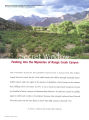
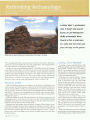
Show Remote and isolated Range Creek Canyon was G- international attention in 2004 when news of Its s~ ectacular archaeological resc Peeking Into the Mysteries of Range Creek Canyon THE TAVAPUTS PLATEAU IN EASTERN UTAH IS NOT A PLACE FOR THE TIMID. Largely devoid of water but for a few small streams that ribbon through seemingly impen-etrable canyon walls, the region is the epitome of desolation- a fiery furnace in the summer, bone- chilling cold in the winter. In 193 1, it was a virtual no- man's land, unexplored except by a handful of hardy cowboys and homesteading dreamers. It must have seemed an unlikely region to yield much evidence of prehistoric humans when intrepid explorers from Harvard University arrived at the Pace Ranch in lower Nine Mile Canyon in late July 193 1. BY JERRY D. SPANGLER AND DONNA KEMP SPANGLER 14 UTAH PRESERVATION wood framing with a stone slab on top. It likely supported a granary. ( Middle) Waldo Wilcox's stewardship of Range Creek Canyon preserved hundreds of Fremont pithouse sites om looters -- - f exception iu ilis rugged, wildt ness. A~ riquarrims Ix~ d heen buz ing abn~ lt Nine, M1. e Canyol- th its endless galleries of prehistoric ~ oclsa rt, ~ U . L C ~ the 1890s. But the vast malor1. q. col: the ' Tavaputs ~. anainrd unexploi. ed! F* ujlg apectations that anorher htlesa Vercle or Cliaco Ca~ nyon awated discovrsy deep iu the wilds. 0 1 - 1 August 2. 193 1, Vi: iJl. ian3 Bowers, J'an- I. e Drnnisoll, and \ Y7aldo Forhe5 saddled up for a tn~ o-\\, eckp ack trip t1.1rough canyons to the ~ 0~ 1othf Nine ~ VfilttC allyon, m parucular, to a place called Range Creek u~ hel- e twc~ 1: elnote rancl~ es had been estublished, but a. rchaeolo-gis~ s llad llcver ventured. DUI- ing thei. 1- t\ vo \ ~ ~ lini sRa nge Creek and Desolation Canyon, the men \\; ere drcidtcily ~~ l- Id~ c~.\ vhebJm> ed pa: tjcularl\; remarkable, norlii~ lg spectdc grand. Ad pel- haps because. of chose aiorc Range Creck was, hl: rhe mcxt part, igllort- 1 3 l ater- generations of archacc> logi. stsw ho were repded by the canyon's rugged isolaciom. , , , u".. u, m,, nuLm "- r.... L.- u,...- u 1 1 with^ -..- years <..... W vibryt color in Ranse Creek. ; I1 : .: - ." - - I I ' : I I - 1 . .. r . ', J I LL z Valdu \ Vlc. c? x, the last ot rhe f~~ ll- ri~ raiinec h-ers in clie canpn: decided to sell his land in a com~, licatcd deal \\ llerel) y rhe ra12cl~ w as hst sold rc? rhv ' 1: 1111stf0l1h. hlic La~ ldst, h en to the federal gx>\; emrnent, and finally to rhe Srare. of IlItaI. 1 t111: ougli legislation s1, oesol: ed by Represe. nratj.~ ie Tin1 Hanssn and Sm. atol: liob ] ? I ? ~ ~ Il? Tric.! r ro transferring title to he. stace, the Bureau 01 1, dnd hqd~~ dgementw. anted soln.. idea of rlje ,11- c11,1eological 1: esau. l: ce. s ru be fo~ j~ tihdw e. \ YTer. e the sires fc. u, aiid scat-tered, as 1: lic 193 1 Han711rd archaeologisrs 11ad nr~: irt. cn?\ Y / as ~ I- Ierea nything to those ru~ nor- s rlinr persistecl in Carbon and Emexy Counties hat clle canyon \ v~ s home t: o spectaculal. 111isoa; and. Foches ventured uira the call- \, oji, \ XriIcox- the one man u. hc? line.\ u bette. c I any c~ thert he ~ l~~ discoveraerdch. acolog~- UTAH P R t S E l < V A T l @ N 15 Intact granaries are among the exciting discoveries in Range Creek. The lid on this rock and mortar granary was sealed by a Fremont farmer hundreds of years ago. cal treasures of Range Creek- spent the day with us and Dr. Duncan Metcalfe, curator of archaeology for the Utah Museum of Natural History, driving down a gut- wrenching ranch road, stopping to point out areas where archaeological sites were located. From time to time, Wilcox would march us off to show us something just out of view from the road. What we saw was jaw- dropping astound-ing. Yes, the pole granaries we had read about were still there and the rock art was visu-ally impressive. But we were stunned by the sheer number of pithouse sites- prehistoric residences defined by circles of stones and boulders- sometimes in isolation, other times in clusters of four to six on ridges and knolls above the floodplain. In fact, the density of the Fremont occupation here exceeded any-thing we had seen before, even that of Nine Mile Canyon. Even more remarkable was that none of the sites showed any evidence of vandalism. There were no looters' holes, no trash left behind by curiosity seekers, no graffiti on the rock art, nothing to suggest they had been touched in a millennium. Potsherds and arrowheads and grinding stones littered the ground. " In 25 years of archaeology in Utah, I can think of fewer than ten sites that had not been looted to some extent," Metcalfe 16 UTAH PRESERVATlON said. " In Range Creek, we are talking about hundreds and hundreds of pristine sites. It is more than remarkable. It is the opportunity of a lifetime." State archaeologist KevinJones, who has been involved in the project from the beginning, agrees. He points out that many other places in the West have rock art and pithouses and granaries, but most have been damaged over the years. " That's what makes this place so unique," he said. Without a doubt, Waldo Wicox deserves accolades for protecting Range Creek Canyon. He not only kept out the curious and mali-cious, he also instilled a preservation ethic in his family, one passed down to him by his father, Budge. " It did not belong to us. If those people wanted to leave their things there, I thought we should leave them alone," Wilcox told Archaeology Magazine. The Key to Challenging Questions? It is hard for those of us involved in the project not to speak in superlatives when describing Range Creek Canyon and what it I means to the science of archaeology. " This is one of the most significant sites in North I America," Jones told the Rocky Mozrntain News. Metcalfe boasts it is among the most important archaeological discoveries of the past half century. Range Creek even made Discover Magazine's list of the 100 most impor-tant scientific discoveries of the year. Collectively, these unspoiled sites offer researchers an unprecedented opportunity to unleash the latest archaeological technol-ogy and theories on some of the most vexing questions surrounding the prehistory of the northern Colorado Plateau. How did the pre-historic Fremont farmers in Range Creek- per-haps a comn~ unity numbering dozens, if not hundreds- thrive in an arid environment that in modern times could not support more than one or turo fanlilies at a time? What happened in the A. D. 1200s to cause the entire social structure, built upon centuries of adaptability to the vagaries of climate and competition, to collapse? Almost all of the evidence gathered so far points to a robust occupation of Range Creek by Fremont peoples between about A. D. 1000 and 1300, the same time frame when nearby Nine Mile Canyon was most intensively occu-pied. These people were farmers who also hunted deer, bighorn sheep, elk, and srnaller animals, and collected wild ~ lantlsik e berries, pine nuts, and grass seeds. The Fremont thrived throughout Utah north of the Colorado River, extending into western Nevada, northwestern Colorado, and southwestern Wyoming. The defining trait of the Fremont was their adaptability to local environments, shifting easily from farm-ing domesticated plants to foraging for wild foods as conditions warranted. Archaeologists debate fiercely whether the Fremont peoples were primarily farmers who supplemented their corn, beans, and squash with occasional wild plants and animals, or if they were pri-marily hunters and gatherers who dabbled a bit in farming. Despite Fremont peoples' remarkable adapt-ability, farming as a component of Fremont life appears to have disappeared by about A. D. 1250 to 1300. Could it be that Range Creek represents a " last stand" for a large group of Fremont farmers besieged by persis-tent drought and hostile, hungry neighbors? Knowledge Sealed in Pithouses and Granaries That is but one question facing researchers as they seek to unravel the mysteries of Range Creek. There are myriad more. For example, the pithouses in Range Creek represent an opportunity to study day- to- day activities of prehistoric peoples. In the Tavaputs Plateau area, the Fremont would typically dig into the shale soils to establish a floor area three feet or more below the surface. The inside of the pit was lined with slabs, and then stone wds were arranged in a circular pattern above ground, creating a house that was partly below ground and partly above. A roof of wooden beams covered with mud and thatch was then placed over the walls to create living quarters that would be warm in the winter. Over the centuries, the roofs collapsed, seal-ing inside all the evidence of day- to- day life, at least until the looters shovel through in search of artifacts. In Range Creek, these pithouses remain sealed, and the information they con-tain is like a library of books with the answers to many different mysteries about how people lived together and how they adapted to chang-ing circumstances. Were these pithouses win-ter residences or year- round homes? Were they single- family homes or were some of the larger ones, those up to 30 feet in diameter, for extended families? Were they even residences at all or were they community structures? What was the size of the Fremont community and how was their society structured? Archaeologists are particularly excited about the granaries because how and why human beings store food tells a lot about the society as a whole. If they store food in chambers next to their homes, it suggests they are present at least most of the time to protect the food from pests, both animal and human. If they hide it away or make it difficult for anyone or anything to get to, it suggests they weren't always around to protect their food or seeds for next year's planting. In Range Creek, both types of storage strategies are evident. Literally hundreds of granaries have been identified, some as small as a bread basket, others massive chambers perched on cliff ledges hundreds of feet above the valley floor and virtually inaccessible except by technical climbers with ropes. Some have remnants of corn and at least one was full of wild rye seeds. Many, if not most, exhibit a tremendous expenditure of energy to build storage cham-bers in situations where any attempt to raid the stores would involve risk to life and limb. " People would not go to this kind of trouble if they weren't afraid," Jones said. There is another line of evidence suggest-ing the Range Creek farmers were in fear for their lives. At Wilcox's suggestion, university students embarked on a grueling hike to a ridge about 1,000 feet above the valley floor. Thwarted by vertical cliff faces and precipi-tous drops, the students took hours to reach the ridge, but once there they found evidence I Professional Office Cleaning w --- -- - Wood floor Restoration Fine Metal Restoration Specializing in Marble and Stone Restoration I11 E. Broadway St., Suite 300 - Salt lakt ( ity, UT 84111 p ( 801) 359.1500 f ( 801) 329.1215 - m ( lop) A new gate is part of efforts to protect the archaeological treasures of Range Creek from looters and vandals. ( Bottom) A view down Little Horse Canyon toward the rugged terrain of Range Creek. ( Left) A latch secured with a leather strap seals the door of an outbuilding on the historic Wilcox Ranch. ( Top) This pithouse is part of a village located on the canyon floor near the stream. Most of Range Creek's pithouses are located higher on canyon benches. ( Bottom) Many of the pithouses and granaries in Range Creek are built in inaccessible locations. These granaries are reached along a talus slope with cliffs above and below. of pithouses, food processing tools, and pottery. What they did not find was water. In other words, some individuals were living high above the valley floor, with a daily commute to and from their fields involving many hours. They would have to carry jugs of water on trails where one false step or stumble would mean certain death. Could this site, dubbed Deluxe Apartment in the Sky, have been a refuge? And what's more, Wilcox has pointed out other sites located in even more precarious settings. Anasazi Ties? But who were they afraid of? It is a question that strikes at the long- running debate among Fremont scholars over what became of the Fremont generally. Were they afraid of other Fremont groups, say their neighbors in Nine Mile Canyon or the San Rafael Swell, whose popu-lations had become too large at the same time drought made farming an unpredictable way of life? Or was it new arrivals, maybe the ancestors of the Utes and Paiutes, who began arriving about A. D. 11007 Or was it some other group, maybe even the Anasazi to the south? The latter question is particularly interesting because Anasazi potsherds- black- on- white, black- on- red, and polychromes from regions hundreds of miles away- are quite common in Range Creek, even though everything else shouts " Fremont." It has long been thought that the two groups didn't interact much. Could it be that the two groups did, in fact, trade with each other? Could they have lived together? And if they did, what was the relationship between the two? Was it purely economical? Was it adversarial? Were the Anasazi and Fremont related by intermarriage or language? Archaeologists are fond of saying that no one can pick up a potsherd or an arrowhead and tell what language its maker spoke. But in Range Creek, the evidence is whispering a caution to researchers that the Fremont social and economic networks may be a lot more complicated than anyone ever considered. Range Creek includes important historical as well as archaeological resources, such as these historic cabins where the Wilcox family lived as late as the 1930s. The building on the right features an unusual sod roof. Research for Many Disciplines Without a doubt, most scientific atten-tion is currently focused on the remarkable prehistory of Range Creek. But the canyon also holds tremendous historic resources that contribute to our understanding of ranching in a harsh desert environment that thwarted the most determined homesteaders, the bat-tles between cattle barons and family farm-ers, and even glimpses into outlaws, desert-ers, and shadowy characters drawn to this remote refuge. Historian Steve Gerber, who has family roots in Range Creek, has been working with archaeologists to document the remains of these sites- stone cabins, out-buildings, and even a hay derrick reportedly built by an African American soldier from Ft. Duchesne- as he attempts to reconstruct eastern Utah's ranch life in the late 1800s and early 1900s. " It is a microcosm of the story of westward expansion and Utah politics of the nineteenth century," Gerber said. Those involved in the Range Creek Archaeological Project envision a grand out-door laboratory- a research station patterned on the model created by the University of California- that would draw many different scientific disciplines: paleontology, wildlife biology, ecology, geomorphology, climatology, and botany, to name a few. Working together, scientists attempting to understand the Range Creek ecosystem could better help archaeologists understand the natural environment and how humans could have responded to the limitations imposed by this environment. Now the World Knows With Range Creek exuding scientific potential at every turn of the rutted road, the most daunting task facing Metcalfe, Jones, and their partners at the Utah Division of Wildlife Resources ( the state agency charged with managing the canyon) is how to preserve Range Creek for future generations. Researchers had hoped to keep the project secret long enough to docu-ment, map, and photograph sites. But word leaked out in the summer of 2004, and scores of national and international media soon descended on Price for a glimpse. A flood of newspaper, magazine, and television stories ensued, with every major news organization in the country chiming in on the wonders and scientific potential of Range Creek. A Google search of " Range Creek archaeology" now reveals more than 95,000 hits. The media attention, however, has accentuated the concerns shared by all the partners that Range Creek is too unique and fragile a resource to squander. And there is growing concern the sites will be targeted by professional artifact collectors seeking a pot or figurine to sell on eBay. Through a special appropriation by the Utah State Legislature, Wildlife Resources has beefed up its law enforcement presence in the canyon. A full- time ranch manager also patrols the canyon daily to remind visitors of the rules against collecting artifacts and damaging sites. Wilcox has seen what pothunters have done to lands outside his locked gate and he has no doubt the sites in Range Creek wiU be plundered if not for careful stewardship. " I'm afraid the public will ruin it," he told USA Toduy. " You'll be awfully lucky if there's anything here for your kids." As the principal parties move forward with the development of a managenlent plan for the canyon, they are of one mind that preserving Range Creek will take a lot more than luck. It will take an unprecedented level of commitment from every stakeholder to ensure Range Creek remains a treasure for all Utahns and a legacy worthy of passing to future generations. a Jerry and Donna Spangler own Uinta Research, a private consulting firm dedicated to the preservation of Utah's cultural resources. Jeny is also an adjunct instructor of archaeology at the College of Eastern Utah. Both are also professional journalists living in the Washington. D. C. area. UTAH P R E S E R V A T I O N 19 |