| OCR Text |
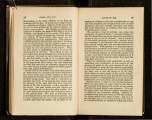
Show 100 LOSING THE POINTS. that are strange to us, we sometimes cannot con .. I vince ourselves that the south is not the north, although the mid-day is shining there in all its splendour. There is no man, who has walked much about among lonely places, that has not ofte:n e~perienced that; and, therefore, though our obJect IS only to cross a portion of country by the short~st road, observatiOn is the most certain means by whiCh we can attain that object; and thus, one of .the earliest lessons that the observer of nature reqmres is "how to keep his way." Take the most intelligent friend that you have in or n~ar London, who has lived within view of a certam reach of the Thames till he has associated the direction of the river th~re with the other points of the horizon, put a compass in your pocket and walk with ~im along the bank of the river from Vauxhall to Wmdsor, or for any other considerable distance,. and keep him engaged in conversation all the wh.Ile, so t~at he should take little notice of the obJects whiCh he passes, then stopping at any plac~ you will, ~he~e there is only a small straight portiOn of t.he nver In view, ask him its direction anrl get lns answer. Then pull out your pocket compa~s and learn the true direction by that ; and you Will find that your friend's notion has little, if any, reference to that, but that with him the Thames always runs in the same direction as it does within his own "reach." Even you yourself, although you. may try to guard against it, will find that, as the nver bends gently northward or southward, your compass becomes false both ways by turns, and that the. very sun shifts about in the heavens, gets sometimes very rapidly westward, and at other times retrogrades eastward. Where there are pathways people can '.' keep the rut," anrl hold on their journey and arnve at t~e end of it with certainty, just as the dull plod on m life by imitating others; but in the new, whether on \ THE BEATEN TRACK. 101 a journey in life or in action, there must be. observation and careiul and connected observatwn, all the w'ay from that w~ich was _famili~rly k~own before otherwise there Is no secunty agamst failure. The ~an who "loses the points," or gets the "compass in his head" reversed, may always be as.su:ed ·that he does so in consequence of some deviatiOn or double that he made, and made just from want of attention to what he was about. As to the fog, there sicrnifies little whether that is in the atmosphere 3r in the mind; and, indeed, it is far more dancrerous in th.e latter case,-the fog of the moor may go off without our attending to it, or we mB.y get out of it; but we never can escape fro!ll the fog of our own inattentive and unobservant mmds. That there are some principles by which we can find our way, in cases w~ere. we can neith~r see it with our eyes, nor grope It with our hands, Is a fact; and any one who attentively observes the footpaths that are formed on a common or field, where there is no hedge, or any thing to determine the direction, may, in part at least, see and understand the reasons. If we can get instruction from the mere fact of treading a pathway acros~ the. comm<?n, we surely need not despair of gettmg mstructwn fro~ any thincr that we choose to observe; and that will be another argument for attending to small and everyday matters,-matter~ that lie within om~ observation and may exercise our thoughts Without expen~ e or loss of time. Why should there be a trodden path at all? is the first question. People do not follow each other by the scent, as dogs follow 7their prey; and their persons, legs,_and disposit~~ns , differ: so that they cannot have mther the abihty or the desire of going all the same way. But quadrupeds, such as sheep, rabbits, and hares, form tracks; and so do some insects-ants for instance. The tracks of ants are nearly straight lines; and those of quadrupeds are much straighter than human 12 |