| OCR Text |
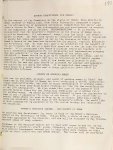
Show The NEVADA Commission gave strong support to the campaign for an increase in the statutory minimum wage and its extension to men. The recommended law was approved, as were improvements in vocational educa tion and basic adult education which had also been recommended by the commission. In NEW YORK, where the recom mendations of the Governor's Com mittee on Education and Employment given to various state departments to be implemented administratively, improvements are being made directly were traceable to the committee's findings. This is particularly true in the Depart ment of Education and in the Women's of the Department of Com Program merce. NORTH CAROLINA and PENNSYLVANIA. have found a way to increase the degree of representation on their commissions. The North Car olina Council of Women's Organiza tions (representing 34 statewide groups and over a half-million women) has ap pointed a special committee to help the new seven member commission on the Education and Employment of Women implement the recommendations in the first commission's report. In Pennsyl vania, the commission called together representatives of statewide organiza tions in which women made up the total or a large part of the membership. This resulted in the establishment of a Both committee which currently represents 46 different groups, to be used as a two for getting problems to the. way channel commission and for implementing rec ommendations. The NORTH CAROLINA Com mission also functioned 1 12 actively on the legislative front, supporting an increase in minimum wage rates which was ap proved by the legislature, and recom mending also the establishment by law f .a permanent commission on the Ed ucation and Employment of Women. This was also. approved. The NORTH DAKOTA Commis an especially high record of achievement in securing passage of its to the legislature. These sion had major proposals included an equal pay law, extension of the existing minimum wage law to and im men and lifting of wage rates, and proved radio, facilities in education. In addition, this TV. commission held a correpndene conference, cospon- sored by the Women's Bureau, to dis the findings of its committees with women from over the state and to scure their assistance for implementa non of future recommendations. cuss In OKLAHOMA, the commission's recommendation for passage of mini mum wage and equal pay laws met with success, although in a somewhat modified form. The OREGON Commission held a statewide conference, cosponsored by the Women's Bureau, at which the re turn to the work force of mature women, and the guidance and training of both girls and women were special points of emphasis. The TENNESSEE Commission has established a Speakers Bureau to meet with women's and civic groups to dis cuss the program and findings of the commission and to help implement its recommendations. The UTAH Commission was suc cessful in having its recommendations for improving minimum wage orders accepted; and although it did not get its original equal pay bill passed, it did help to have incorporated in the Fair Employment Practice Act a provision establishing the principle of equal pay. The RHODE ISLAND Commission instrumental in the establishment of a Degree Program at the Providence Campus of the University of Rhode Island especially to meet the needs of women. The time required for a Bach This commission was also particularly successful in its encouragement of the appointment by the Governor of qual ified women for policy-making state POSlOOns. Among those persons so rec ognized were two members of the Utah Commission, one going to the Utah Legislative Council, one as the first to the five-member woman appointee State Building Board. In addition, one was woman appointed to the State Human Relations Committee; one to the Commission on Uniform State Laws, and several to Boards of Trustees of institutions of higher learning. sity. The VIRGINIA Commission taped and ran a thirty minute television show on the Status of Women in Virginia, and also secured excellent newspaper and TV coverage for the commission's Printing of the PENNSYLVANIA Commission's report will be financed by a $10,000 appropriation by the state legislature. was elor's Degree was extended to about five years, and flexibility was introduced at other needed' points. The program developed as the result of the Status of Women Conference at the U niver The SOUTH CAROLINA Commis sion has felt the need for getting an overall view of various aspects of wom en's status, and has conducted statewide surveys of educational opportunities, of women's attitudes on vocational educa tion and training, and on attitudes of volunteers. SOUTH DAKOTA Commis sion met with success in its efforts to secure better vocational education facili ties. Its recommendation for an equal pay law was given heed, and although not passed by the legislature, a Legisla tive Research Commission was ap pointed and hearings held, with the possibility of passage at the next session. The commission was a major force also in securing the passage of enabling legislation so that the state might take advantage of Federal funds for expand ing day care, foster home care, and care for unwed mothers. It has put much emphasis also on insuring that Indian children and adults alike are brought into the education, employment, Head Start, Job Corps, and similar programs. The . activities in general. The WEST VIRGINIA Commission cooperated with the State Department of Labor, the AFL-CIO, and other in terested groups in a successful legisla tive campaign which led to the enact similar ment of an pay law. A effort to equal promote minimum wage leg islation was defeated only by a narrow to margin, and the commission plans this toward to work continue objective during the coming session. In WISCONSIN, the commission has asked other state commissions (The Aging, Migratory Workers, etc.) to ap of to the Status Women Commission. It is taking an active part in current discussions be tween two sections of the State Indus point representatives trial Commission concerning the effect of Title VII on Wisconsin's laws affect The ing the employment of women. Wisconsin Commission during this pe riod held its Second Annual Confer ence on with the Women, cosponsored Women's Bureau and a number of state agencies. 0 |