| OCR Text |
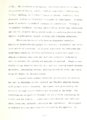
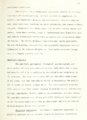
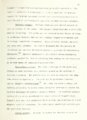
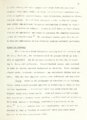
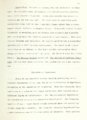
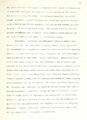
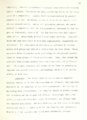
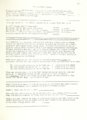
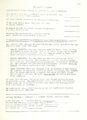
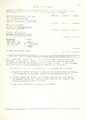
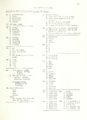
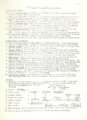
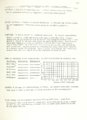
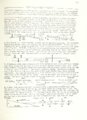
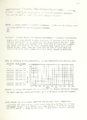
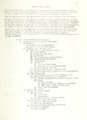
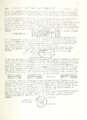
Show 34,5 1: Design OPI'IO t, arrt eres t an exper-iment (' project in earth <::C1' er.ce, 1 ect a question (1) JC be answer-ed '.rithoul too such d.iI'f i lCU It-Y· 2 () Deduce s0r;e. hypotheses that mh_l;t exp Lai n l' t (3) C2,r-;;[ully plan a procedur-e to control vanables for testing the hypot.hcses Collect data th a- s you, t.hat one or ,- can <, , - (11-) , merit and graph your results. Complete 0Pl'ION,2: one proceeaure you used. 1-5<> (5) Dri3:.v by ccnc Ius i.ons _vas - t0 - I;.h at car eru.i has been mini-experiment from each of these fields Shov your data and then explain it. measur-e .... proved, Describe the .. _ @I{()H,( 1. HOI-! much does change each day during the week? from the same locat1on for several days to obtain an sunse 2. How sky 3. How ITiu?h does the ,?any meteors fall from the uS1ng stars 10 mi.nut es or (Carefully average ti..ne sunset daily difference.) move each day? (Heasure the angle of moveacnt in the else time moonrise and convert to degrees.) moon or more on sky in a typical hour? (Observe· the skr for night. Count the meteors and multiply.) moonless a 4. Rm-J much does how many a planet move in one week? (Select a bright planet and measure degrees it moves in one week using stationary close faint st.ar s ] , 6-10. METEOROLCGY 1. \nat is the average 2. \'!hat is the at the (U se a average.) as determined by a barometer? (Read the barometer Find the pressure difference and convert.) hill. temperature correctly to obtain thermoseter height of hill a and bottom of the top 3. vfnat is the relative humidity leer.... ard side? Use a 4. \'hat is the speed of then measure its wet and a speed on dry cloud for a the readings the ..zindward day, side of week? a then a to surface land? certain a each lake ;,ulb thermometer and the compared across certain hour for gle of view. compared to the appropr-i.at e tables.) (Estimate Graph the height scale.) these to 11-15. HYD::..olOGY 1. H011)' flows down much. wat.er' 2. How much water in a rive: eah mnute? (Detenni?e Cross sectlon lt ath rock and by float1ng objects. the aver-age Compute strlng. s ed iraent, (Take a a 'tleigh the is a river carry'Ing per unit volume? certain volume container and evaporate it. 3. How fast does the tide speed Wave of time. come may in (or require v.aves )? (Determine several trials to be sample x 3ped /ffiln.) of river residue.) distance moved per unit averaged.) soil than compact soil of the same 4. HOi., much faster does wat er infiltrate loose wat.er' and time the movement., ] add type? (Place the soils in tall glasses, 16-20. GEDLCGY fault or joint? (Use a ompass to 1. vlliat is the strike and dip of a rock laye:t line on ::..t a!1d a level to measure dlp.) measure the direction of a level contours eye.height el to yourgradlent.) slope? (Use a level to sight between them. Flgure-the distance horizontal and use a tape get (Profile your soil by digging a hole to 3. HOi;[ thick is the. topsoil and subsoil? teAure 2. How much a hill to color and loose bedrock and noting the horizon 4 • How old is when a rock they lived or changes.) , them fossils in a rock layer and identify one whose age is known, ] 0 another t compare the 1 ayer_ layer? (Find as to |