| OCR Text |
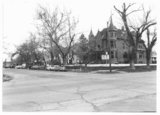
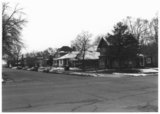
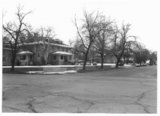
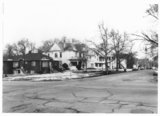
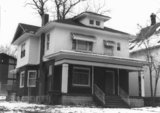
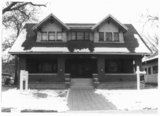
Show NFS Form 10-900-a Utah WordPerfect 5.1 Format (Revised Feb. 1993) OMB No. 10024-0018 United States Department of the Interior National Park Service National Register of Historic Places Continuation Sheet Section No. _8_ Page 10 _____________________Jefferson Avenue Historic District, Ogden, Weber County, UT that time (169% growth from 1880 to 1900). 19 In the mid 1890s, the economy shifted with the "Cleveland Depression," but was booming again by the turn of the century. In response to that depression, the Jefferson District had no new construction from 1895 until 1903. The Sanborn fire insurance maps of 1884 do not show the Jefferson District, possibly due to sparse development. The 1890 maps show the beginnings of substantial buildings. Of the 27 buildings in the district, 14 of them are built of brick. There is only one stone dwelling, and two dwellings show a portion of them being built of adobe. The rest of the structures are frame. There are several small outbuildings, but only six of them are large enough to possibly be carriage houses. The 1906 Sanborn maps show the character of the district that is visible today. In 1903 a new wave of building occurred in the Jefferson District, and with it came a new stylistic change: the Four Square. Thereafter, only one Victorian style residence was built (2683 Jefferson). Three Four Square type houses were built in the district between 1903 and 1905: 607 25th Street, 2627 Jefferson and 2640 Jefferson. While still substantial in size, the Four Square reflected the changing attitudes of the population and the rejection of the Victorian presumptuousness. Beginning in 1906, the bungalow era arrived in the Jefferson District. The shift to the bungalow style of architecture in Utah was a reflection of the phenomenon sweeping the nation during this time: a trend toward efficient, affordable, and relatively simple homes. Bungalows replaced the Victorian cottage as the house for the middle class.20 Eight bungalows (2520 Jefferson, 2546 Jefferson, 2604 Jefferson, 2615-17 Jefferson, 2619 Jefferson, 2656 Jefferson, 2659-61 Jefferson, and 2687 Jefferson) were built between 1906 and 1915. After 1915, only one residential dwelling was built (2583 Jefferson, c. 1949). However, two churches were built on lots previously occupied by residences. A First Baptist Church in the English Palladian style was built between 1923-26, on the southwest corner of 25th Street and Jefferson Avenue. It replaced an earlier residential structure. Another church, the First Methodist Church, which was built in 1928 on the southeast corner of 26th Street and Jefferson Avenue, also replaced an earlier structure that appears on the 1890 and 1906 Sanborn maps. The original structure appears to have been a square duplex of undefinable style. Jefferson Avenue is a wide residential street that is well-landscaped and lined with mature trees. It was a grand avenue of mansions for several of the city's aristocracy. House building moved from west to east up to the bench, and traveling east along any of the centrally located streets, the pattern of evolution is visually evident in the stylistic changes represented. Jefferson Avenue could be considered one of the first "waves" of building that steadily progressed east from the heart of the city. As the aesthetic tastes of affluent citizens changed, so did the location of 19Ogden City Statistical Review, 1991, pg. IV-2. 20 Cater and Goss, Utah's Historic Architecture. X See continuation sheet |