| OCR Text |
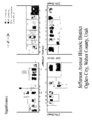
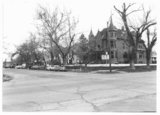
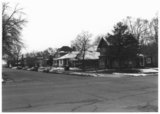
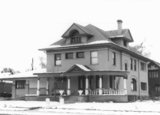
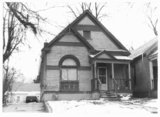
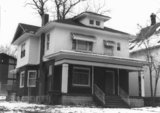
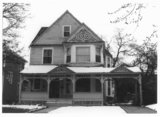
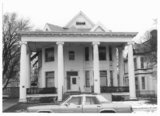
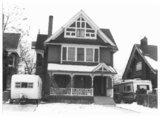
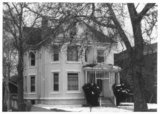
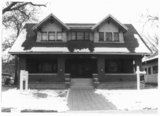
Show NFS Form 10-900-a Utah WordPerfect 5.1 Format (Revised Feb. 1993) OMB No. 10024-0018 United States Department of the Interior National Park Service National Register of Historic Places Continuation Sheet Section No. 8 Page 4 Jefferson Avenue Historic District, Ogden, Weber County, UT Narrative Statement of Significance The Jefferson Avenue Historic District is both historically and architecturally significant. It is primarily a residential neighborhood constructed between 1882 and 1928, with the majority of the houses constructed between 1882 and 1910. These buildings reflect the rapid growth and prospering economy of Ogden during the c.1880 to 1900 period due to the Union Pacific and Central Pacific railroads and the industries they helped prosper. The houses in the district were mostly built by affluent businessmen in the popular styles of the time. The district's location in Ogden is also significant as one of the first waves of building up the east bench. The truly imposing structures, that date from this period, hint at "well-to-do" first owners, but the mixture of upper class, upper middle class, and middle class families is also illustrated, not only in some smaller Victorian period homes, but also in the number of early 20th-century style homes built in the district. History of Ogden Miles Goodyear, the first European-American settler to the Ogden area, built Fort Buenaventura as a fur trading post in 1845. The Mormons arrived in Utah in 1847 and immediately began establishing settlements in promising locations, including Ogden. The general conference of the Church of Jesus Christ of Latter-day Saints (Mormon or IDS church) voted in 1850 to create a permanent city on the site, naming it Ogden after Peter Skene Ogden, a fur trapper who had been in the Ogden Valley in 1825. The city was laid out in a formal grid pattern typical of Mormon communities in Utah. Although Ogden was to remain a predominantly agricultural community, settlers were encouraged to build houses on the city lots along with permanent public buildings. Lorin Farr was Ogden's ecclesiastical leader and first mayor. The population in Ogden grew slowly from about 1,100 in 1850 to about 1,500 in 1860. The Union Pacific Railroad Company built a railroad through Ogden in 1869 as part of the first transcontinental railroad, which was completed in 1869 at Promontory, approximately 30 miles west of Ogden. Once the Union Pacific and Central Pacific railroads joined, Ogden was chosen as the ideal intersection for east-west railroads. Although Corrine, north of Ogden, was a better site geographically for the junction of the north-south lines, Ogden was chosen due to political and financial maneuvering by the LDS church. By 1878, Ogden was recognized as the "Junction City" of the intermountain west, with most passengers and freight traveling through the area stopping there. Despite common belief, the railroad did not immediately change Ogden's landscape and population. Even by 1876, seven years after the coming of the railroad, Ogden was still a small-scale town of primarily frame buildings. Ogden began to expand rapidly in the late 1880s and early 1890s; most of this expansion was due to the railroads which had both freight and passenger lines. The population grew from about 3,127 in 1870 to 6,069 in 1880, and soared to 12,889 by 1890. X See continuation sheet |