| OCR Text |
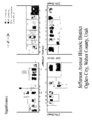
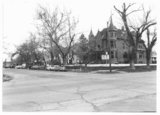
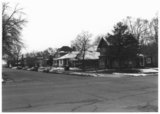
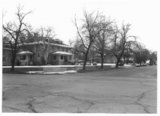
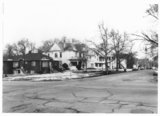
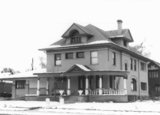
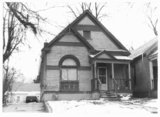
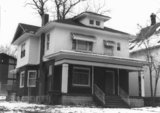
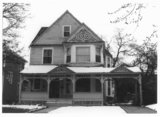
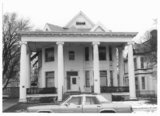
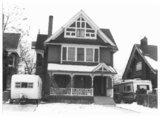
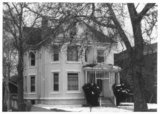
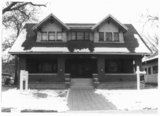
Show NFS Form 10-900-a Utah WordPerfect 5.1 Format (Revised Feb. 1993) OMB No. 10024-0018 United States Department of the Interior National Park Service National Register of Historic Places Continuation Sheet Jefferson Avenue Historic District, Ogden, Weber County, UT Most of the buildings within the district are still used as residences. Two churches, the First Baptist Church (c. 1923-26), located at 2519 Jefferson Avenue, and the First Methodist Church (1928), located at 2604 Jefferson, are still in use as churches today. The predominant original use of the district was as single family residences. Two duplexes were built (5%) and are still used as a duplexes. Most of the original single family residences have been converted to other uses (57%), including multi-family dwellings (45%), service or group homes (6%), and public buildings (6%). Only 9 buildings (29%) are still single family residences. There are also a few apartment buildings in the neighborhood including the Farnsworth (Robin) Apartments (2539 Jefferson) built in 1922. 1 The other apartments are houses that have been converted. The dominant architectural style in the district is Victorian (53%), which was popular during one of the peak growths in the district (1880 to 1900). Most of the Victorian style houses are substantial dwellings, reflecting the economic background of their owners. Victorian stylistic elements in Jefferson Avenue houses include asymmetrical facades, arched windows, patterned shingles in gable ends, projecting bays, and leaded glass windows. Although Victorian houses were popular in Utah through c.1910, only two were built in this district after 1900.2 The transition in style preferences is very visible in the number of early 20th-century style houses built during the next period of building (1900 to 1910). Twenty-five percent (8) of the contributing buildings in the district are built in the bungalow style, 6 percent (2) were built in the Arts & Crafts bungalow style, and 10 percent (3) are the Four Square type.3 While many of these houses are substantial in comparison with the typical houses being built in other areas in Utah at the same time, they are more modest in scale and reflect a more "middle-class" lifestyle than the large Victorian houses of the prior period. The stylistic features include wide overhanging porches, dormers in the slopes of the roofs, geometrically patterned leaded glass windows, and wide eaves. Many of the houses are accompanied by small outbuildings, usually simple frame garages, some of which were built during the historic period, but are no longer considered contributing to the historic nature of the district due to significant alterations that have taken place. Two exceptions should be noted. The house located at 2640 Jefferson (1903), built in the Victorian/Four Square style, has a twostory carriage house connected with it. The Prairie style house located across the street at 2649 Jefferson (c. 1891 and extensively remodeled c. 1914) has a very good example of a one story carriage house connected with it. The Jefferson District retains a high degree of architectural integrity. Thirty-two (80%) of the forty buildings in the district are considered contributing. Of the remaining buildings, only one (2.5%) of them was built out of the period of significance. Seven (17.5%) of the buildings that were built during 1 lt is part of a thematic nomination listed in the National Register of Historic Places December 31,1987. 2 Carter, Thomas and Peter Goss. Utah's Historic Architecture. 1847-1940. Salt Lake City, UT: University of Utah Graduate School of Architecture and Utah State Historical Society, 1991. 3lbid. X See continuation sheet |