| OCR Text |
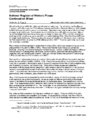
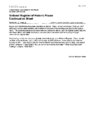
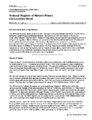
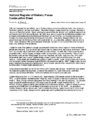
Show NPS Form 10-900-a Utah WordPerfect 5.1 Format (Revised Feb. 1993) 0MB No. 10024-0018 United States Department of the Interior National Park Service National Register of Historic Places Continuation Sheet Section No. _8_ Page _5______________________ Jefferson Avenue Historic District, Ogden, Weber County, UT With the increased railroad activity, due to Ogden's status as a regional transportation hub, came nonMormons ("gentiles" as they were called). This influx changed Ogden forever by bringing a diversity of religious and political beliefs. Ogden was fought over politically by Mormon and gentile groups such as the People's party and the Liberal party. By 1889, as a result of a growing non-Mormon population and political disenfranchisement of polygamous Mormons4, the anti-Mormon Liberal party took control of Ogden's municipal government by winning every city office. One visible change made by this new government was the renaming of the north-south street for U.S. presidents, Jefferson Avenue among them. Many members of the controlling body that made up Ogden's local government over the years lived in the Jefferson Avenue District. In addition to all of the political changes occurring during this time period, Ogden's means of financial growth was changing. Due to the railroad, Ogden was no longer a small agricultural community, "inland town," but a major city of commerce and trade to outside areas.5 By 1889 there were such industries as woolen mills, a broom factory, a vinegar works, an iron works, and three breweries. Many of these businesses, such as flour milling began as pioneer industries. By 1900, many local flour mills were consolidated with David Eccles' Ogden Milling Company which used wheat that came from local farmers. Lumberyards and sawmills also added to Ogden's growth. Again, David Eccles was involved, with his Eccles Lumber Company doing $100,000 in business annually by 1888.6 Ogden's canning and sugar industries also began during this period, and of course, with all of the railroad traffic, there was a need for hotels of which Ogden provided many. As businesses expanded, so did the rest of the city's functions and services. Telephones were added, the telegraph system was expanded, a hospital was established, roads were paved, sidewalks installed, and electricity provided. Permanent schools and churches were also built. Ogden's total population in 1910 was 25,580. Approximately 3,900 people worked for the railroads in 1915. By participating in railroad related industries, many of Ogden' s leading entrepreneurs became wealthy. Many average workers also earned their living working in the same businesses. For example, sugar companies employed about 1,500 people, and mercantile houses employed about 1,100 workers. Much of Ogden's wealth also resulted from the livestock industry. Ogden's railroad business surged during World War I and continued its prosperity and growth in the 1920s. The agriculture industry, however, did not fare so well. Like the rest of the country, Ogden was hit hard by the Great Depression of the 1930s. During this time, passenger and freighting business declined and many of "The Edmunds Act of 1882 and the Edmunds-Tucker Act of 1887 strengthened the anti-polygamy movement, thus weakening the Mormon's politically. Roberts and Sadler, Ogden: Junction City. 5Roberts and Sadler, Ogden: Junction City, 65. 6Roberts and Sadler, Ogden: Junction City, 68. X See continuation sheet |