| OCR Text |
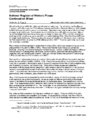
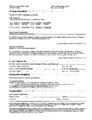
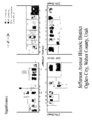
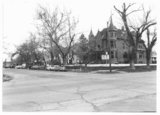
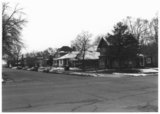
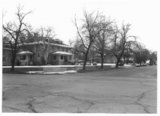
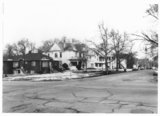
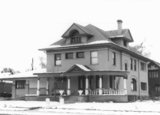
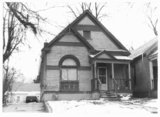
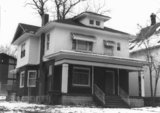
Show NFS Form 10-900-a Utah WordPerfect 5.1 Format (Revised Feb. 1993) OMB No. 10024-0018 United States Department of the Interior National Park Service National Register of Historic Places Continuation Sheet Section No. 8 Page JS.______________________Jefferson Avenue Historic District, Ogden, Weber County, UT Ogden's major industries suffered or went out of business completely. In general, railroad workers with seniority continued working during the Depression, but part-time workers often lost their jobs.7 Today, Ogden remains a relatively healthy and prosperous city, but its condition has little to do with the railroad. Many of the old railroad tracks and structures such as roundhouses, have been destroyed. History of Jefferson Avenue District The Jefferson Avenue Historic District is a residential neighborhood that attests to the rapid growth and prospering economy of Ogden during the decades from 1880 to 1900 by its abundance of substantial Victorian period homes. As in other towns along the Wasatch Front, the preferred residential areas in Ogden have been on the east side, moving farther up the bench as utility services were improved and the population increased. The Jefferson District easily fits into this pattern. It is located only two blocks east of Washington Boulevard, originally Main Street, close to the heart of the city. Although some of the buildings replaced earlier dwellings, most were the first on their lot.8 Conforming to the grid pattern of planning preferred in the Mormon culture, the Jefferson District is in this respect part of a greater scheme. Studies of Sanborn Insurance Maps and the extant buildings in the Jefferson District suggest a progression of phases. It grew from a sparsely settled neighborhood of smaller homes, to denser development and larger houses in the Victorian style. Yet some smaller, more modest dwellings survived and multiplied in the midst of the Victorian presumptuousness, indicating that the area was not exclusively upper class, but that it also was within reach of the middle classes for building or rental property. Unique house specimens are nevertheless an important factor of the district's character. Some architect-designed homes are known (i.e., 2523 Jefferson was designed by William W. Fife, a prominent Ogden architect), while others show the originality and sophistication that suggest an architect's involvement (i.e., 2580 Jefferson and 2504 Jefferson). The Jefferson District could be considered the first "wave" of residential development that marched up the bench east of the main commercial district, beginning with the prosperous economy of the 1890s and continuing until after the end of World War I. When the height of the Victorian period waned and the next generation of the prominent families of the neighborhood moved farther east (e.g., Eccles Avenue Historic District), the demand for housing close to the downtown area increased, and as the larger homes were sold, or the original owners died, the houses were divided into rental units to meet this demand. 7Much of the history for this nomination was gleaned from Jalynn Olsen's, Building by the Railyard: The Historic Commercial and Industrial Architecture of Ogden, Utah, Western Regional Architecture Program, Center for Architectural Studies, Publication No. 7, Graduate School of Architecture, University of Utah, Salt Lake City, Utah, 1998. Other information is from Historic Site reports for buildings located within the boundaries of the Jefferson Avenue Historic District. On file at Ogden City Planning, Ogden, Utah, and the Utah State Historic Preservation Office, Salt Lake City, Utah. 8Sanborn Maps from 1884,1906,1949-50. X See continuation sheet |