| OCR Text |
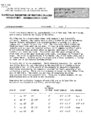
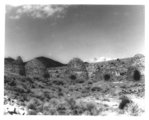
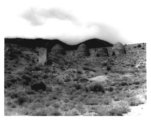
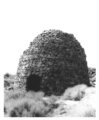
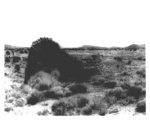
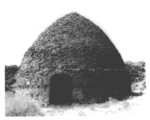
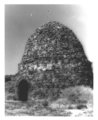
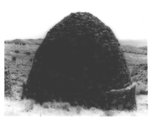
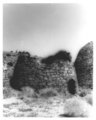
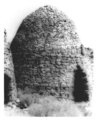
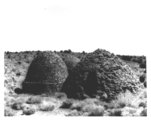
Show FHR-8-300A (11/78) UNITED STATES DEPARTMENT OF THE INTERIOR HERITAGE CONSERVATION AND RECREATION SERVICE NATIONAL REGISTER OF HISTORIC PLACES INVENTORY -- NOMINATION FORM CONTINUATION SHEET ITEM NUMBER PAGE engineer credited with introducing the beehive kiln was J. C. Cameron, in Marquette County, Michigan, in 1868. Cameron, in an article in the Utah Mining Gazette stated that he indeed introduced the kiln, and described them as in a form of "a parabolic dome, with a base of twenty to twenty-four feet in diameter and altitutde of nineteen to twenty-two feet." He estimated the cost at not to exceed $700. 12 These kilns were probably constructed with the use of internal scaffolding against which the walls were laid as they slanted towards the top of the dome. The five Frisco charcoal kilns of the Frisco Mining and Smelting Company were among those described extensively in the 1880 census mineral compendium. That description including a discussion of charcoal burning in Frisco was as follows: The kilns are made of granite float found in the neighborhood and a lime mortar. They are of various sizes, from 16 to 26 feet in diameter. It is the rule in this section to make the height of the kiln equal to thediameter. The thickness varies from 18 to 30 inches at the base and from 12 to 18 inches at the summit. There are two openings, closed by sheet iron doors, one at the ground level, 4 by 6 feet, and the other in the side two-thirds of the distance to the apex, 3 by 4 feet. There are also three rows of vent holes, 3 by 4 inches, near the ground. The lower row is at the surface of the ground. The rows above are 18 inches apart, having vent holes 3 feet apart in each row. The kilns cost from $500 to $1,000 each, and lasted a very long time if used regularly. The 16-foot kiln holds about 15 cords of wood and the 26-foot kiln 45 cords. Sometimes the wood is piled radially, but generally very closely in cord-wood fashion. The wood is all pinon pine, and is cut at all seasons by Mormons at $1.25 per cord. It is brought from 1 to 4 miles by sledges or wagons to kilns for from $1.50 to $2.50 per cord. The kilns are fired in the center at the bottom (though sometimes at the top), and the fire is drawn to the top by leavig a small unsealed space around the upper door. This is then closed entirely, and the fire is regulated by the vent holes. The duration of burning is from three to seven days, and of cooling from three to six days. Charring, which includes packing the wood in the kiln and drawing the coal, is usually done by contract, and costs |