| OCR Text |
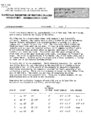
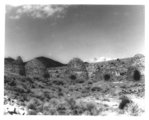
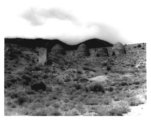
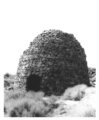
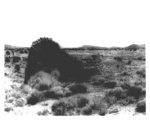
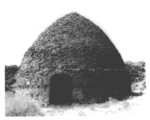
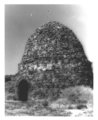
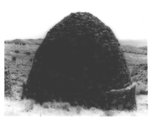
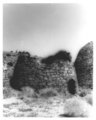
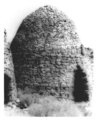
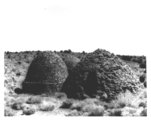
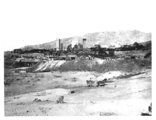
Show FHR-8-300A (11/78) UNITED STATES DEPARTMENT OF THE INTERIOR HERITAGE CONSERVATION AND RECREATION SERVICE HI! NATIONAL REGISTER OF HISTORIC PLACES INVENTORY -- NOMINATION FORM CONTI NUATION SHEET ITEM NUMBER 8 PAGE Frisco's main mines in the late 1870s through the 1880s were the Horn Silver Mine and Carbonate group of mines, the latter being owned by the Frisco Mining and Smelter Company. With the development of these mines, made possible primarily because of the extension of the Utah Southern railroad to Frisco in 1880, came prosperity and growth. The Frisco Smelting Company began expanded construction in Frisco in July, 1877. Corresponding to the successful working of the Horn Silver mine. It was at that time that the smelting works were built, including in all probability, the five beehive charcoal kilns needed to provide fuel for the smelter. 3 The Frisco Smelting Company was headed by W. S. Godbe, manager; Benjamin Y. Hampton, superintendent; and M. Atkins, agent. 4 It was Hampton who supervised the construction of the smelter, which was reported running in September , 1877; 5 again primarily with ore from the Horn Silver mine. In September, 1879 the Frisco Mining and Smelting Company incorporated representing a reorganization of the Frisco Smelting Company. The Frisco Mining and Smelting Company had a capital stock of $2,000,000 in 80,000 shares, with property that included the smelting plant at Frisco, the Carbonate group of mines located about 2-1/2 miles northeast of town, the Cave mine in the Bradshaw district (nearer to Mil ford), and an iron flux mine in the Rocky district. 6 In 1880 the general manager of the company was C. D. Bigelow.' An 1880 report on the Frisco Mining and Silver Company described the smelting plant as a "complete one," containing a Blake rock-breaker, a Number 5 Baker blower, two horizontal boilers, one 40 horse-power horizontal engine, several pumps, a shaft furnace and flue-dust chamber, a reverberatory flue-dust slagging furnace, and five charcoal kilns" adjacent to the works." 8 These are the kilns that remain in Frisco. Charcoal was a necessary fuel for smelting, which made mining more profitable by enabling the mining company to work the ores closer to their working site. In the process of making charcoal "pits" were first utilized. In 1880 pits were still used in the Frisco area, primarily in the Wahwah Mountains, west of town. 9 These were conical-shaped pits in the ground, usually lined with stone or brick. Wood was then put inside, placed on fire, and covered with earth and sod, and allowed to smolder for 15 to 20 days, eventually burning itself out. the product was a black, porous residue of wood with all organic matter removed, leaving almost pure carbon. It would burn in smelter furnaces without smoke, producing an intense heat JO During the 1870s, the trend turned from pits to kilns, constructed of stone or brick. This represented a capital investment and an original cost to the company of from $500 to $1000, but was offset by the fact that it proved more efficient, less wasteful, and produced a higher quality of charcoal. 11 The |