| OCR Text |
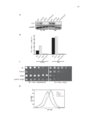
Show 35 Molecular Cell M itochondrial Stress and Protein Degradation recently been shown to have unusually short half-~ves, w hich are dependent upon the cytosolic proteasome (Azzu and BrMd, 2010; Azzuet aI., 2010). TheOSCP subunit of the mitochondrial com plex V ATP synthase has also shown to be ubiquitinated and degraded by the cytosolic proteasome (Margineantu et aI., 2(07). It is possible that a mitochondrial retrotranslocatio n system, analogous to that of the ER in ERAD, might extrude proteins for degradation in the cytosol. Finally, the aberrant cellula- physiology of the vms16. mutant suggests that t he Vmsl protein is req uired for maintenance of mitochondrial f unction. The loss of Vmsl causes a marked time-dependent fail ure of mitochondrial respiratio n. Concurrently, we also observed an increase in oxidative stress and its damaging effects. Ukely as a direct consequence, the vms16. mutant exhibits progressively more pronounced cell death in static culture. Interestingly, these phenotypes are strikingly similar to that observed for the S565G mutant of Cdc48 (Braun et aI., 2006; Madeo et aI., 1997), w hich fails to stably interact with Vmsl. Therefore, two independent genetic manipulations, mutation of Cdc48 and deletion of Vmsl, that prevent the Vmsl-dependent reg ulation of Cdc48 both cause ceR death with sinilar mitochondrial sequellae. The importance of mitochondrial protein quality control for mitochondrial function and healthy ~fe span has been recently emphasized by studies of the mitochondrial matrix Lon protease (Luce and Osiewacz, 20(9). Based on these genetic and biochemical connections, we propose a model wherein mitochondrial stress causes the recruitment of a subpopulation of Cdc48 and Npl4 to mitochondria through their interaction with Vmsl (Figure S7E). Wesuggest that the Vmsl-dependent translocation to mitochondria enables Cdc48 and its cofactor Npl4 to perform a function on mitochondria that is similar to its function in ERAD. In the absence of Vmsl, damaged, misfolded, Md ubiquitinated proteins accumulate, causing progressive mitochondrial dysfunction and eventually cell death. These data a nd the high degree of conservation t hroughout eukaryotes suggest that Vmsl performs similar functions in higher eukaryotes. We propose that Vmsl is a component of an evokrtionarily conserved system for maintaining mitochondrial functio n throug h protein quality control. In its absence, progressive mitochondrial dysfunction causes shortened life span as observed in yeast and worms. Due to the central role for mitochondrial dysfunction in age-related human diseases, including neurodegenerative diseases, we consider it likely that alterations in Vmsl expression, activity, or associations would impact the incidence of such pathologies. Indeed, mutations in vep, the human ortholog of Cdc48, cause progressive musde weakness and frontotemporal dementia ('Natts et aI., 2004; Weihl et aI., 2(09). Of more direct interest, a locus conferring susceptibility to Alzheimer's disease has been mapped to human chromosome 2q (Holmans et aI., 2(05), with a second study mapping susceptibility to the immediate vicinity of the human VMS1 ortholog (Scott et aI., 2(03). It wi. be important to defne whether these susceptibiHty loci are related to alterations in Vmsl function. A more detailed understanding of the Vmsl system could aid in understMding the mitochondrial etiology of disease and the cellular systems to prevent it. EXPERIMENTAL PROCEDURES Fluo ... scence Microscopy Thevm$loI. stra in was trM sf<rmEKIw l hbolll pVMS1-GFP (er pVMSl deletion mutaflt-GFp) I!fl(I p""o-RFP pIa$mi(!$. To test the effect of mpamy:: in treat· ment on Vmsl Iocalizalictl, $Im in$ _e grown to 1Tid-ic9 phase at 30'C in SO medium lacking beth ....adI Md leucine, l1eatedwittl veh iclEo (r mpamy:: in (200 fl!)Im ~ fer3/'r, Md mage(! \l$ing a Zei$$Axk>pI>Yl2 m aging /Ti(:o"OllOOP'" (Ca-lZei$$). Hydrogen pelOxide (3 roM t;>r eittler90 m in [V111$1 Iocalizaticl'l] (r 3 hr [COC48 bcalization]) , M OO1y:: in A, oIigcmy<i'l, CCCP, FCCP (10 J.M f(r 3 Iv), and stationary phase experimel1l$ were dooEo ethefWise identically. F(r Cdc48 Md NpI4localizaticl'l, lIle WT Md """$101. strains expressing C-teml inally GFP·tagged COC48 (r Np14 from lIle native CDC4lJ er NPf..4 Iocus_e tleatedasatxwe. M~odlO'ldriailocalization was quantif>EKlusing ImageJ $Cfl __e in a blinded mMne •. ThEo GFPs;gna1intell$ity lIlat overIappeod wittl m~o-fIR' (dEo$ignated m~odlondria) was QUMtif>EKl. Avemge total cellular GFP siJtlal intensity was al$O quantified f(r each eeM. M~odlO'ldria l localizat ion was expressed as a ratioof mtochondria llycolocaliz$d GFP and tota l cellular GFP. Yeast Vmsl Tandem Affinity Purification P ...ification Tandem affJl ity PUrifICation (TAl') p!.rifocati<:rl was per/(:m1ed as previously dEo$Cribed (Puig etal., 2001~ The """$101. $Imin , trMSf(:m1edwittl C-temlinally TAP·taOOed Vmsl C()(l$lIUCi undEorllle natWe IiMSI premoter, was groom to late log phase Md harvested. Cleoaled I;$ateswere geoemted Md in(:lbated wittllgG..agarose beads fer 4 hr at 4' C, washed, M dtleatedwith TEV protease f(r2/'r at 17· 0. The TEVcleoavage eluate was lIlen in(:wated wittl calmodu lin beads f(r 2 /'r at 4' C Md lIle fJ'lal eluates _e obtained with EGTA elution. Eluates _e lIlen Malyzed by SDS-PAGE and COOm8$$iEo blue sta ining. The unique bMds detected WElle identif""d by LC-M&MS. F(r negative control, JRY4 72 $1m .. trall$formedwittl empty vecter was M aIyz$d in paralle l Fzol and CPY' Degradation AsSllY WT, vm$loI. , M d ufdl-I strain$ tmll$fOmled with eittler pRS414.f"ZOI-HA (r pRS414-CPY'·HA COll$truCI _e groom to log phase Md treated wittl 0.1 mglm l cy::loOexmidE!. For each OO1e point, lIle $'I/1lEI fk,Jmber of cells was harve$led, wa$he(!, and ¥sed fer each culh.re as de$(:ribe(l (Kushnirov, 2000) . Each Iy$ate was then $\.i)j!:oCled to WEI$lenl blotting \l$ing anti-HAand porin M tbX!ie$. ThEo levels (1 Fzol-HA and CPY'·HA were llOmlalized to that (1 porin Md P!1<1 in lIle $3t11e $3t11p1Eo, rEl$pE!(:tively. Note that cycIo/'Iex· midE! C3I,I$EIS VI11$I trMslocaticl'l to mtochorldria. Tandem Affinity P ...ification and Immunoprecipitation fn>m Mammalian Cells C2C12 cells stably expre$$ing an empty integration cassette (r mOU$El Vmsl (NM_026187.4) wittl a C-temlina l Rag-HA tag (.ACOOATCCAGCCGCCOACT ACANJGACGACOATGICAAAGCCCTOOCCTACCCATACGATGTGCCAGAT TACGCT) WElle grown t09O% oonnuency. ce lls WElIeIy$ed in bullercO'ltaining 40 mM HEPES, 100 mM NeCI, 5 roM Na.P.o " 5 roM 2i1ly::eropho$pllate, 10 mM NaF, 20 J.M znC l", 0.02% 1gepal 630, M d EDTA-tree ~te Pret$I$EI ~hiI)it(rmix (Roche) , at pH 7.5. L)$8tesWElIe cl;'rifoed bycentrifugat icl'l f(r 10 min at 18,000 x g. Vmsl.f"Iag.HA was mlTl,Jnopr~atedfrom $UpematMI$ by in(:watic\'l f(r 2 hr wlh agarose beads pr<l(:()(ljugated to eittler anti-Rag (Sigma , F2426) (r Mti-HA MlibOOy (Sgma, A2095~ F(r lIle TAP of Vmsl , lIle cl;'rifoed Iy$ates from 4 x 10 em di$he$ WElle poole(! and $Ubje(:ted to m m!$l~le(:ipitation by Flag , and lIlen wa$he(! fO<.r times wlh wash buller{ly$i$buffer but wittll20 mM NaCIMdO.l % 1gepal-630). Washed VI11$I.f"Iag-HA was eluted by in(:wation with 250 J'l)fm 3x flag peptidEo f(r 45 m in on ice and lIlen repurif""d by HA, washed two OO1eswittl wash buller, and e luted by incubation wittl 250 ~glm l HA peptidEo f(r45 min at RT. m lTl,J· n~tes WElle $\.i)je(:ted to SOs-PAGE and the Ie$Ultarlt gel was siw",r stainEKI using lIle PiEolCe Silver Sta in t;>r Mass ~ometry (24600 ~ To test whether an intact VIM was leQUired f(r coimm!$l~ipitaticl'l of Vmsl· Flag-HA and p97 , ~xes were pu lled down by Flag and eluted by heating wittll.5x Laemmi's buffer. Clarified I)$ates, $.Ipematafll$, I!fl(I eluates_e mm!$l(:t)lotted f(rVmsl \l$ing an affJlity1llFif""danti-1TIOI.I$EI VI11$I antibOOy 478 Molecular CelI 4Q, 465-460, November 12, 2010 C2010 Elsevier Inc. |