| OCR Text |
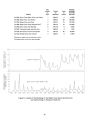
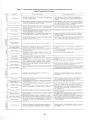
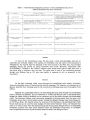
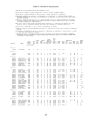
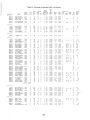
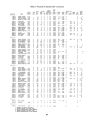
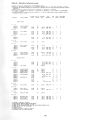
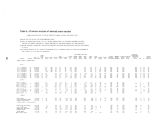
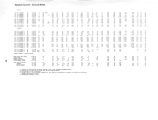
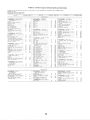
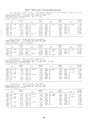
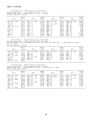
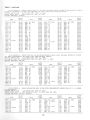
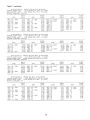
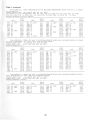
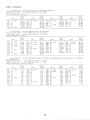
Show indicate that the maximum thickness of the unconsolidated deposits may exceed 800 feet locally ( see appendix, p. 57). The material is poorly sorted, and because there are no well- defined beds of material of very low or very high permeability, the unconsolidated valley fill can be treated as a single, essentially homogeneous, water- table aquifer. Aquifer characteristics.- The calculated hydraulic conductivity of the aquifer in Heber Valley is about 50 ft3/ day/ ft2 ( cubic feet of water per day per square foot), and the transmissivity is in the range of 6,700- 20,000 ft3/ day/ ft. These values were calculated using values of specific capacity of wells obtained from drillers' tests and using the value for ground- water accretion to Deer Creek Reservoir calculated on page 8. Conventional aquifer tests were not made because the valley contains no large- capacity wells. Drillers' reports for 35 wells in the valley include the results of pumping or bailing tests, generally of 2 hours duration or less ( table 3). The specific capacities determined from these tests ranged from 0.2 to 25 gpm ( gallons per minute) per foot of drawdown. Because the specific capacity of a well is greatly influenced by the well construction- thickness of aquifer penetrated and open to the well, method of finish, method and amount of development, and a host of other factors- as well as the duration of the test, the largest specific capacities are probably most indicative of the potential of the aquifer. The largest specific capacities of wells in Heber Valley ( 25 gpm per foot of drawdown) were used to calculate the aquifer transmisivity by the method of Theis and others ( 1963); the calculated transmissivity was about 6,700 ft3/ day/ ft. The calculated ground- water accretion to Deer Creek Reservoir is 47,000 acre- feet per year ( p. 8). Using Darcy's law in the form: T= 119.4Q/ IL where Q is the ground- water discharge ( 47,000 acre- feet per year), I is the slope of the water table near the reservoir ( 0.02 foot per foot), and L is the length of the reservoir shoreline adjacent to the valley fill ( 13,900 feet), the transmissivity, T, is calculated as about 20,000 ft3/ day/ ft. The specific yield of the aquifer material was estimated from drillers' logs as follows: Each logged material was assigned a value of specific yield and this value was multiplied by the percent of the total depth logged as that material; the resulting figure was the weighted specific yield for the given material in that hole. The weighted specific yields of all the materials reported in each log were summed to give the average specific yield of all the material drilled. The values of specific yield assigned to the various materials reported by the drillers were values that have been determined largely by hydrologists in other areas and the interpretation of drillers' terms followed the schemes summarized by Johnson ( 1967, tables 17 and 24). The specific yield of the upper 30 feet of the aquifer material was estimated from 20 logs; the values of specific yield ranged from 8 to 20 percent and averaged about 14 percent. The specific yield of the total thickness of material penetrated was estimated from 17 logs of the deepest wells in the valley. The total depths of the wells ranged from 100 to 225 feet and averaged 144 feet; the values of specific yield ranged from 7 to 21 percent and averaged about 12 percent. Accordingly, the value of 14 percent ( for the upper 30 feet of the material) was used to compute annual recharge, and the value of 12 percent ( for the total thickness of the valley fill) was used to compute the amount of water in recoverable storage in the aquifer. 26 |