| OCR Text |
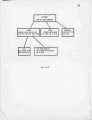
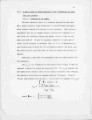
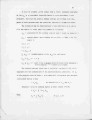
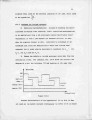
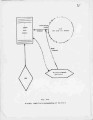
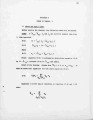
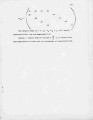
Show 84 a) one CPU b) core memory c) drum (capacity supposed to be infinite) d) a channel between core and drum A program might be in four possible states: 1) on the drum, 2) being brought into core, 3) in core, waiting for or using the CPU, or waiting for an absent page, 4) being swapped out of core, to the drum. An "external scheduler" decides which programs are candidates to be brought into core, and among those which arc in core, which one gets the CPU, or which are candidates to be swapped out. A program is considered to be in core when a certain set of pages is in core (this set might be the entire program). Programs are sup-posed to be small enough so that their pages can be retrieved entirely in one drum rotation (if there is not conflict). A conflict occurs if two orograms, while both are being brought in, happen to have a page on the same sector of the drum. The swappor is an algorithm which har; to decide, at nach sector of the drum, which page should be transferred. It might do either a read, or a write. With Van Tuyl's algorithm (hereafter called "tlv^ Berkeley algorithm"), pages which are not dirty (not written on while in core) , do not need to be written on feha drum. Van Tuyl simulated his algorithm with the assumption that halt of the pages cf each pro-gram are dirtied while in core. |