| OCR Text |
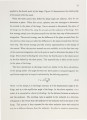
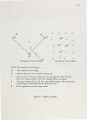
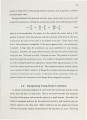
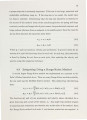
Show 47 It is also not possible to adjust the hinge centered at P3 , doing so would affect more points outside the refined area. No reasonable solution was found for this particular difficulty, and thus no solution is applied in eplastics under the assumption that the hinges will continue to move the endpoints toward the same angular relationship. 7 .2.3 The History Mechanism The B-spline refinement process poses a problem with respect to the eplastics intersection detection and resolution methods: points move abruptly from one time step to the next time step. The previously described intersection resolution technique was to move points back to their location before the current time step to ensure nonintersection. Now this cannot be done, because the points have moved away from their previous paths or the points did not exist before the current step. The solution is a history mechanism that moves, back in time, those points that existed before the refinement: back to a time at which refinement does not cause the refined mesh configuration to intersect with the static surface. The modeling proceeds from this time. If the draping surface is initially defined to intersect the static surface, there is no time at which refinement can occur and the history mechanism fails. 7.2.4 Error Control After Refinement After refinement of the mesh and the physical properties of the constraints, the value of ~tis modified to ensure the error of integration does not increase. There are two basic considerations: a change in the accelerations in the next time step and the expected future change in the magnitudes of forces as a result of having shorter springs and hinges. From equation 4. 7, the following relationship is derived |