| OCR Text |
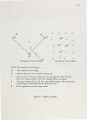
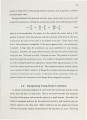
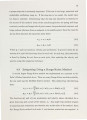
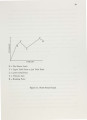
Show CHAPTER 5 PLASTICITY Nowhere does one find perfectly elastic materials. At some point, any -material can be stretched beyond its capacity to return to its original state. Such a state is called a plastic deformation. The study of plastics is a natural extension to the study of elastics and a simplified plastic model is the final concept added to this model. The volume of work that has been directed at the study of plastic deformations is immense. It is a realm that has been studied for many decades by mathematicians, physicists, civil, mechanical and materials engineers. Early materials engineers, not having most of the theoretical models that exist today, relied on the accumulated knowledge and rules of thumb gained through extensive materials testing. From this testing, a standard model evolved that described material properties. Two important quantities, stress and strain, were developed to describe the state of a material at a given moment. Simply speaking, stress is the amount of force being applied to the material and strain is the amount of deformation of the material. These quantities are plotted against each other in "stress-strain" graphs that represent the result of applying a force or "load" to a material. The simplest version of such a graph, one continuous pull on a piece of material, is shown in Figure 5.1. This graph is representative of most materials, although many do not have a lower yield point and for them the graph increases from the upper yield point to the ultimate load. Representation of the plastic state of a spring or hinge is based on the five key values shown. |