| OCR Text |
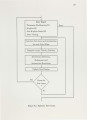
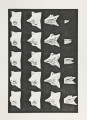
Show 34 other where points from each of the two surfaces occupy the same location and the user wants the surfaces to be joined, coalescing is a way to make that connection. During the coalescing of points, it often happens that the automatic creation of springs causes two springs to each have the same endpoints. Checks are made to ensure that this does not happen and when it does, one of the springs is eliminated from the mesh. Due to the expensive nature of the comparison, coalescing is usually turned off. The user needs to specify when it is to take place. 7.2 Refinement Refinement is now introduced into eplastics. Refinement is used in eplastics to relieve the modeler of the duty of specifying all the degrees of freedom that will be required of the surface to be modeled. Only those portions of the mesh that need the extra degrees of freedom are refined, such as the portion of the mesh that touches a static object. Automatic refinement also allows eplastics to model a smaller set of points and constraints until refinement is required, allowing for faster modeling time until refinement takes place. When refinement takes place, there are two issues that must be resolved: the Bspline refinement and the refinement of the physical properties of the model. When a B-spline surface is refined, the surface remains the same shape but the coefficients in the refined mesh have changed and the mesh has one more row or column of mesh points. This allows the modeler to create a wider range of surfaces by giving the modeler more flexibility in changing the surface in ensuing modeling operations. In eplastics, the notion of refinement of the physical constraints is sirilllar: the overall physical properties of the mesh are maintained while additional point masses and constraints are created to give more flexibility to the mesh. However, by modeling the physical properties at discrete locations in space (the control points), the physical model is only an approximation to the physical properties of the continuous |