| Title |
Frederick T. Baird, Provo, Utah: an interview by Benjamin Bahlmann, August 30, 2002: Saving the Legacy tape nos. 528 & 527 |
| Alternative Title |
Frederick T. Baird, Saving the legacy: an oral history of Utah's World War II veterans, ACCN 2070, American West Center, University of Utah |
| Creator |
Baird, Frederick T., 1924- |
| Contributor |
University of Utah. American West Center; Bahlmann, Benjamin J. |
| Publisher |
Digitized by J. Willard Marriott Library, University of Utah |
| Date |
2002-08-30 |
| Date Digital |
2015-12-16 |
| Access Rights |
I acknowledge and agree that all information I obtain as a result of accessing any oral history provided by the University of Utah's Marriott Library shall be used only for historical or scholarly or academic research purposes, and not for commercial purposes. I understand that any other use of the materials is not authorized by the University of Utah and may exceed the scope of permission granted to the University of Utah by the interviewer or interviewee. I may request permission for other uses, in writing to Special Collections at the Marriott Library, which the University of Utah may choose grant, in its sole discretion. I agree to defend, indemnify and hold the University of Utah and its Marriott Library harmless for and against any actions or claims that relate to my improper use of materials provided by the University of Utah. |
| Spatial Coverage |
Germany |
| Subject |
Baird, Frederick T., 1924- --Interviews; Veterans--Utah--Biography; World War, 1939-1945--Personal narratives, American; World War, 1939-1945--Military operations, American; World War, 1939-1945--Campaigns--Europe, Northern--Personal narratives, American |
| Keywords |
Army Air Corps; Marines |
| Description |
Transcript (81 pages) of an interview by Benjamin Bahlmann with Frederick T. Baird on August 30, 2002. From tape numbers 322 and 333 in the "Saving the Legacy" Oral History Project |
| Collection Number and Name |
Accn2070, Saving the Legacy oral history project, 2001-2010 |
| Abstract |
Baird (b. 1924) describes his childhood and life on a Utah farm. After enlisting in the Army Air Corps in 1943 and receiving basic training in Texas, he was assigned to Walnut Ridge, Arkansas, as a records clerk, then to Columbus, Mississippi. During December 1944, he was reassigned to the infantry for European duty and shipped eventually near Aachen, Germany, for combat with the 52nd Armored Infantry Battalion, 9th Armored Division, operating from a half-track. He discusses his combat experiences. At the end of the war, was assigned occupation duty in Munich, where he returned to records management with the 39th Machine Records Unit. He was discharged in 1946. Mr. Baird worked thirty-four years for Geneva Steel before retiring in 1984. Interviewed by Benjamin Bahlmann. 81 pages. |
| Type |
Text |
| Genre |
oral histories (literary works) |
| Format |
application/pdf |
| Extent |
81 pages |
| Language |
eng |
| Rights |
 |
| Scanning Technician |
Mazi Rakhsha |
| Conversion Specifications |
Original scanned with Kirtas 2400 and saved as 400 ppi uncompressed TIFF. PDF generated by Adobe Acrobat Pro X for CONTENTdm display |
| ARK |
ark:/87278/s64q9x2g |
| Topic |
Personal narratives--American; Veterans; World War (1939-1945) |
| Setname |
uum_slohp |
| ID |
1030066 |
| Reference URL |
https://collections.lib.utah.edu/ark:/87278/s64q9x2g |
| Title |
Page 61 |
| Format |
application/pdf |
| Setname |
uum_slohp |
| ID |
1030045 |
| OCR Text |
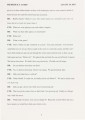
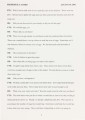
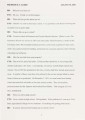
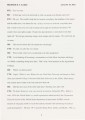
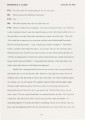
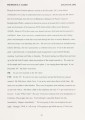
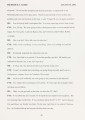
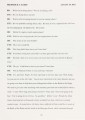
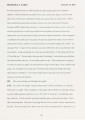
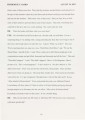
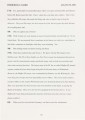
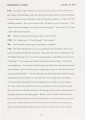
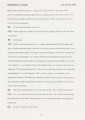
Show where orne of them were hot. They had dug trenche and had !attic -w rk plac d r the top of the trenche where they hot them and the blood would ju t run through th r and run into the trenches. Their a he were in the e urn . Early on, they'd try to find orne of their relative and end them orne of the remain . They took everything they could off of the Jew that wa worth anything. We could mell the tink. BB: Were the bodies still there when you were there? FTE: No, the bodies had all been taken out. But the stink was still there. It wa a urprising thing. I was talking with a young schoolteacher there that was living in one of the towns where had taken over after the war. I asked, "What was it like?" She aid, "Every morning when we came in, it was, "Heil Hitler, Heil Hitler," and, "We are the Master Race," and all of this. I said, "How could you let all of these people go to the concentration camps and get killed, thousands and thousands and all the Jews." She said, "That didn't happen." I said, "That didn't happen? Here's a Life Magazine. Here's pictures of it. This is what happened." "I don't believe it. We don't believe it. We didn't know that." They were just fed lies all the time, those people. They said they didn't know what was going on. They kept their mouths shut. They had to do what they were told to do. I've got a magazine I brought home, with all this other stuff. It says, "Alles arbeit fur Deutschland." Every nation that they took over, Holland, Poland, Luxembourg, all these places I'd been in when we'd been fighting and going through brought people in (to Germany) for the war effort, "Alles arbeit fur Deutschland." Everybody in Europe works for this cause. It was a terrible thing. BB: Did you encounter any SS troops or individual SS? Did you have any experience with them specifically? 61 |
| Reference URL |
https://collections.lib.utah.edu/ark:/87278/s64q9x2g/1030045 |