| Title |
Frederick T. Baird, Provo, Utah: an interview by Benjamin Bahlmann, August 30, 2002: Saving the Legacy tape nos. 528 & 527 |
| Alternative Title |
Frederick T. Baird, Saving the legacy: an oral history of Utah's World War II veterans, ACCN 2070, American West Center, University of Utah |
| Creator |
Baird, Frederick T., 1924- |
| Contributor |
University of Utah. American West Center; Bahlmann, Benjamin J. |
| Publisher |
Digitized by J. Willard Marriott Library, University of Utah |
| Date |
2002-08-30 |
| Date Digital |
2015-12-16 |
| Access Rights |
I acknowledge and agree that all information I obtain as a result of accessing any oral history provided by the University of Utah's Marriott Library shall be used only for historical or scholarly or academic research purposes, and not for commercial purposes. I understand that any other use of the materials is not authorized by the University of Utah and may exceed the scope of permission granted to the University of Utah by the interviewer or interviewee. I may request permission for other uses, in writing to Special Collections at the Marriott Library, which the University of Utah may choose grant, in its sole discretion. I agree to defend, indemnify and hold the University of Utah and its Marriott Library harmless for and against any actions or claims that relate to my improper use of materials provided by the University of Utah. |
| Spatial Coverage |
Germany |
| Subject |
Baird, Frederick T., 1924- --Interviews; Veterans--Utah--Biography; World War, 1939-1945--Personal narratives, American; World War, 1939-1945--Military operations, American; World War, 1939-1945--Campaigns--Europe, Northern--Personal narratives, American |
| Keywords |
Army Air Corps; Marines |
| Description |
Transcript (81 pages) of an interview by Benjamin Bahlmann with Frederick T. Baird on August 30, 2002. From tape numbers 322 and 333 in the "Saving the Legacy" Oral History Project |
| Collection Number and Name |
Accn2070, Saving the Legacy oral history project, 2001-2010 |
| Abstract |
Baird (b. 1924) describes his childhood and life on a Utah farm. After enlisting in the Army Air Corps in 1943 and receiving basic training in Texas, he was assigned to Walnut Ridge, Arkansas, as a records clerk, then to Columbus, Mississippi. During December 1944, he was reassigned to the infantry for European duty and shipped eventually near Aachen, Germany, for combat with the 52nd Armored Infantry Battalion, 9th Armored Division, operating from a half-track. He discusses his combat experiences. At the end of the war, was assigned occupation duty in Munich, where he returned to records management with the 39th Machine Records Unit. He was discharged in 1946. Mr. Baird worked thirty-four years for Geneva Steel before retiring in 1984. Interviewed by Benjamin Bahlmann. 81 pages. |
| Type |
Text |
| Genre |
oral histories (literary works) |
| Format |
application/pdf |
| Extent |
81 pages |
| Language |
eng |
| Rights |
 |
| Scanning Technician |
Mazi Rakhsha |
| Conversion Specifications |
Original scanned with Kirtas 2400 and saved as 400 ppi uncompressed TIFF. PDF generated by Adobe Acrobat Pro X for CONTENTdm display |
| ARK |
ark:/87278/s64q9x2g |
| Topic |
Personal narratives--American; Veterans; World War (1939-1945) |
| Setname |
uum_slohp |
| ID |
1030066 |
| Reference URL |
https://collections.lib.utah.edu/ark:/87278/s64q9x2g |
| Title |
Page 22 |
| Format |
application/pdf |
| Setname |
uum_slohp |
| ID |
1030006 |
| OCR Text |
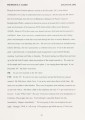
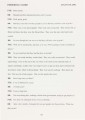
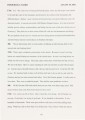
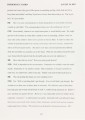
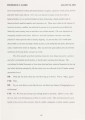
Show tretch of the we t bank, including Stra bourg. Further outh, the German rill held a large alient on the west bank of the Rhine to the Vo ges Mountain centered on th town of Colmar Pocket. All through the fall, the Germans had been gathering their last re erves into three massive Panzer Armies and in the early morning of December 16, 1944, they hurled them into the fifty-mile sector of thinly held American lines in Eastern Belgium and Luxembourg. Thus began the largest and most costly battle of the western front, the Battle of the Bulge. The green and lightly armed US 99th and 1 O(Jh Infantry Divisions bore the initial brunt of the attack. The first waves of German infantry infiltrated easily in the morning fog and snow through the dense forest in which the outposts of 9gth and 1 O(Jh Infantry Divisions were scattered. German tanks poured through a gap in the lines between the two American divisions. The 991h, battered but still intact, was forced back to the north and west widening the gap. Here, reinforced by units rushed down from the north, they held fast creating the "Northern shoulder" of the Bulge, which ultimately caused the Germans to miss their objectives. Disaster overwhelmed the American 1 O(Jh Division just to the south. Three regiments of the 1 O(Jh were penetrated and engulfed. Two of these regiments were cut off and forced to surrender. The third regiment, all that was left of the 1 O(Jh Division, staggered back in disorder to the crossroads town of St. Vith. Here they found the 7th Armored Division, elements of the 9th Armored Division and 28th Infantry Division. They were determined to hold St. Vith as long as possible. The Germans needed to take St. Vith immediately for their overall plan to succeed. The Gls in St. Vith managed to hold the town four days. The German timetable was thrown further behind and the Germans were diverted even further to the south. The delay of those four days had doomed the German offensive to ultimate failure, even as German tanks continued to roll westward toward the Meuse River. The Germans had hoped to 22 |
| Reference URL |
https://collections.lib.utah.edu/ark:/87278/s64q9x2g/1030006 |