| Title |
Frederick T. Baird, Provo, Utah: an interview by Benjamin Bahlmann, August 30, 2002: Saving the Legacy tape nos. 528 & 527 |
| Alternative Title |
Frederick T. Baird, Saving the legacy: an oral history of Utah's World War II veterans, ACCN 2070, American West Center, University of Utah |
| Creator |
Baird, Frederick T., 1924- |
| Contributor |
University of Utah. American West Center; Bahlmann, Benjamin J. |
| Publisher |
Digitized by J. Willard Marriott Library, University of Utah |
| Date |
2002-08-30 |
| Date Digital |
2015-12-16 |
| Access Rights |
I acknowledge and agree that all information I obtain as a result of accessing any oral history provided by the University of Utah's Marriott Library shall be used only for historical or scholarly or academic research purposes, and not for commercial purposes. I understand that any other use of the materials is not authorized by the University of Utah and may exceed the scope of permission granted to the University of Utah by the interviewer or interviewee. I may request permission for other uses, in writing to Special Collections at the Marriott Library, which the University of Utah may choose grant, in its sole discretion. I agree to defend, indemnify and hold the University of Utah and its Marriott Library harmless for and against any actions or claims that relate to my improper use of materials provided by the University of Utah. |
| Spatial Coverage |
Germany |
| Subject |
Baird, Frederick T., 1924- --Interviews; Veterans--Utah--Biography; World War, 1939-1945--Personal narratives, American; World War, 1939-1945--Military operations, American; World War, 1939-1945--Campaigns--Europe, Northern--Personal narratives, American |
| Keywords |
Army Air Corps; Marines |
| Description |
Transcript (81 pages) of an interview by Benjamin Bahlmann with Frederick T. Baird on August 30, 2002. From tape numbers 322 and 333 in the "Saving the Legacy" Oral History Project |
| Collection Number and Name |
Accn2070, Saving the Legacy oral history project, 2001-2010 |
| Abstract |
Baird (b. 1924) describes his childhood and life on a Utah farm. After enlisting in the Army Air Corps in 1943 and receiving basic training in Texas, he was assigned to Walnut Ridge, Arkansas, as a records clerk, then to Columbus, Mississippi. During December 1944, he was reassigned to the infantry for European duty and shipped eventually near Aachen, Germany, for combat with the 52nd Armored Infantry Battalion, 9th Armored Division, operating from a half-track. He discusses his combat experiences. At the end of the war, was assigned occupation duty in Munich, where he returned to records management with the 39th Machine Records Unit. He was discharged in 1946. Mr. Baird worked thirty-four years for Geneva Steel before retiring in 1984. Interviewed by Benjamin Bahlmann. 81 pages. |
| Type |
Text |
| Genre |
oral histories (literary works) |
| Format |
application/pdf |
| Extent |
81 pages |
| Language |
eng |
| Rights |
 |
| Scanning Technician |
Mazi Rakhsha |
| Conversion Specifications |
Original scanned with Kirtas 2400 and saved as 400 ppi uncompressed TIFF. PDF generated by Adobe Acrobat Pro X for CONTENTdm display |
| ARK |
ark:/87278/s64q9x2g |
| Topic |
Personal narratives--American; Veterans; World War (1939-1945) |
| Setname |
uum_slohp |
| ID |
1030066 |
| Reference URL |
https://collections.lib.utah.edu/ark:/87278/s64q9x2g |
| Title |
Page 35 |
| Format |
application/pdf |
| Setname |
uum_slohp |
| ID |
1030019 |
| OCR Text |
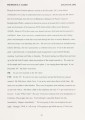
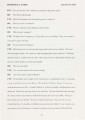
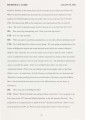
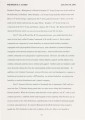
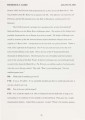
Show FREDERICK T. BAIRD 30 20 2 Northern Europe. Montgomery's British-Canadian 2P'1 Am1y Group wa in the north on the Allied left, in Holland. Omar Bradley 's l21 h Army Group held the Allied center and Dever's (Jh Army Group, composed of US Jlh Army and the French 1 ·r Army, was in the south on the Allied right facing the upper Rhine. Bradley 's 121 h Army Group was composed ofthe US l s1 Army and Patton'sfamous US 3rd Army. Mr. Baird joined the 9th Armored Division which was one of several divisions in the US 1st Army. The 91 h, like all World War II US armored divisions, was subdivided into three main tactical units called Combat Commands A, B, and R (reserve). Each combat command was composed of a tank battalion, an armored field artillery battalion (equipped with self-propelled 105mm howitzers), and a battalion of armored infantry (equipped with armored transports like half-tracks). Armored Divisions and their combat commands were designed for rapid movements. However, the tanks of a combat command could not move forward safely without infantry support and the infantry of a combat command could not move without tank support. Neither tanks nor infantry could move forward without fire from the self-propelled artillery protecting their flanks. In addition to the Combat Commands, armored divisions also had headquarters company, a battalion of mechanized cavalry, a MP battalion, an antitank battalion, an engineering battalion, a medical detachment and a signals company. The grh Armored Division landed in Normandy late in September 1944, and first went into line, 23 October doing patrol duty in a quiet sector along the LuxembourgGerman frontier. When the Germans launched their winter offensive, the gth, with no real combat experience, suddenly found itself engaged in heavy fighting. The Division saw its severest action at St. Vith, Echternach, and Bastogne, but its Combat Commands fought in widely separated areas. Its stand at Bastogne held off the Germans long enough to enable the JOist Airborne to dig in for a defense of the city. After a rest period in 35 |
| Reference URL |
https://collections.lib.utah.edu/ark:/87278/s64q9x2g/1030019 |