| Title |
Frederick T. Baird, Provo, Utah: an interview by Benjamin Bahlmann, August 30, 2002: Saving the Legacy tape nos. 528 & 527 |
| Alternative Title |
Frederick T. Baird, Saving the legacy: an oral history of Utah's World War II veterans, ACCN 2070, American West Center, University of Utah |
| Creator |
Baird, Frederick T., 1924- |
| Contributor |
University of Utah. American West Center; Bahlmann, Benjamin J. |
| Publisher |
Digitized by J. Willard Marriott Library, University of Utah |
| Date |
2002-08-30 |
| Date Digital |
2015-12-16 |
| Access Rights |
I acknowledge and agree that all information I obtain as a result of accessing any oral history provided by the University of Utah's Marriott Library shall be used only for historical or scholarly or academic research purposes, and not for commercial purposes. I understand that any other use of the materials is not authorized by the University of Utah and may exceed the scope of permission granted to the University of Utah by the interviewer or interviewee. I may request permission for other uses, in writing to Special Collections at the Marriott Library, which the University of Utah may choose grant, in its sole discretion. I agree to defend, indemnify and hold the University of Utah and its Marriott Library harmless for and against any actions or claims that relate to my improper use of materials provided by the University of Utah. |
| Spatial Coverage |
Germany |
| Subject |
Baird, Frederick T., 1924- --Interviews; Veterans--Utah--Biography; World War, 1939-1945--Personal narratives, American; World War, 1939-1945--Military operations, American; World War, 1939-1945--Campaigns--Europe, Northern--Personal narratives, American |
| Keywords |
Army Air Corps; Marines |
| Description |
Transcript (81 pages) of an interview by Benjamin Bahlmann with Frederick T. Baird on August 30, 2002. From tape numbers 322 and 333 in the "Saving the Legacy" Oral History Project |
| Collection Number and Name |
Accn2070, Saving the Legacy oral history project, 2001-2010 |
| Abstract |
Baird (b. 1924) describes his childhood and life on a Utah farm. After enlisting in the Army Air Corps in 1943 and receiving basic training in Texas, he was assigned to Walnut Ridge, Arkansas, as a records clerk, then to Columbus, Mississippi. During December 1944, he was reassigned to the infantry for European duty and shipped eventually near Aachen, Germany, for combat with the 52nd Armored Infantry Battalion, 9th Armored Division, operating from a half-track. He discusses his combat experiences. At the end of the war, was assigned occupation duty in Munich, where he returned to records management with the 39th Machine Records Unit. He was discharged in 1946. Mr. Baird worked thirty-four years for Geneva Steel before retiring in 1984. Interviewed by Benjamin Bahlmann. 81 pages. |
| Type |
Text |
| Genre |
oral histories (literary works) |
| Format |
application/pdf |
| Extent |
81 pages |
| Language |
eng |
| Rights |
 |
| Scanning Technician |
Mazi Rakhsha |
| Conversion Specifications |
Original scanned with Kirtas 2400 and saved as 400 ppi uncompressed TIFF. PDF generated by Adobe Acrobat Pro X for CONTENTdm display |
| ARK |
ark:/87278/s64q9x2g |
| Topic |
Personal narratives--American; Veterans; World War (1939-1945) |
| Setname |
uum_slohp |
| ID |
1030066 |
| Reference URL |
https://collections.lib.utah.edu/ark:/87278/s64q9x2g |
| Title |
Page 46 |
| Format |
application/pdf |
| Setname |
uum_slohp |
| ID |
1030030 |
| OCR Text |
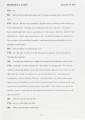
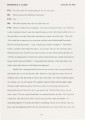
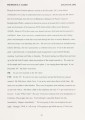
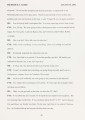
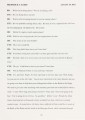
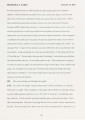
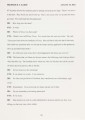
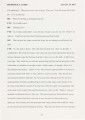
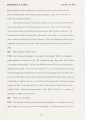
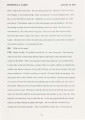
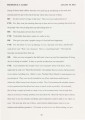
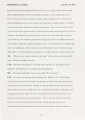
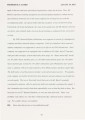
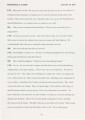
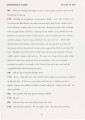
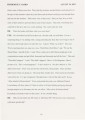
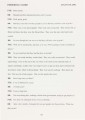
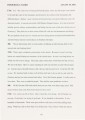
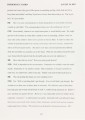
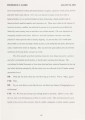
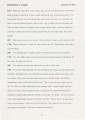
Show REDER! K T. BAIRD 2 2 BB: Did you have any clo e calls your elf? FTE: I think one of the clo e t call that happened to me wa from ' fri ndly" fir . W had a guy in our outfit who wa one of the be t shooter that I had ever en. He had a carbine and had it filed down o he could u e it on full automatic if he needed to, in t ad of single shots on semi-automatic. He didn't like his Ml too much although he had one. He really liked that carbine. [Editor's note: Both the M1 Garand and the M1 carbine were used in World War II. The Garand fired a 30.06 round and was the standard semiautomatic infantry rifle. It weighed about a third more than the shorter M 1 semiautomatic carbine that fired .30 caliber pistol rounds. Later in the war, an M2 carbine was introduced that looked almost the same as the M 1 carbine but could be selectively fired either semi or fully automatically.] That was his buddy. He kept that shined up and cleaned and when we stopped someplace and were fooling around, we'd throw cans up in the air and he could hit the can with that carbine every time. We really respected him and he knew he was good. One night on guard duty, we had to relieve them, he and his buddy. It was dark and we knew there were enemy around. It was one or two o'clock in the morning and it was dark. During the daytime sometimes, if we were there more than a day or two, we'd take a blanket or something out by the outpost so we could keep warm or sit on the blanket out there. I went out to relieve him. I hollered to him, "I've come to relieve you." I don't know whether he misunderstood or thought he was being challenged by a German or something, but he just swung his carbine around and shot at me. All I could see was the fire coming at me. I said, "Hey, what are you shooting at me for?" He said, "I'm sorry. Where did I hit you?" I said, "You didn't hit me." "He said, "Don't tell me that. I can't miss. That's imposs ible." I said, "No, you missed me and how come your carbine didn't keep shooting?" He aid, "I 46 |
| Reference URL |
https://collections.lib.utah.edu/ark:/87278/s64q9x2g/1030030 |