| Title |
Frederick T. Baird, Provo, Utah: an interview by Benjamin Bahlmann, August 30, 2002: Saving the Legacy tape nos. 528 & 527 |
| Alternative Title |
Frederick T. Baird, Saving the legacy: an oral history of Utah's World War II veterans, ACCN 2070, American West Center, University of Utah |
| Creator |
Baird, Frederick T., 1924- |
| Contributor |
University of Utah. American West Center; Bahlmann, Benjamin J. |
| Publisher |
Digitized by J. Willard Marriott Library, University of Utah |
| Date |
2002-08-30 |
| Date Digital |
2015-12-16 |
| Access Rights |
I acknowledge and agree that all information I obtain as a result of accessing any oral history provided by the University of Utah's Marriott Library shall be used only for historical or scholarly or academic research purposes, and not for commercial purposes. I understand that any other use of the materials is not authorized by the University of Utah and may exceed the scope of permission granted to the University of Utah by the interviewer or interviewee. I may request permission for other uses, in writing to Special Collections at the Marriott Library, which the University of Utah may choose grant, in its sole discretion. I agree to defend, indemnify and hold the University of Utah and its Marriott Library harmless for and against any actions or claims that relate to my improper use of materials provided by the University of Utah. |
| Spatial Coverage |
Germany |
| Subject |
Baird, Frederick T., 1924- --Interviews; Veterans--Utah--Biography; World War, 1939-1945--Personal narratives, American; World War, 1939-1945--Military operations, American; World War, 1939-1945--Campaigns--Europe, Northern--Personal narratives, American |
| Keywords |
Army Air Corps; Marines |
| Description |
Transcript (81 pages) of an interview by Benjamin Bahlmann with Frederick T. Baird on August 30, 2002. From tape numbers 322 and 333 in the "Saving the Legacy" Oral History Project |
| Collection Number and Name |
Accn2070, Saving the Legacy oral history project, 2001-2010 |
| Abstract |
Baird (b. 1924) describes his childhood and life on a Utah farm. After enlisting in the Army Air Corps in 1943 and receiving basic training in Texas, he was assigned to Walnut Ridge, Arkansas, as a records clerk, then to Columbus, Mississippi. During December 1944, he was reassigned to the infantry for European duty and shipped eventually near Aachen, Germany, for combat with the 52nd Armored Infantry Battalion, 9th Armored Division, operating from a half-track. He discusses his combat experiences. At the end of the war, was assigned occupation duty in Munich, where he returned to records management with the 39th Machine Records Unit. He was discharged in 1946. Mr. Baird worked thirty-four years for Geneva Steel before retiring in 1984. Interviewed by Benjamin Bahlmann. 81 pages. |
| Type |
Text |
| Genre |
oral histories (literary works) |
| Format |
application/pdf |
| Extent |
81 pages |
| Language |
eng |
| Rights |
 |
| Scanning Technician |
Mazi Rakhsha |
| Conversion Specifications |
Original scanned with Kirtas 2400 and saved as 400 ppi uncompressed TIFF. PDF generated by Adobe Acrobat Pro X for CONTENTdm display |
| ARK |
ark:/87278/s64q9x2g |
| Topic |
Personal narratives--American; Veterans; World War (1939-1945) |
| Setname |
uum_slohp |
| ID |
1030066 |
| Reference URL |
https://collections.lib.utah.edu/ark:/87278/s64q9x2g |
| Title |
Page 28 |
| Format |
application/pdf |
| Setname |
uum_slohp |
| ID |
1030012 |
| OCR Text |
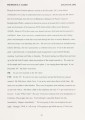
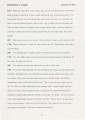
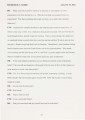
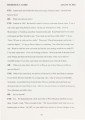
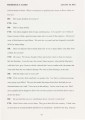
Show FREDERICK T. BAIRD 0 20 2 the whole fall and winter of 1944, had left the Allies de perately hort of infantry riflemen. Allied commanders grabbed every clerk, cook, grave digger, musician, and other rear echelon-type, handed them rifles and turned them into infantrymen. Almost three hundred-thousand men attending college in the Army Specialized Training Program, ASTP, suffered the same fate. It must be understood that most men voluntarily enlisted specifically to avoid being drafted into the infantry and many of these new infantrymen were not particularly happy about this sudden turnabout.] I sent a telegram or called my wife and said, "I'm going to be here for maybe two weeks. If you want to come down to Texas, maybe we can find a room to rent and be together for a week." So she said, "Yes." I said, "I'll try and meet you at the USO Club, if you can find that when you get here. Look around and see if you can ask where that is. I'll go there and I'll see if I can find you." So one night, after one day of retraining, I went downtown and along the street and there she was. So we found a place to stay. That training was so rigorous, as soon as I came in at night, I'd just flop down and go sound asleep. I just couldn't keep going. So, we talked it over and said, "We better talk to Heavenly Father about this, about what we should do." So we did and the answer came that she was to go home because it was just too rigorous. BB: They were running you through basic again? FTE: Yes, and it was tough. I'd get out there and we had to crawl down in a foxhole. They gave us a radio. They would give us an image with a German on it and they'd have us call in different places and have us say, "Fox up," or "Easy up," or something when they called us. You'd raise this up and the machine guns would shoot into them. We'd take turns doing that. One day I was doing that and I was so tired I went to sleep down in the hole. The next thing I knew there were some officers running down to the hole to see 28 |
| Reference URL |
https://collections.lib.utah.edu/ark:/87278/s64q9x2g/1030012 |