| Title |
Edwin J. Johnson, Springville, Utah: an interview by Benjamin Bahlmann, February 8, 2002: Saving the Legacy tape nos. 489 & 490 |
| Alternative Title |
Edwin J. Johnson, Saving the legacy: an oral history of Utah's World War II veterans, ACCN 2070, American West Center, University of Utah |
| Creator |
Johnson, Edwin J., 1924-2011 |
| Contributor |
University of Utah. American West Center; Bahlmann, Benjamin J. |
| Publisher |
Digitized by J. Willard Marriott Library, University of Utah |
| Date |
2002-02-08 |
| Date Digital |
2015-12-16 |
| Access Rights |
I acknowledge and agree that all information I obtain as a result of accessing any oral history provided by the University of Utah's Marriott Library shall be used only for historical or scholarly or academic research purposes, and not for commercial purposes. I understand that any other use of the materials is not authorized by the University of Utah and may exceed the scope of permission granted to the University of Utah by the interviewer or interviewee. I may request permission for other uses, in writing to Special Collections at the Marriott Library, which the University of Utah may choose grant, in its sole discretion. I agree to defend, indemnify and hold the University of Utah and its Marriott Library harmless for and against any actions or claims that relate to my improper use of materials provided by the University of Utah. |
| Spatial Coverage |
New Caledonia; Guadalcanal; New Guinea; Philippines; Japan |
| Subject |
Johnson, Edwin J., 1924-2011--Interviews; Veterans--Utah--Biography; World War, 1939-1945--Personal narratives, American; World War, 1939-1945--Military operations, American; World War, 1939-1945--Campaigns--Pacific Area--Personal narratives, American |
| Description |
Transcript (120 pages) of an interview by Benjamin Bahlmann with Edwin J. Johnson on February 8, 2002. From tape numbers 489 and 490 in the "Saving the Legacy" Oral History Project |
| Collection Number and Name |
Accn2070, Saving the Legacy oral history project, 2001-2010 |
| Abstract |
Johnson (b. 1924) describes his childhood in Springville, Utah, and being inducted into the Army. He was sent to New Caledonia in December 1943 and shortly thereafter went to Guadalcanal as a replacement in the 43rd Infantry Division. He also served in New Guinea and the Philippines, as well as being part of the occupation force in Japan. Interviewed by Benjamin Bahlmann. 120 pages. |
| Type |
Text |
| Genre |
oral histories (literary works) |
| Format |
application/pdf |
| Extent |
120 pages |
| Language |
eng |
| Rights |
 |
| Scanning Technician |
Mazi Rakhsha |
| Conversion Specifications |
Original scanned with Kirtas 2400 and saved as 400 ppi uncompressed TIFF. PDF generated by Adobe Acrobat Pro X for CONTENTdm display |
| ARK |
ark:/87278/s6ht4rdf |
| Topic |
Personal narratives--American; Veterans; World War (1939-1945) |
| Setname |
uum_slohp |
| ID |
1029984 |
| Reference URL |
https://collections.lib.utah.edu/ark:/87278/s6ht4rdf |
| Title |
Page 24 |
| Format |
application/pdf |
| Setname |
uum_slohp |
| ID |
1029887 |
| OCR Text |
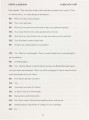
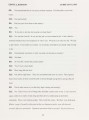
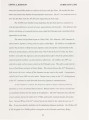
Show EDWIN J. JOHN ON BR R BB: At any point in the PT (phy ical training) or fore d march did y u w nd r "What have I gotten my elf into?" EJJ: Ye , a lot of times (laugh )-- And a lot of time after that, too. BB: How long did your basic training last? Wa it about ix week ? 2 02 EJJ: Oh, no. I got there about the end of June. I think it was about four day before the end of June, so about 26 June. I got home about the first of November on a furlough. BB: Oh, so that whole time you were in boot camp? EJJ: In boot camp, yes, about five months. [Editor's note: Sailors and Marines go to "boot camp". Soldiers go to "basic training". During World War II, US soldiers were generally rushed through basic training in about six weeks, which was about twice the pace during peacetime. In basic training men are indoctrinated into the military, taught basic military procedures and drill, toughened by physical training, given some basic weapons training and tested as to personal aptitudes to determine his military specialty. When a man completed basic training he was classified into some particular occupation in the Army and was shipped out to train in that specialty. Men classified as infantry riflemen went on to three months advanced infantry training. Immediately afterwards, since there was always a shortage of riflemen in combat units, the riflemen were shipped overseas. Furloughs were generally given just before a man was shipped overseas. Mr. Johnson probably went seamlessly through basic into advanced infantry training at Camp Roberts. He would have learned hand to hand combat, small arms, machine guns, mortars, and rifle squad tactics. Most men who were headed for the Pacific, no matter what their specialty, received some amphibious landing training as well.] 24 |
| Reference URL |
https://collections.lib.utah.edu/ark:/87278/s6ht4rdf/1029887 |