| Title |
Harold S. Madsen, Pleasant Grove, Utah: an interview by Benjamin Bahlmann, September 6, 2002: Saving the Legacy tape nos. 530-532 |
| Alternative Title |
Harold S. Madsen, Saving the legacy: an oral history of Utah's World War II veterans, ACCN 2070, American West Center, University of Utah |
| Creator |
Madsen, Harold S. (Harold Stanley), 1926-2006 |
| Contributor |
University of Utah. American West Center; Bahlmann, Benjamin J. |
| Publisher |
Digitized by J. Willard Marriott Library, University of Utah |
| Date |
2002-09-06 |
| Date Digital |
2015-12-16 |
| Access Rights |
I acknowledge and agree that all information I obtain as a result of accessing any oral history provided by the University of Utah's Marriott Library shall be used only for historical or scholarly or academic research purposes, and not for commercial purposes. I understand that any other use of the materials is not authorized by the University of Utah and may exceed the scope of permission granted to the University of Utah by the interviewer or interviewee. I may request permission for other uses, in writing to Special Collections at the Marriott Library, which the University of Utah may choose grant, in its sole discretion. I agree to defend, indemnify and hold the University of Utah and its Marriott Library harmless for and against any actions or claims that relate to my improper use of materials provided by the University of Utah. |
| Spatial Coverage |
France; Belgium; Germany; Czechoslovakia |
| Subject |
Madsen, Harold S. (Harold Stanley), 1926-2006--Interviews; Veterans--Utah--Biography; World War, 1939-1945--Personal narratives, American; World War, 1939-1945--Military operations, American; World War, 1939-1945--Campaigns--Europe, Northern--Personal narratives, American |
| Description |
Transcript (85 pages) of an interview by Benjamin Bahlmann with Harold S. Madsen on September 6, 2002. From tape numbers 530, 531, and 532 in the "Saving the Legacy" Oral History Project |
| Collection Number and Name |
Accn2070, Saving the Legacy oral history project, 2001-2010 |
| Abstract |
Madsen (b. 1926) discusses his childhood in Salt Lake City, Utah. He was drafted into the army in August 1944 and received basic training at Camp Wolters, Texas. He was shipped to England and crossed the channel in an LST to Le Havre. In January 1945 he was assigned to the 3rd Army, 90th Infantry Division, 359th Infantry Regiment, B, in Belgium. Madsen describes his combat experience and his activities in post-war Europe. Interviewed by Benjamin Bahlmann. 85 pages. |
| Type |
Text |
| Genre |
oral histories (literary works) |
| Format |
application/pdf |
| Extent |
85 pages |
| Language |
eng |
| Rights |
 |
| Scanning Technician |
Mazi Rakhsha |
| Conversion Specifications |
Original scanned with Kirtas 2400 and saved as 400 ppi uncompressed TIFF. PDF generated by Adobe Acrobat Pro X for CONTENTdm display |
| ARK |
ark:/87278/s689380j |
| Topic |
Personal narratives--American; Veterans; World War (1939-1945) |
| Setname |
uum_slohp |
| ID |
1029831 |
| Reference URL |
https://collections.lib.utah.edu/ark:/87278/s689380j |
| Title |
Page 70 |
| Format |
application/pdf |
| Setname |
uum_slohp |
| ID |
1029815 |
| OCR Text |
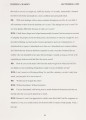
Show HAROLD . MAD EN PT MB R6 2002 out and sought after it. But I thought he was like a natural born killer h wa a killer. H wasn't normal. Okay. Then I thought, there's my squad leader who's aiming this boat right at the shore and he sees machine gun coming from there. I say to myself, well that was sort of heroic in a way because the natural instinct would ... BB: You would have done differently maybe? HSM: ... would be to avoid certain death (laughs). So he knew that that was our objective and he was doing it. I'd say to myself there's a bit of heroism in that. So I would ask myself, what are heroes? I would say to myself, maybe under unusual circumstances, in order to maybe preserve a certain situation somebody risks his life for the benefit of a larger number that would probably be heroic. But I thought that doesn't happen very much in war because maybe people, I think those who haven't been in combat don't realize that it's such a unified thing, it's such a team thing. So you don't see heroes on the basketball floor or on the football floor, they're doing it together, they're working together. So it seemed to me that that was the way war was playing out. BB: With your explanation, then, did you see other people do things on their own more, outside of the team realm for whatever reason, crazy or not? Is there any other examples of someone rushing a pillbox or anything like that? HSM: We would hear occasionally, you know, it was McAuliffe that was the ... BB: Bastogne? HSM: The Bastogne thing, I think so. Of course that took probably a little of courage in his disadvantaged position to do that. So we would occasionally hear something, not something quite that dramatic ... 70 |
| Reference URL |
https://collections.lib.utah.edu/ark:/87278/s689380j/1029815 |