| Title |
Harold S. Madsen, Pleasant Grove, Utah: an interview by Benjamin Bahlmann, September 6, 2002: Saving the Legacy tape nos. 530-532 |
| Alternative Title |
Harold S. Madsen, Saving the legacy: an oral history of Utah's World War II veterans, ACCN 2070, American West Center, University of Utah |
| Creator |
Madsen, Harold S. (Harold Stanley), 1926-2006 |
| Contributor |
University of Utah. American West Center; Bahlmann, Benjamin J. |
| Publisher |
Digitized by J. Willard Marriott Library, University of Utah |
| Date |
2002-09-06 |
| Date Digital |
2015-12-16 |
| Access Rights |
I acknowledge and agree that all information I obtain as a result of accessing any oral history provided by the University of Utah's Marriott Library shall be used only for historical or scholarly or academic research purposes, and not for commercial purposes. I understand that any other use of the materials is not authorized by the University of Utah and may exceed the scope of permission granted to the University of Utah by the interviewer or interviewee. I may request permission for other uses, in writing to Special Collections at the Marriott Library, which the University of Utah may choose grant, in its sole discretion. I agree to defend, indemnify and hold the University of Utah and its Marriott Library harmless for and against any actions or claims that relate to my improper use of materials provided by the University of Utah. |
| Spatial Coverage |
France; Belgium; Germany; Czechoslovakia |
| Subject |
Madsen, Harold S. (Harold Stanley), 1926-2006--Interviews; Veterans--Utah--Biography; World War, 1939-1945--Personal narratives, American; World War, 1939-1945--Military operations, American; World War, 1939-1945--Campaigns--Europe, Northern--Personal narratives, American |
| Description |
Transcript (85 pages) of an interview by Benjamin Bahlmann with Harold S. Madsen on September 6, 2002. From tape numbers 530, 531, and 532 in the "Saving the Legacy" Oral History Project |
| Collection Number and Name |
Accn2070, Saving the Legacy oral history project, 2001-2010 |
| Abstract |
Madsen (b. 1926) discusses his childhood in Salt Lake City, Utah. He was drafted into the army in August 1944 and received basic training at Camp Wolters, Texas. He was shipped to England and crossed the channel in an LST to Le Havre. In January 1945 he was assigned to the 3rd Army, 90th Infantry Division, 359th Infantry Regiment, B, in Belgium. Madsen describes his combat experience and his activities in post-war Europe. Interviewed by Benjamin Bahlmann. 85 pages. |
| Type |
Text |
| Genre |
oral histories (literary works) |
| Format |
application/pdf |
| Extent |
85 pages |
| Language |
eng |
| Rights |
 |
| Scanning Technician |
Mazi Rakhsha |
| Conversion Specifications |
Original scanned with Kirtas 2400 and saved as 400 ppi uncompressed TIFF. PDF generated by Adobe Acrobat Pro X for CONTENTdm display |
| ARK |
ark:/87278/s689380j |
| Topic |
Personal narratives--American; Veterans; World War (1939-1945) |
| Setname |
uum_slohp |
| ID |
1029831 |
| Reference URL |
https://collections.lib.utah.edu/ark:/87278/s689380j |
| Title |
Page 67 |
| Format |
application/pdf |
| Setname |
uum_slohp |
| ID |
1029812 |
| OCR Text |
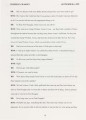
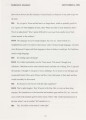
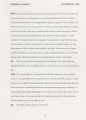
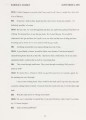
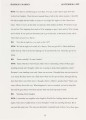
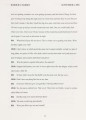
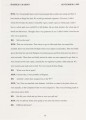
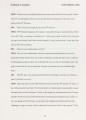
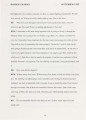
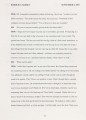
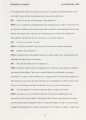
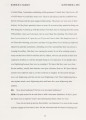
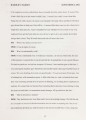
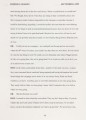
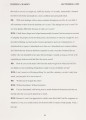
Show HAROLD . MAD E P MB R , 2002 BB: Yes, like the one guy, kind of wandering. But do you think that could hav happened to you if it continued? HSM: I don't perceive that happening because there was such a support system there. We just, we were such a unit that, for example, for a machine gun you said did you bring your machine gun, the barrel when you escaped from that place? Oh, yes. I wouldn't have even dreamed .. .ifl had been injured I would have brought it because they needed it. The squad couldn't have functioned properly without it. BB: I've heard people talk about how they felt like they were fighting more for your buddy next to you than anything else. Is that kind of how it was for you, do you think? HSM: You know, I didn't articulate that in my mind. We had such ... you see, I had been brainwashed long enough for years to know that we were fighting a deadly enemy that was very greedy and would conquer the world if it could. Everything was so wonderfully black and white then. It wasn't like now (laughs). First of all we had this great purpose, this noble purpose. Here's this evil Hitler and Tojo and Mussolini etc. These are evil people. BB: Did you still feel Hitler on the battlefield? Or did it become much smaller in scope? HSM: We didn't think so much Hitler. In fact, we had a way of seeing things from a different point of view on the battlefield than we did at home. As I told you, we criticized Patton; we criticized ninety-day wonders, but also sometimes our leaders. FDR, whom I had loved since childhood, and others were having their summits and they were deciding we're not going to, we're going to have the harshest terms of surrender we could possibly conjure up and Germany has got to capitulate in the most shameful way, etc. And we 67 |
| Reference URL |
https://collections.lib.utah.edu/ark:/87278/s689380j/1029812 |