| Title |
Harold S. Madsen, Pleasant Grove, Utah: an interview by Benjamin Bahlmann, September 6, 2002: Saving the Legacy tape nos. 530-532 |
| Alternative Title |
Harold S. Madsen, Saving the legacy: an oral history of Utah's World War II veterans, ACCN 2070, American West Center, University of Utah |
| Creator |
Madsen, Harold S. (Harold Stanley), 1926-2006 |
| Contributor |
University of Utah. American West Center; Bahlmann, Benjamin J. |
| Publisher |
Digitized by J. Willard Marriott Library, University of Utah |
| Date |
2002-09-06 |
| Date Digital |
2015-12-16 |
| Access Rights |
I acknowledge and agree that all information I obtain as a result of accessing any oral history provided by the University of Utah's Marriott Library shall be used only for historical or scholarly or academic research purposes, and not for commercial purposes. I understand that any other use of the materials is not authorized by the University of Utah and may exceed the scope of permission granted to the University of Utah by the interviewer or interviewee. I may request permission for other uses, in writing to Special Collections at the Marriott Library, which the University of Utah may choose grant, in its sole discretion. I agree to defend, indemnify and hold the University of Utah and its Marriott Library harmless for and against any actions or claims that relate to my improper use of materials provided by the University of Utah. |
| Spatial Coverage |
France; Belgium; Germany; Czechoslovakia |
| Subject |
Madsen, Harold S. (Harold Stanley), 1926-2006--Interviews; Veterans--Utah--Biography; World War, 1939-1945--Personal narratives, American; World War, 1939-1945--Military operations, American; World War, 1939-1945--Campaigns--Europe, Northern--Personal narratives, American |
| Description |
Transcript (85 pages) of an interview by Benjamin Bahlmann with Harold S. Madsen on September 6, 2002. From tape numbers 530, 531, and 532 in the "Saving the Legacy" Oral History Project |
| Collection Number and Name |
Accn2070, Saving the Legacy oral history project, 2001-2010 |
| Abstract |
Madsen (b. 1926) discusses his childhood in Salt Lake City, Utah. He was drafted into the army in August 1944 and received basic training at Camp Wolters, Texas. He was shipped to England and crossed the channel in an LST to Le Havre. In January 1945 he was assigned to the 3rd Army, 90th Infantry Division, 359th Infantry Regiment, B, in Belgium. Madsen describes his combat experience and his activities in post-war Europe. Interviewed by Benjamin Bahlmann. 85 pages. |
| Type |
Text |
| Genre |
oral histories (literary works) |
| Format |
application/pdf |
| Extent |
85 pages |
| Language |
eng |
| Rights |
 |
| Scanning Technician |
Mazi Rakhsha |
| Conversion Specifications |
Original scanned with Kirtas 2400 and saved as 400 ppi uncompressed TIFF. PDF generated by Adobe Acrobat Pro X for CONTENTdm display |
| ARK |
ark:/87278/s689380j |
| Topic |
Personal narratives--American; Veterans; World War (1939-1945) |
| Setname |
uum_slohp |
| ID |
1029831 |
| Reference URL |
https://collections.lib.utah.edu/ark:/87278/s689380j |
| Title |
Page 58 |
| Format |
application/pdf |
| Setname |
uum_slohp |
| ID |
1029803 |
| OCR Text |
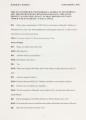
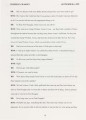
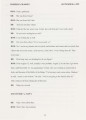
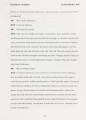
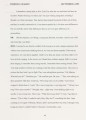
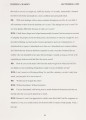
Show HAROLD . MAD E P MB R 6, 2002 then we had a little_[ unclear]_. At least it didn train the first tim . But I wa u ed to writing long letters. On the way over across the sea ... BB: You continued to write even through the campaign? HSM: Yes, and we had a loot bag, it was a gas mask. We weren't looting, really but everybody called it that. Everybody threw their gas masks away and we'd have a shaving kit, a diary, a little notebook for writing, so forth. So I had a notebook for writing and a pen. So we got to this sheep pen and when I was on there, I wrote fifteen to twenty to twenty-five, thirty page letters onboard ship. In fact, the censor came down and said, "Who's Madsen down here? I just wanted to see somebody who'd write twenty and thirty page letters. I've never seen anything like it." So in the sheep pen you didn't write thirtyfive page letters. You're lucky to write two or three paragraphs because your hands were almost frozen. At least you had, it was dry, you got some letters, you got some better chow, you didn't have to eat C- or K-rations and you weren't in danger of dying, just freezing to death and so on. Part of the great challenge overseas was the discomfort. It'd be at night, we'd taken a house and you'd hear, clamber, wham, clang, clang, then a cursing and the guy would stop in the middle of the room because he hadn't made it. Then I used to get under the table. The big strong guys and the non-coms would get the couches and sleep there and I'd get under the table because then the guys that were rushing for the door with their dysentery wouldn't topple on me. But I would always get under the table so I'd be under the table from guys rushing. BB: Did you ever get sick? 58 |
| Reference URL |
https://collections.lib.utah.edu/ark:/87278/s689380j/1029803 |