| OCR Text |
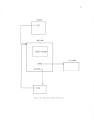
Show 16 These locks can be ol two typf~s , hnrd locks <-liid soft locks. When a lo ck is rc·q,wstcd on a11 object , it is cal led a hard lock . .As a side-effect of this, locks are d<CJ IIircd on otiH'I ohj ects in tlw segment . 'fl1ese locks a re called soft locks. Hard locks a rc Cjlwuccl wh il(' soft locks are not. l ~a ch of" th ese locks can be associated with one of the following communication modes . These nwcles a re used to not ify the aJfectecl use rs upon a change or update 1o tlw o b j cct. There are five communi cat ion modes: I. Update-notify- Tlw lock holdf'r is inf"orm<~ cl ou ohj<~c t upd ate. 2. Read-notify- The lock holder is informed of read requests for this object hy ut.lwr clients. ;). Write-notify- The lock holder is informed of write requ ests for this object IJy other c lient s . '!. Read-write-notify- Tlw lock ilold c t IS iuComwcl or· rc<t,cl or vvritt: reqnests fur t!Jis object by other client s . 5. No-notify- No notificatiou is sent . In ObServer , the cli ent does local caching(>[' objects. Tbe client cornrnunicates ll'itiJ il1c- se rver <tsy nclJrouu us ly. In Obse rver, there is a database of ObServer databases called Binde r . There is one Bind<cT per machirw. Every client has to cont;tct I he Binder for creating, opening, or reconnecting to a database. ENCOfU~ (Ex tensible and Natural Cornmon Object REsource) is the front-end data definition and manipulation e nvironment Cor ObServer and supports its own query l::t11 guage . Queries can be ex ecutf~cl again st a set of in stances of specified tvpC's and return a se~ L of' in stances or a hoolea.n valu e . 8NCOH.E also supports iII <!<-:; i rJ ,L; llll <I at;~. jwc; <uld J! r<!JHT Li cs. |