| OCR Text |
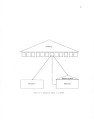
Show 8 cllid IH'il <tvior (I.IJtl re L<t.iJI !heir us({JJill<'SS. Th is lends to the in1portaJ 1t iss11e of how t.o prop<~gate ch;.wges iu class schema to the iu stances of t he af-[ected class. Some systems delay the application of changes to in stances (def erred) whereas others modify them imnwdiately aJter the- change is issued (immediate) . Yet another way to handle this is by providing version iug of classes. A new version of a class is g(~ uerat e d each t ime it is modifi ed and a ll new instances created a re associated with t he new ve-rsion. 2.4. 7 Distribution In a dist rib uted system , execution can take place at whatever network location IS most app ropriate. There are t hree el i f[e rent clien t/server archi tect ures for POSs based ou t he granulari ty of data h ctnsfer [22]. These are object server, page server, cliicl file se rv(-' r. Doing <t il co n1 putat ion 011 a centrali zed system leads to bot tlenecks, vvhereas, di st r i h11t(~d computation may not be able to take advantage of cent ral indi ces and complex cache consistency systems may he requ ired if t here are rnult iple clients. In view of t hi s, dif-ferent POSs provide difFerent degrees of distribution. 2.5 Some P ersistent Object Systems This scc:Lion con tains descriptions of various OOD BMSs and POSs that exist Loclay. An attempt has been made to maintain a consistent ordering of feat ures while describing these systems. Each descrip t ion begins with a summary of where t he sys tem was developed and the la nguage interfaces available. Next, support f"m object id(~ntity, lil(~ !l1ory Jll a iJagelll PUL sr henw, and availab le object mauip uJat iu11 Jnccli<:wi sms are described . l-' iua lly navigat ional support , schema evolu tion, di st ri h11 Lion etc. a n-' cl esc ribecl. |