| Title |
Wayne A. Omer, Holladay, Utah: an interview by Winston Erickson, September 17th, 2001: Saving the legacy tape no. 291 and 292 |
| Alternative Title |
Wayne A. Omer, Saving the legacy: an oral history of Utah's World War II veterans, ACCN 2070, American West Center, University of Utah |
| Creator |
Omer, Wayne A., 1921- |
| Contributor |
Erickson, Winston P., 1943-; University of Utah. American West Center |
| Publisher |
Digitized by J. Willard Marriott Library, University of Utah |
| Date |
2001-09-17 |
| Date Digital |
2015-09-16 |
| Access Rights |
I acknowledge and agree that all information I obtain as a result of accessing any oral history provided by the University of Utah's Marriott Library shall be used only for historical or scholarly or academic research purposes, and not for commercial purposes. I understand that any other use of the materials is not authorized by the University of Utah and may exceed the scope of permission granted to the University of Utah by the interviewer or interviewee. I may request permission for other uses, in writing to Special Collections at the Marriott Library, which the University of Utah may choose grant, in its sole discretion. I agree to defend, indemnify and hold the University of Utah and its Marriott Library harmless for and against any actions or claims that relate to my improper use of materials provided by the University of Utah. |
| Spatial Coverage |
Solomon Islands; Ulithi, Micronesia; Peleliu Island, Palau; Santa Barbara, Santa Barbara County, California, United States |
| Subject |
Omer, Wayne A., 1921- --Interviews; World War, 1939-1945--Personal narratives, American; Veterans--Utah--Biography; World War, 1939-1945--Aerial operations, American; World War, 1939-1945--Campaigns--Pacific Area--Personal narratives, American |
| Keywords |
Marines; Solomon campaign |
| Description |
Transcript (75 pages) of an interview by Winston P. Erickson with Wayne A. Omer on September 17, 2001. This is from tape numbers 291 and 292 in the "Saving the Legacy Oral History Project |
| Collection Number and Name |
Accn2070, Saving the Legacy oral history project, 2001-2010 |
| Abstract |
Wayne Omer (b. 1921) details his genealogy and recalls his childhood in Holladay, Utah. He went to work for the FBI in 1941 and moved to Washington, DC. He enlisted in the Navy and begain flight training in Athens, Georgia. After being commissioned he transferred to the Marines and was shipped out to the Solomon Islands. After serving in the Pacific he was reassigned to a training mission in Santa Barbara, where he remained until the war ended. Other topics covered include serving in the Reserves, making jewelry, and working for Litton Industries. 75 pages. |
| Type |
Text |
| Genre |
oral histories (literary works) |
| Format |
application/pdf |
| Extent |
75 pages |
| Language |
eng |
| Rights |
 |
| Scanning Technician |
Mazi Rakhsha |
| Conversion Specifications |
Original scanned with Kirtas 2400 and saved as 400 ppi uncompressed TIFF. PDF generated by Adobe Acrobat Pro X for CONTENTdm display |
| ARK |
ark:/87278/s6s48r79 |
| Topic |
Personal narratives--American; Veterans; World War (1939-1945); Military operations, Aerial--American |
| Setname |
uum_slohp |
| ID |
1026161 |
| Reference URL |
https://collections.lib.utah.edu/ark:/87278/s6s48r79 |
| Title |
Page 51 |
| Format |
application/pdf |
| Setname |
uum_slohp |
| ID |
1026134 |
| OCR Text |
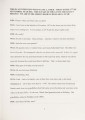
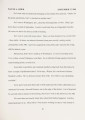
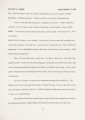
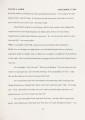
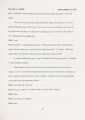
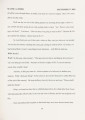
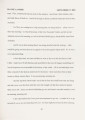
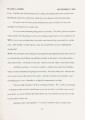
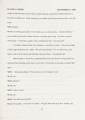
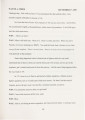
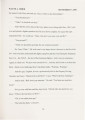
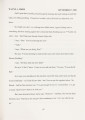
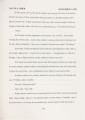
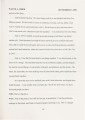
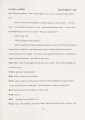
Show WAYNE A. OMER PT MB R 17 2001 WAY: I never dropped a torpedo in anger, just in training. WIN: So when you're dropping these bombs, what would be the technique? WAY: Dive bombing. Usually we'd be in a formation, maybe at 10 000 feet. And the leader of the formation would get us in a position where we could make a peel off and go in about three seconds a piece. Establish a glide, which was sometimes, around about forty-five degrees. When you're going down at forty five degrees, it seems like you're going pretty steep. It feels steeper than it actually is. WIN: Forty five degrees is pretty steep, though. WAY: It's a pretty steep angle. One of the reasons we didn't want to get any steeper than that was there, I don't' know where it actually ever happened, but it said you don't want to go any steeper because there's a chance that maybe the bombs would fall out directly enough maybe hit the prop. And so, the airplane was fitted up with twelve bomb racks. And all the time, around patrol, we were carrying four depth charges that weighed about four hundred and seventy five- almost a ton of depth charges. All the time we patrolled we were loaded with four depth charges. And then when we went on these bombing runs, they'd say they needed four fivehundreds, or one one-thousand. I think I dropped a couple of one thousand pounders. And then the one unique run we made was they put in seventy-two bombs in the bomb bay of each one of us. They were about thirty-pounders, what we call "grass cutters," 49 |
| Reference URL |
https://collections.lib.utah.edu/ark:/87278/s6s48r79/1026134 |