| Title |
Wayne A. Omer, Holladay, Utah: an interview by Winston Erickson, September 17th, 2001: Saving the legacy tape no. 291 and 292 |
| Alternative Title |
Wayne A. Omer, Saving the legacy: an oral history of Utah's World War II veterans, ACCN 2070, American West Center, University of Utah |
| Creator |
Omer, Wayne A., 1921- |
| Contributor |
Erickson, Winston P., 1943-; University of Utah. American West Center |
| Publisher |
Digitized by J. Willard Marriott Library, University of Utah |
| Date |
2001-09-17 |
| Date Digital |
2015-09-16 |
| Access Rights |
I acknowledge and agree that all information I obtain as a result of accessing any oral history provided by the University of Utah's Marriott Library shall be used only for historical or scholarly or academic research purposes, and not for commercial purposes. I understand that any other use of the materials is not authorized by the University of Utah and may exceed the scope of permission granted to the University of Utah by the interviewer or interviewee. I may request permission for other uses, in writing to Special Collections at the Marriott Library, which the University of Utah may choose grant, in its sole discretion. I agree to defend, indemnify and hold the University of Utah and its Marriott Library harmless for and against any actions or claims that relate to my improper use of materials provided by the University of Utah. |
| Spatial Coverage |
Solomon Islands; Ulithi, Micronesia; Peleliu Island, Palau; Santa Barbara, Santa Barbara County, California, United States |
| Subject |
Omer, Wayne A., 1921- --Interviews; World War, 1939-1945--Personal narratives, American; Veterans--Utah--Biography; World War, 1939-1945--Aerial operations, American; World War, 1939-1945--Campaigns--Pacific Area--Personal narratives, American |
| Keywords |
Marines; Solomon campaign |
| Description |
Transcript (75 pages) of an interview by Winston P. Erickson with Wayne A. Omer on September 17, 2001. This is from tape numbers 291 and 292 in the "Saving the Legacy Oral History Project |
| Collection Number and Name |
Accn2070, Saving the Legacy oral history project, 2001-2010 |
| Abstract |
Wayne Omer (b. 1921) details his genealogy and recalls his childhood in Holladay, Utah. He went to work for the FBI in 1941 and moved to Washington, DC. He enlisted in the Navy and begain flight training in Athens, Georgia. After being commissioned he transferred to the Marines and was shipped out to the Solomon Islands. After serving in the Pacific he was reassigned to a training mission in Santa Barbara, where he remained until the war ended. Other topics covered include serving in the Reserves, making jewelry, and working for Litton Industries. 75 pages. |
| Type |
Text |
| Genre |
oral histories (literary works) |
| Format |
application/pdf |
| Extent |
75 pages |
| Language |
eng |
| Rights |
 |
| Scanning Technician |
Mazi Rakhsha |
| Conversion Specifications |
Original scanned with Kirtas 2400 and saved as 400 ppi uncompressed TIFF. PDF generated by Adobe Acrobat Pro X for CONTENTdm display |
| ARK |
ark:/87278/s6s48r79 |
| Topic |
Personal narratives--American; Veterans; World War (1939-1945); Military operations, Aerial--American |
| Setname |
uum_slohp |
| ID |
1026161 |
| Reference URL |
https://collections.lib.utah.edu/ark:/87278/s6s48r79 |
| Title |
Page 39 |
| Format |
application/pdf |
| Setname |
uum_slohp |
| ID |
1026122 |
| OCR Text |
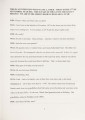
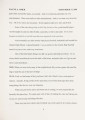
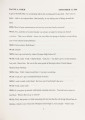
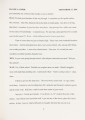
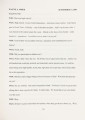
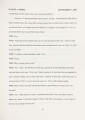
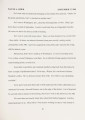
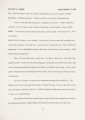
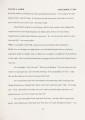
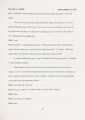
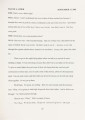
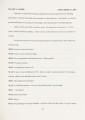
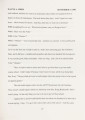
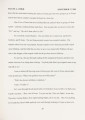
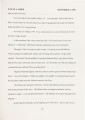
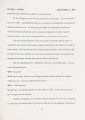
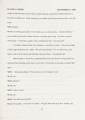
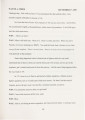
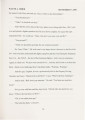
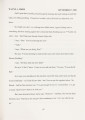
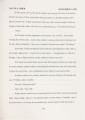
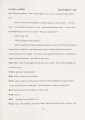
Show WAYNE A. OMER PT B R17 2001 And then another plane had seen a little strip and mu t have tak n it£ r a carri r deck. Went in and hit just a patch of coral. And I don't know what happened to th third. "Tokyo Rose" the next day was telling us about these four planes that came down to beat up Ulithi. We all had radios by then and listened to "Tokyo Rose" a lot. The other, fourth plane, a day or two lane- a plane was spotted on the beach at Yap. Some guy, Jap, had been smart enough to say, "I'm not going to do this crazy thing." So he went down and apparently made a belly landing on the beach! There was actually a couple of air strips down there, but the word was that his plane was spotted down there. It was assumed that a kamikaze pilot had chickened out. So anyway, that's the things that kept us busy out there. WIN: What would you do on your off time? WAY: Read, lay on the beach (a little bit). WIN: Well, it wasn't a very big area. You didn't have a whole lot of options, did you? WAY: No. There was no place to go. Actually, the only way you could get to the other side of the strip was to go to the beach on either end of the strip, and they had a road around, but no one was allowed to cross the air strip itself (which went from beach to beach). But the only two strips that we really operated off for any length of time were made of coral. They did on this Ulithi - they had a drag line that would be pulling coral off of the reef that formed the island, because they couldn't afford to move anything 37 |
| Reference URL |
https://collections.lib.utah.edu/ark:/87278/s6s48r79/1026122 |