| Title |
Herbert Warren Maw, Salt Lake City, Utah: an interview by Becky B. Lloyd, April 6, 2001: Saving the legacy tape no. 276 |
| Alternative Title |
H. Warren Maw, Saving the legacy: an oral history of Utah's World War II veterans, ACCN 2070, American West Center, University of Utah |
| Creator |
Maw, H. Warren, 1922- |
| Contributor |
Lloyd, Becky B.; University of Utah. American West Center |
| Publisher |
Digitized by J. Willard Marriott Library, University of Utah |
| Date |
2001-04-06 |
| Date Digital |
2015-09-16 |
| Access Rights |
I acknowledge and agree that all information I obtain as a result of accessing any oral history provided by the University of Utah's Marriott Library shall be used only for historical or scholarly or academic research purposes, and not for commercial purposes. I understand that any other use of the materials is not authorized by the University of Utah and may exceed the scope of permission granted to the University of Utah by the interviewer or interviewee. I may request permission for other uses, in writing to Special Collections at the Marriott Library, which the University of Utah may choose grant, in its sole discretion. I agree to defend, indemnify and hold the University of Utah and its Marriott Library harmless for and against any actions or claims that relate to my improper use of materials provided by the University of Utah. |
| Spatial Coverage |
Japan; China; Korea; Salt Lake City, Salt Lake County, Utah, United States |
| Subject |
Maw, H. Warren, 1922- --Interviews; World War, 1939-1945--Personal narratives, American; World War, 1939-1945--Naval operations, American; Veterans--Utah--Biography |
| Keywords |
USS Theodore E. Chandler; Korea |
| Description |
Transcript (53 pages) of an interview by Becky B. Lloyd with Herbert Warren Maw on April 6, 2001. This is from tape number 276 in the "Saving the Legacy Oral History Project |
| Collection Number and Name |
Accn2070, Saving the Legacy oral history project, 2001-2010 |
| Abstract |
Herbert Warren Maw (b.1922) is the son of former Utah Governor Herbert B. Maw. He joined ROTC at the University of Utah in 1940, and was admitted to the United States Naval Academy in 1943. After graduating in 1946, he served on a destroyer, the USS Theodore E. Chandler. He was later called up for service in Korea aboard the USS Hawkins. He served in the Naval Reserve for 21 years. 53 pages. |
| Type |
Text |
| Genre |
oral histories (literary works) |
| Format |
application/pdf |
| Extent |
53 pages |
| Language |
eng |
| Rights |
 |
| Scanning Technician |
Mazi Rakhsha |
| Conversion Specifications |
Original scanned with Kirtas 2400 and saved as 400 ppi uncompressed TIFF. PDF generated by Adobe Acrobat Pro X for CONTENTdm display |
| ARK |
ark:/87278/s6tj0kw5 |
| Topic |
Personal narratives--American; Veterans; World War (1939-1945); Military operations, Naval--American |
| Setname |
uum_slohp |
| ID |
1025899 |
| Reference URL |
https://collections.lib.utah.edu/ark:/87278/s6tj0kw5 |
| Title |
Page 48 |
| Format |
application/pdf |
| Setname |
uum_slohp |
| ID |
1025891 |
| OCR Text |
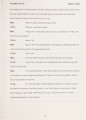
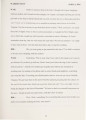
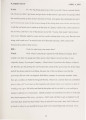
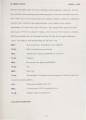
Show W RRE M W PRI 2001 an1oa. Now that's a beautiful place. During the tran fl r, whi l I wa in Ila\ aiL I g interested in the ukulele so I bought a ukulele and an instructi n b k. I g d v n t , get down to Samoa and it was very, very primitive at that tim . The girls w r stuff like that, it wasn't that primitive, but they lived in nepa huts and in this b autiful little bay, Pago Pago is the name of this village. Our whole job down there wa t tak the chiefs of the islands, the local authorities of the islands, from this island to this island to this island-wherever they wanted to go. We were just a presence there. Again, now that was a very relaxing, boring time and I learned how to play the ukulele because I spent lots of time doing that. And we had American missionaries over there and I would go out with them on some of my days off and enjoy the culture, a n1ost stimulating culture. It' s a relatively small island and so if anybody is walking by during mealtime, they invite you up to eat. It's like you're a relative. And of course the missionaries were welcomed all the time. And the fact that they were overwhelmingly welcomed they would bring them into the home. They would sit the men and the missionaries and me, if I was with them. They'd serve all the food. We'd sit around on the floor and we'd eat all we wanted. Then after we left, the ladies and the children would sit and eat. BBL: WAR: BBL: Just like the plebe days. Oh, yeah, only we were upperclassmen (laughs). Exactly! w AR: And that was interesting just to see and understand that. We had a few bingo nights at the, sort of the Navy headquarters there. They had some Navy nurses because they did have a hospital there. That was a very slow time in my life and when that was over- 46 |
| Reference URL |
https://collections.lib.utah.edu/ark:/87278/s6tj0kw5/1025891 |