| Title |
Herbert Warren Maw, Salt Lake City, Utah: an interview by Becky B. Lloyd, April 6, 2001: Saving the legacy tape no. 276 |
| Alternative Title |
H. Warren Maw, Saving the legacy: an oral history of Utah's World War II veterans, ACCN 2070, American West Center, University of Utah |
| Creator |
Maw, H. Warren, 1922- |
| Contributor |
Lloyd, Becky B.; University of Utah. American West Center |
| Publisher |
Digitized by J. Willard Marriott Library, University of Utah |
| Date |
2001-04-06 |
| Date Digital |
2015-09-16 |
| Access Rights |
I acknowledge and agree that all information I obtain as a result of accessing any oral history provided by the University of Utah's Marriott Library shall be used only for historical or scholarly or academic research purposes, and not for commercial purposes. I understand that any other use of the materials is not authorized by the University of Utah and may exceed the scope of permission granted to the University of Utah by the interviewer or interviewee. I may request permission for other uses, in writing to Special Collections at the Marriott Library, which the University of Utah may choose grant, in its sole discretion. I agree to defend, indemnify and hold the University of Utah and its Marriott Library harmless for and against any actions or claims that relate to my improper use of materials provided by the University of Utah. |
| Spatial Coverage |
Japan; China; Korea; Salt Lake City, Salt Lake County, Utah, United States |
| Subject |
Maw, H. Warren, 1922- --Interviews; World War, 1939-1945--Personal narratives, American; World War, 1939-1945--Naval operations, American; Veterans--Utah--Biography |
| Keywords |
USS Theodore E. Chandler; Korea |
| Description |
Transcript (53 pages) of an interview by Becky B. Lloyd with Herbert Warren Maw on April 6, 2001. This is from tape number 276 in the "Saving the Legacy Oral History Project |
| Collection Number and Name |
Accn2070, Saving the Legacy oral history project, 2001-2010 |
| Abstract |
Herbert Warren Maw (b.1922) is the son of former Utah Governor Herbert B. Maw. He joined ROTC at the University of Utah in 1940, and was admitted to the United States Naval Academy in 1943. After graduating in 1946, he served on a destroyer, the USS Theodore E. Chandler. He was later called up for service in Korea aboard the USS Hawkins. He served in the Naval Reserve for 21 years. 53 pages. |
| Type |
Text |
| Genre |
oral histories (literary works) |
| Format |
application/pdf |
| Extent |
53 pages |
| Language |
eng |
| Rights |
 |
| Scanning Technician |
Mazi Rakhsha |
| Conversion Specifications |
Original scanned with Kirtas 2400 and saved as 400 ppi uncompressed TIFF. PDF generated by Adobe Acrobat Pro X for CONTENTdm display |
| ARK |
ark:/87278/s6tj0kw5 |
| Topic |
Personal narratives--American; Veterans; World War (1939-1945); Military operations, Naval--American |
| Setname |
uum_slohp |
| ID |
1025899 |
| Reference URL |
https://collections.lib.utah.edu/ark:/87278/s6tj0kw5 |
| Title |
Page 45 |
| Format |
application/pdf |
| Setname |
uum_slohp |
| ID |
1025888 |
| OCR Text |
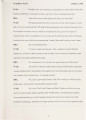
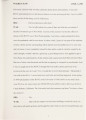
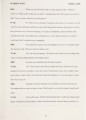
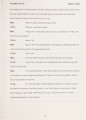
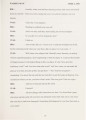
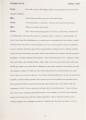
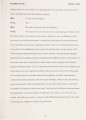
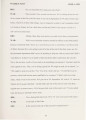
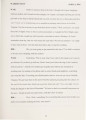
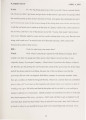
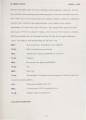
Show W RR MW I RI 2001 BBL: Okay. o you land d in New Y rk and y u ~ r n ab ut mn - month cruise, tour, and so what happened when you got toN w Y rk? WAR: Well, they turned around and- BBL: Let me interrupt you now that I said that. You said thi guy on y ur ship had contracted polio. Did they do anything with you guys in tenns of n1edical treatn1ent? WAR: BBL: WAR: They didn't know anything about it then, we were just quarantined. On your ship? Yeah. In all the foreign countries they would not let us ashore-anybody. When we got to America there was no special things we had to go through or anything. In fact, we went to sea again, only now we were not a squadron of four anymore. It was an individual ship. We were on what you called, oh geez, we would go behind aircraft carriers and just stay a thousand yards behind them in case an airplane crashed, we would be there to help the survivor. Because an aircraft carrier can't turn around in less than about half an hour, whereas we'd be there within minutes. BBL: So you were part of the carrier group, then? WAR: Not really, but we were assigned to work with a specific carrier. It's got a special name and I can't think of it right now. And we ended up going through the canal again working out of San Diego. San Diego became our home base, if you will. BBL: Now, were you still on the same ship? WAR: Yeah. Same ship. And I, we did that for several months. We went out to San Clemente Island-! think that's the name of it-out of San Diego there and we would practice shooting our guns at targets on the island and then practicing shooting 43 |
| Reference URL |
https://collections.lib.utah.edu/ark:/87278/s6tj0kw5/1025888 |