| OCR Text |
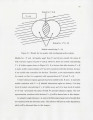
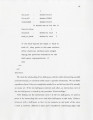
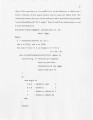
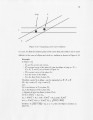
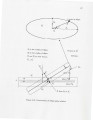
Show 46 f2 in f1 delete f 1 (j) I f1 in f2 delete f2(k)l coincident delete f1 (j) I (* delete one of the two *) face_ to face: disjoint delete B· ' exit back_to_back: delete B· ' exit (* two half-spaces are equal or back to back if, they point to the same surface, after identical surfaces were merged during the previous evaluation of the half-space representation. *) end; od; od; end Face; We check the relationship of two half-spaces, which is either intersecting, parallel (nonintersecting), or coincident (with equal or opposite orientation). We can delete superfluous faces if they are completely outside B, or we find out that B is actually an en1pty set. If the two half-spaces intersect each other, an intersection curve of the two half-spaces is created by the procedure "PrimitiveEdge." After finding out the intersection curve e of the two half-spaces, we need to prune it by intersecting this curve with other half-spaces in this body. Either e intersects with a half-space so that we can co1npute an end point of the curve e (this is, however, deferred to later and is handled by intersecting edges with |