| OCR Text |
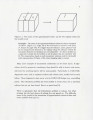
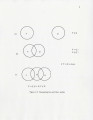
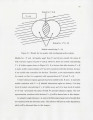
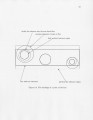
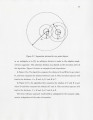
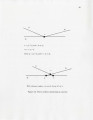
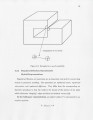
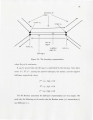
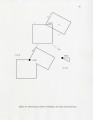
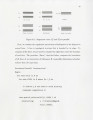
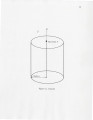
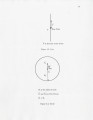
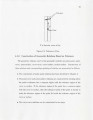
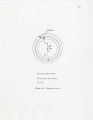
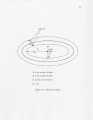
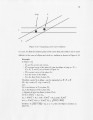
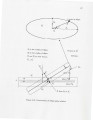
Show CHAPTER 3 REMOVING REDUNDANCY FOR MANIFOLD OBJECTS As discussed in Chapter 1, besides the tolerance approaches, consistency can also be achieved by rernoving possibly contradicting interdependent relations. In this chapter, we present an approach for re1noving redundancies in a Boolean set operation for 2-n1anifold 3D solid objects. The algorithm is robust, and at the san1e tirne efficient, because there is basically no extra con1putation required for achieving robustness. This work has been presented in [34). 3.1 Definition of Redundancy The robustness problem is mainly caused by contradictions in redundant and irnprecise co1nputations. However, in1precise co1nputation does not generate inconsistencies if there is no redundancy in the data representation. To eliminate redundancies, we first identify then1 and then avoid or re1nove them appropriately. We distinguish two types of redundancies: directly redundant data co1nputation and indirectly redundant data computation. 1. Directly redundant data computation. Some coincident objects may coexist in different data structures of the representations of the geometric objects. They are redundant. This redundant data will involve redundant data computation, which is directly obvious. For instance (see Figure 3.1), surfaces f and g are coincident within tolerance (f = g). When we compute the relation between e and f, the cornputation of the relation between e and g is directly implied. We |