| Title |
William A. Wells, Salt Lake City, Utah: an interview by Becky B. Lloyd, January 28, 2003: Saving the legacy tape no. 626 |
| Alternative Title |
William A. Wells, Saving the legacy: an oral history of Utah's World War II veterans, ACCN 2070, American West Center, University of Utah |
| Creator |
Wells, William A., 1924-2014 |
| Contributor |
Lloyd, Becky B.; University of Utah. American West Center |
| Publisher |
Digitized by J. Willard Marriott Library, University of Utah |
| Date |
2003-01-28 |
| Date Digital |
2015-09-16 |
| Access Rights |
I acknowledge and agree that all information I obtain as a result of accessing any oral history provided by the University of Utah's Marriott Library shall be used only for historical or scholarly or academic research purposes, and not for commercial purposes. I understand that any other use of the materials is not authorized by the University of Utah and may exceed the scope of permission granted to the University of Utah by the interviewer or interviewee. I may request permission for other uses, in writing to Special Collections at the Marriott Library, which the University of Utah may choose grant, in its sole discretion. I agree to defend, indemnify and hold the University of Utah and its Marriott Library harmless for and against any actions or claims that relate to my improper use of materials provided by the University of Utah. |
| Spatial Coverage |
France; Belgium; Germany; Luxembourg; Salt Lake City, Salt Lake County, Utah, United States |
| Subject |
Wells, William A., 1924-2014--Interviews; World War, 1939-1945--Personal narratives, American; Veterans--Utah--Biography; World War, 1939-1945--Military operations, American; World War, 1939-1945--Campaigns--Europe, Northern--Personal narratives, American; Ardennes, Battle of the, 1944-1945--Personal narratives, American |
| Keywords |
Cooks; Artillery; Battle of the Bulge; Siegried line |
| Description |
Transcript (26 pages) of an interview by Becky B. Lloyd with William A. Wells on January 28, 2003. This is from tape number 626 in the "Saving the Legacy Oral History Project |
| Collection Number and Name |
Accn2070, Saving the Legacy oral history project, 2001-2010 |
| Abstract |
Wells (b. 1924) talks about his childhood in Salt Lake City, Utah. He was drafted into the army in December 1942 and was sent to cooks and bakers school at Fort Bragg, North Carolina. He later trained in the aviation cadet program, but was sent to Europe attached to the 87th Infantry Division, 334th Field Artillery Battalion. His service locations included France, Belgium, Germany, and Luxembourg. He gives his impressions of the Battle of the Bulge and combat on the Siegfried Line. 26 pages. |
| Type |
Text |
| Genre |
oral histories (literary works) |
| Format |
application/pdf |
| Extent |
26 pages |
| Language |
eng |
| Rights |
 |
| Scanning Technician |
Mazi Rakhsha |
| Conversion Specifications |
Original scanned with Kirtas 2400 and saved as 400 ppi uncompressed TIFF. PDF generated by Adobe Acrobat Pro X for CONTENTdm display |
| ARK |
ark:/87278/s6dj7dxg |
| Topic |
Personal narratives--American; Veterans; World War (1939-1945); Ardennes, Battle of the (1944-1945) |
| Setname |
uum_slohp |
| ID |
1022856 |
| Reference URL |
https://collections.lib.utah.edu/ark:/87278/s6dj7dxg |
| Title |
Page 23 |
| Format |
application/pdf |
| Setname |
uum_slohp |
| ID |
1022851 |
| OCR Text |
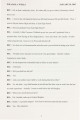
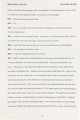
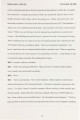
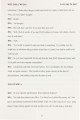
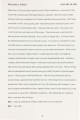
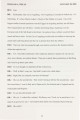
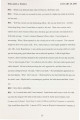
Show WILLIAM A. WELL JA RY 28,2003 BIL: Oh he was a fun guy. Stubborn. He was a good-sized guy six-foot-one and about 200 pounds and he wore his hair about a quarter of an inch long. It was mostly gray. His buddies called him, Daddy Warbucks (laughs). He and I had a management group and there were four people. There were two groups of two. I was with him on one group. Then we had the other two vice presidents, which were the other group. If we made any major decisions, and sometimes I determined what those were. One of these: "You don't buy a piece of equipment over $1,500 dollars without me knowing." And the boss: "Amen." BEC: Oh? BIL: To do some major things took agreement between these two groups. In some kinds of emergencies, you had to have the approval of one of these groups, like, to bid a job, buy a cherry picker or a tractor or anything of that nature. The reason that I had the strict rules on buying equipment was that contractor's equipment is expensive. You can spend half a million dollars for an old piece of equipment. You've got to make sure that piece works pretty steadily or you can't afford to own it. The equipment had to meet all my criteria. General-type equipment was fine. For specialized equipment, you had to make a good case. For example, I remember one time that they wanted to buy a crane. This was a big crane for $600,000. I said, "No way. No way. If you need a $600,000 crane, you rent it for the time-frame that you need it." Consequently, I think, I made my pay there. You know, also, another fortunate thing. This was during the Jimmy Carter era, when interest rates went crazy. I took our little old profits and put them in bank CDs at twelve or even as much as twenty percent interest. I could pay our general officers out of interest I earned on CDs. 22 |
| Reference URL |
https://collections.lib.utah.edu/ark:/87278/s6dj7dxg/1022851 |