| Title |
William A. Wells, Salt Lake City, Utah: an interview by Becky B. Lloyd, January 28, 2003: Saving the legacy tape no. 626 |
| Alternative Title |
William A. Wells, Saving the legacy: an oral history of Utah's World War II veterans, ACCN 2070, American West Center, University of Utah |
| Creator |
Wells, William A., 1924-2014 |
| Contributor |
Lloyd, Becky B.; University of Utah. American West Center |
| Publisher |
Digitized by J. Willard Marriott Library, University of Utah |
| Date |
2003-01-28 |
| Date Digital |
2015-09-16 |
| Access Rights |
I acknowledge and agree that all information I obtain as a result of accessing any oral history provided by the University of Utah's Marriott Library shall be used only for historical or scholarly or academic research purposes, and not for commercial purposes. I understand that any other use of the materials is not authorized by the University of Utah and may exceed the scope of permission granted to the University of Utah by the interviewer or interviewee. I may request permission for other uses, in writing to Special Collections at the Marriott Library, which the University of Utah may choose grant, in its sole discretion. I agree to defend, indemnify and hold the University of Utah and its Marriott Library harmless for and against any actions or claims that relate to my improper use of materials provided by the University of Utah. |
| Spatial Coverage |
France; Belgium; Germany; Luxembourg; Salt Lake City, Salt Lake County, Utah, United States |
| Subject |
Wells, William A., 1924-2014--Interviews; World War, 1939-1945--Personal narratives, American; Veterans--Utah--Biography; World War, 1939-1945--Military operations, American; World War, 1939-1945--Campaigns--Europe, Northern--Personal narratives, American; Ardennes, Battle of the, 1944-1945--Personal narratives, American |
| Keywords |
Cooks; Artillery; Battle of the Bulge; Siegried line |
| Description |
Transcript (26 pages) of an interview by Becky B. Lloyd with William A. Wells on January 28, 2003. This is from tape number 626 in the "Saving the Legacy Oral History Project |
| Collection Number and Name |
Accn2070, Saving the Legacy oral history project, 2001-2010 |
| Abstract |
Wells (b. 1924) talks about his childhood in Salt Lake City, Utah. He was drafted into the army in December 1942 and was sent to cooks and bakers school at Fort Bragg, North Carolina. He later trained in the aviation cadet program, but was sent to Europe attached to the 87th Infantry Division, 334th Field Artillery Battalion. His service locations included France, Belgium, Germany, and Luxembourg. He gives his impressions of the Battle of the Bulge and combat on the Siegfried Line. 26 pages. |
| Type |
Text |
| Genre |
oral histories (literary works) |
| Format |
application/pdf |
| Extent |
26 pages |
| Language |
eng |
| Rights |
 |
| Scanning Technician |
Mazi Rakhsha |
| Conversion Specifications |
Original scanned with Kirtas 2400 and saved as 400 ppi uncompressed TIFF. PDF generated by Adobe Acrobat Pro X for CONTENTdm display |
| ARK |
ark:/87278/s6dj7dxg |
| Topic |
Personal narratives--American; Veterans; World War (1939-1945); Ardennes, Battle of the (1944-1945) |
| Setname |
uum_slohp |
| ID |
1022856 |
| Reference URL |
https://collections.lib.utah.edu/ark:/87278/s6dj7dxg |
| Title |
Page 14 |
| Format |
application/pdf |
| Setname |
uum_slohp |
| ID |
1022842 |
| OCR Text |
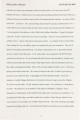
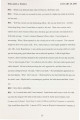
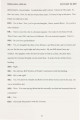
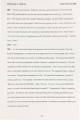
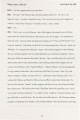
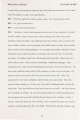
Show WILLI M . W LL J R 2 200 ink d wn to about to the tire tops and you d think it was never going to quit going d wn but it did. owe drove across the Rhine on this float (pontoon) bridge at a place call d Boppard (about ten miles south of Koblenz). The Rhine was maybe a quarter of a mile wide at this point. A few of the bridge's pontoons had been punctured by shrapnel and not yet repaired. At those points, the truck would suddenly sink even further by a foot or so. This caused us a momentary gut-wrenching. All along the river there were smokepots burning to obscure enemy observation. The road out ofBoppard was under sporadic enemy shellfire so we left singly as fast as the GMCs would go, dodging shell craters in the road as we went. Anyhow, that's the story of the Rhine; but now, on to Koblenz. We were back at Koblenz. This would have been March of '45. Most of this time, my division was part of the Third Army. Sometimes we were part of the First, but most of the time, part of the Third Army. Once we got past Koblenz, we made a pretty good dash to the east. We went through a town called Saalfeld. We got to a city named Plauen, which is just on the German-Czechoslovakian border. I judged that Plauen was about twice the size of Salt Lake City. We went through Plauen and there was just barely a trail through this city, where somebody had thrown the bricks and rocks away, to allow oneway traffic to go through the city. We went on through. By that time, they were concerned that we would meet up with the Russians and that we'd get into a firefight with them. So we went through Plauen and were stopped. We were in Czechoslovakia and I think it was a little town, I don't remember its exact name, but I think it was something like, Shoenfeld. It was really just a crossroads, but there was a two-story Gasthaus at that crossroads. We took it over. We retained the staff. We lived with sheets and bathtubs while they determined whether we were going to keep the fight up. 13 |
| Reference URL |
https://collections.lib.utah.edu/ark:/87278/s6dj7dxg/1022842 |