| Title |
William A. Wells, Salt Lake City, Utah: an interview by Becky B. Lloyd, January 28, 2003: Saving the legacy tape no. 626 |
| Alternative Title |
William A. Wells, Saving the legacy: an oral history of Utah's World War II veterans, ACCN 2070, American West Center, University of Utah |
| Creator |
Wells, William A., 1924-2014 |
| Contributor |
Lloyd, Becky B.; University of Utah. American West Center |
| Publisher |
Digitized by J. Willard Marriott Library, University of Utah |
| Date |
2003-01-28 |
| Date Digital |
2015-09-16 |
| Access Rights |
I acknowledge and agree that all information I obtain as a result of accessing any oral history provided by the University of Utah's Marriott Library shall be used only for historical or scholarly or academic research purposes, and not for commercial purposes. I understand that any other use of the materials is not authorized by the University of Utah and may exceed the scope of permission granted to the University of Utah by the interviewer or interviewee. I may request permission for other uses, in writing to Special Collections at the Marriott Library, which the University of Utah may choose grant, in its sole discretion. I agree to defend, indemnify and hold the University of Utah and its Marriott Library harmless for and against any actions or claims that relate to my improper use of materials provided by the University of Utah. |
| Spatial Coverage |
France; Belgium; Germany; Luxembourg; Salt Lake City, Salt Lake County, Utah, United States |
| Subject |
Wells, William A., 1924-2014--Interviews; World War, 1939-1945--Personal narratives, American; Veterans--Utah--Biography; World War, 1939-1945--Military operations, American; World War, 1939-1945--Campaigns--Europe, Northern--Personal narratives, American; Ardennes, Battle of the, 1944-1945--Personal narratives, American |
| Keywords |
Cooks; Artillery; Battle of the Bulge; Siegried line |
| Description |
Transcript (26 pages) of an interview by Becky B. Lloyd with William A. Wells on January 28, 2003. This is from tape number 626 in the "Saving the Legacy Oral History Project |
| Collection Number and Name |
Accn2070, Saving the Legacy oral history project, 2001-2010 |
| Abstract |
Wells (b. 1924) talks about his childhood in Salt Lake City, Utah. He was drafted into the army in December 1942 and was sent to cooks and bakers school at Fort Bragg, North Carolina. He later trained in the aviation cadet program, but was sent to Europe attached to the 87th Infantry Division, 334th Field Artillery Battalion. His service locations included France, Belgium, Germany, and Luxembourg. He gives his impressions of the Battle of the Bulge and combat on the Siegfried Line. 26 pages. |
| Type |
Text |
| Genre |
oral histories (literary works) |
| Format |
application/pdf |
| Extent |
26 pages |
| Language |
eng |
| Rights |
 |
| Scanning Technician |
Mazi Rakhsha |
| Conversion Specifications |
Original scanned with Kirtas 2400 and saved as 400 ppi uncompressed TIFF. PDF generated by Adobe Acrobat Pro X for CONTENTdm display |
| ARK |
ark:/87278/s6dj7dxg |
| Topic |
Personal narratives--American; Veterans; World War (1939-1945); Ardennes, Battle of the (1944-1945) |
| Setname |
uum_slohp |
| ID |
1022856 |
| Reference URL |
https://collections.lib.utah.edu/ark:/87278/s6dj7dxg |
| Title |
Page 10 |
| Format |
application/pdf |
| Setname |
uum_slohp |
| ID |
1022838 |
| OCR Text |
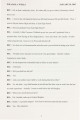
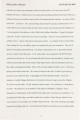
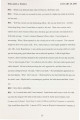
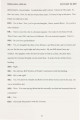
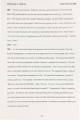
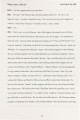
Show WILLIAM A. WELL J U RY 28,2003 columns. The interesting thing to me all along the south bank of this river wer ru ting vehicles. The retreating Germans, they had to cross the e1ne but they couldn t take those truck and cars with them. They'd drive them up to the water s edge and set them afire. How they got across, by boat or what, I'm not sure. There were just hundreds and thousands of rusted vehicles just parked in a row. BEC: Really? BIL: Yeah, that's a sight that I'll always remember. By this time, they'd timber-built the old bridges. So we crossed to the north bank of the Seine at Rouen and proceeded pretty much eastward through a city called Beauvais, and later, a city called Scissons and then, through Verdun. Incidentally, I'll tell you another sight I saw. As we were moving up, another outfit was coming out. They were infantry, because they were all transported by jeep. Infantry, in those times, was primarily all jeep-transported. A sight I'll never forget: It was dusk or early evening. There was light snow falling. I kept looking (at this jeep column). Something wasn't quite right. I kept looking at these guys. The guys in the back seats, quite often had snow on their faces. Of course, the obvious reason was that they were dead. That was an early event, before we'd even fired a shot in anger. We first had some action at a city called Metz. Metz is a medieval town. It has a series of old castles on top of hills. We started firing artillery and the infantry attacked. We pretty well mopped the area up, but there was a German unit left in an old castle. They had captured a couple of American howitzers and a truckload of ammo from an ammunition train. They were firing our own ammunition back at us. But yet the area was pretty well mopped up. So they left a howitzer, which was mine, and put a company of infantry at the base of the hill. We were behind stone buildings, so we were pretty well protected 9 |
| Reference URL |
https://collections.lib.utah.edu/ark:/87278/s6dj7dxg/1022838 |