| Title |
James Patterson, Salt Lake City, Utah: an interview by Luke Perry, August 15, 2001: Saving the legacy tape no. 283 and 284 |
| Alternative Title |
James H. Patterson, Saving the legacy: an oral history of Utah's World War II veterans, ACCN 2070, American West Center, University of Utah |
| Creator |
Patterson, James H., 1921-2006 |
| Contributor |
Perry, Luke; University of Utah. American West Center |
| Publisher |
Digitized by J. Willard Marriott Library, University of Utah |
| Date |
2001-08-15 |
| Date Digital |
2015-09-16 |
| Access Rights |
I acknowledge and agree that all information I obtain as a result of accessing any oral history provided by the University of Utah's Marriott Library shall be used only for historical or scholarly or academic research purposes, and not for commercial purposes. I understand that any other use of the materials is not authorized by the University of Utah and may exceed the scope of permission granted to the University of Utah by the interviewer or interviewee. I may request permission for other uses, in writing to Special Collections at the Marriott Library, which the University of Utah may choose grant, in its sole discretion. I agree to defend, indemnify and hold the University of Utah and its Marriott Library harmless for and against any actions or claims that relate to my improper use of materials provided by the University of Utah. |
| Spatial Coverage |
Philippines; Japan |
| Subject |
Patterson, James H., 1921-2006--Interviews; World War, 1939-1945--Personal narratives, American; Veterans--Utah--Biography; World War, 1939-1945--Campaigns--Pacific Area--Personal narratives, American; Prisoners of war--United States; Prisoners of war--Japan |
| Keywords |
Army Air Corps; POWs; Davao |
| Description |
Transcript (42 pages) of an interview by Luke Perry with James Patterson on August 15, 2001. This is from tape numbers 283 and 284 in the "Saving the Legacy Oral History Project |
| Collection Number and Name |
Accn2070, Saving the Legacy oral history project, 2001-2010 |
| Abstract |
Patterson (b. 1921) was in the Army Air Corps stationed at Del Monte in the Philippines, where he was taken prisoner by the Japanese He relates his experiences as a POW. 42 pages. |
| Type |
Text |
| Genre |
oral histories (literary works) |
| Format |
application/pdf |
| Extent |
42 pages |
| Language |
eng |
| Rights |
 |
| Scanning Technician |
Mazi Rakhsha |
| Conversion Specifications |
Original scanned with Kirtas 2400 and saved as 400 ppi uncompressed TIFF. PDF generated by Adobe Acrobat Pro X for CONTENTdm display |
| ARK |
ark:/87278/s6cz56g7 |
| Topic |
Personal narratives--American; Veterans; World War (1939-1945); Prisoners of war |
| Setname |
uum_slohp |
| ID |
1022421 |
| Reference URL |
https://collections.lib.utah.edu/ark:/87278/s6cz56g7 |
| Title |
Page 37 |
| Format |
application/pdf |
| Setname |
uum_slohp |
| ID |
1022413 |
| OCR Text |
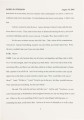
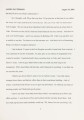
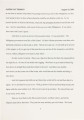
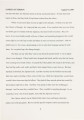
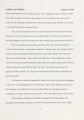
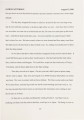
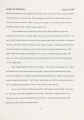
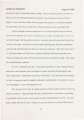
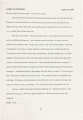
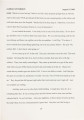
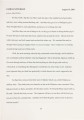
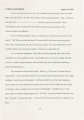
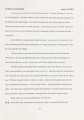
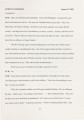
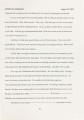
Show JAMES PATTERSON ugu t 1 2001 That's why these doctors up here- Dr. Abraham, he's from India. He's my doct r that I see at the clinic. He said, 110h, we have a lot of schistosomiasis" I said "Yeah but you don't have--------------?---------------. And they've got a cure for that. That's something you pick up down in some of these South American countries. But schistosomiasis was different. So we took that treatment. But we couldn't take it all because they doctors were scared. They'd have you hooked up to IVs and an EKG while they were giving those shots. Oh, you'd get pain. He says, We're going to have to be real careful that we don't get that stuff in your vein on the outside. It will eat your skin right off. So, I took those treatments. Then right at the last, probably thirty days of that treatment, you were confined to bed. You couldn't move. You were so dang tired and wore out. And you'd go through it, and you finally get your weight back and feeling good, and then back on ... My wife used to kid me all the time. She'd say, "Well, dear, it's about time for your period." Every year about October or November I'd pass blood for three days; bright red blood. And I'd go to the hospital. And they wouldn't know what was happening. They'd scope you, and I had doctors look up my rear-end. They couldn't see any lesions, or nothing. I sent a sample of my stool back to Washington. And they'd say, "Yeah, you've got live schistosomiasis eggs in you. 11 He said, "You've probably had that all your life. 11 He said, "You just don't get ... you're a host for those eggs and they're going to stay there. 35 |
| Reference URL |
https://collections.lib.utah.edu/ark:/87278/s6cz56g7/1022413 |