| Title |
James Patterson, Salt Lake City, Utah: an interview by Luke Perry, August 15, 2001: Saving the legacy tape no. 283 and 284 |
| Alternative Title |
James H. Patterson, Saving the legacy: an oral history of Utah's World War II veterans, ACCN 2070, American West Center, University of Utah |
| Creator |
Patterson, James H., 1921-2006 |
| Contributor |
Perry, Luke; University of Utah. American West Center |
| Publisher |
Digitized by J. Willard Marriott Library, University of Utah |
| Date |
2001-08-15 |
| Date Digital |
2015-09-16 |
| Access Rights |
I acknowledge and agree that all information I obtain as a result of accessing any oral history provided by the University of Utah's Marriott Library shall be used only for historical or scholarly or academic research purposes, and not for commercial purposes. I understand that any other use of the materials is not authorized by the University of Utah and may exceed the scope of permission granted to the University of Utah by the interviewer or interviewee. I may request permission for other uses, in writing to Special Collections at the Marriott Library, which the University of Utah may choose grant, in its sole discretion. I agree to defend, indemnify and hold the University of Utah and its Marriott Library harmless for and against any actions or claims that relate to my improper use of materials provided by the University of Utah. |
| Spatial Coverage |
Philippines; Japan |
| Subject |
Patterson, James H., 1921-2006--Interviews; World War, 1939-1945--Personal narratives, American; Veterans--Utah--Biography; World War, 1939-1945--Campaigns--Pacific Area--Personal narratives, American; Prisoners of war--United States; Prisoners of war--Japan |
| Keywords |
Army Air Corps; POWs; Davao |
| Description |
Transcript (42 pages) of an interview by Luke Perry with James Patterson on August 15, 2001. This is from tape numbers 283 and 284 in the "Saving the Legacy Oral History Project |
| Collection Number and Name |
Accn2070, Saving the Legacy oral history project, 2001-2010 |
| Abstract |
Patterson (b. 1921) was in the Army Air Corps stationed at Del Monte in the Philippines, where he was taken prisoner by the Japanese He relates his experiences as a POW. 42 pages. |
| Type |
Text |
| Genre |
oral histories (literary works) |
| Format |
application/pdf |
| Extent |
42 pages |
| Language |
eng |
| Rights |
 |
| Scanning Technician |
Mazi Rakhsha |
| Conversion Specifications |
Original scanned with Kirtas 2400 and saved as 400 ppi uncompressed TIFF. PDF generated by Adobe Acrobat Pro X for CONTENTdm display |
| ARK |
ark:/87278/s6cz56g7 |
| Topic |
Personal narratives--American; Veterans; World War (1939-1945); Prisoners of war |
| Setname |
uum_slohp |
| ID |
1022421 |
| Reference URL |
https://collections.lib.utah.edu/ark:/87278/s6cz56g7 |
| Title |
Page 29 |
| Format |
application/pdf |
| Setname |
uum_slohp |
| ID |
1022405 |
| OCR Text |
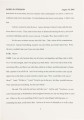
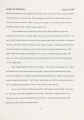
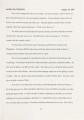
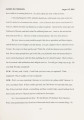
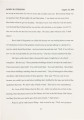
Show JAMES PATTERSON u u t 1 2001 those out at-well, we probably had ten soldiers. We all carried bolo kniv s b cau w had to cut our way through high grass and stuff. You could shave with one of thos things. So we could have killed-with the guards we had there, we could have planned what po.st they were on at a certain time. There would have been no problem there. So they brought us back in and put us in-we waited for these trucks to come in from Davao, and then they took us out and put us on a ship. The ship I was on wasn't in too bad of shape. But they split us up there. And that's where Rosenval and Jensen- they weren't on the ship. And when we come around Zamboanga the American submarines went out and sank that ship, The Shark, an American submarine. They knew who was on it. They knew there was POWs on it. But the word from back here in the states was, "Sink everything that comes out because you don't know what they're taking. They might have stuff that they could use." So, boy, everything was sunk. At Manila about 600 were sunk. Medical doctors, and nurses, and corpsmen who was trained in surgery and stuff, all designated to take these Thai people. I think there was close to 700 of them. They said 600 and something. As they was going out past Corregidor a submarine sunk that ship. No survivors. So you see what happens. I saw what happened to us. But, anyway, this is why-if a guard-and, boy, he'd be out there and he'd watch you when you came in. And you'd hide that rope, and maybe have some straw or something in your hand, and try to get it in his mouth, and then slip that thing in his nose. You then had a carabao that day to work. If he'd try to get away from you, you'd pull that rope on 27 |
| Reference URL |
https://collections.lib.utah.edu/ark:/87278/s6cz56g7/1022405 |