| Title |
James Patterson, Salt Lake City, Utah: an interview by Luke Perry, August 15, 2001: Saving the legacy tape no. 283 and 284 |
| Alternative Title |
James H. Patterson, Saving the legacy: an oral history of Utah's World War II veterans, ACCN 2070, American West Center, University of Utah |
| Creator |
Patterson, James H., 1921-2006 |
| Contributor |
Perry, Luke; University of Utah. American West Center |
| Publisher |
Digitized by J. Willard Marriott Library, University of Utah |
| Date |
2001-08-15 |
| Date Digital |
2015-09-16 |
| Access Rights |
I acknowledge and agree that all information I obtain as a result of accessing any oral history provided by the University of Utah's Marriott Library shall be used only for historical or scholarly or academic research purposes, and not for commercial purposes. I understand that any other use of the materials is not authorized by the University of Utah and may exceed the scope of permission granted to the University of Utah by the interviewer or interviewee. I may request permission for other uses, in writing to Special Collections at the Marriott Library, which the University of Utah may choose grant, in its sole discretion. I agree to defend, indemnify and hold the University of Utah and its Marriott Library harmless for and against any actions or claims that relate to my improper use of materials provided by the University of Utah. |
| Spatial Coverage |
Philippines; Japan |
| Subject |
Patterson, James H., 1921-2006--Interviews; World War, 1939-1945--Personal narratives, American; Veterans--Utah--Biography; World War, 1939-1945--Campaigns--Pacific Area--Personal narratives, American; Prisoners of war--United States; Prisoners of war--Japan |
| Keywords |
Army Air Corps; POWs; Davao |
| Description |
Transcript (42 pages) of an interview by Luke Perry with James Patterson on August 15, 2001. This is from tape numbers 283 and 284 in the "Saving the Legacy Oral History Project |
| Collection Number and Name |
Accn2070, Saving the Legacy oral history project, 2001-2010 |
| Abstract |
Patterson (b. 1921) was in the Army Air Corps stationed at Del Monte in the Philippines, where he was taken prisoner by the Japanese He relates his experiences as a POW. 42 pages. |
| Type |
Text |
| Genre |
oral histories (literary works) |
| Format |
application/pdf |
| Extent |
42 pages |
| Language |
eng |
| Rights |
 |
| Scanning Technician |
Mazi Rakhsha |
| Conversion Specifications |
Original scanned with Kirtas 2400 and saved as 400 ppi uncompressed TIFF. PDF generated by Adobe Acrobat Pro X for CONTENTdm display |
| ARK |
ark:/87278/s6cz56g7 |
| Topic |
Personal narratives--American; Veterans; World War (1939-1945); Prisoners of war |
| Setname |
uum_slohp |
| ID |
1022421 |
| Reference URL |
https://collections.lib.utah.edu/ark:/87278/s6cz56g7 |
| Title |
Page 32 |
| Format |
application/pdf |
| Setname |
uum_slohp |
| ID |
1022408 |
| OCR Text |
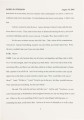
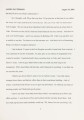
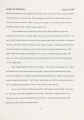
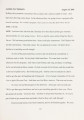
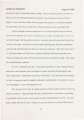
Show JAMES PATTERSON prison, like POWs. u u t 1 2001 So they built a big fire out-like I said, the Japs in the middle had a big bonfire and they were sitting around drinking saki. And then they got a lot of Philippine girls. They brought them in, and raped them, and done a lot of things like that. And then they ran out of things to do, so they got a farmer to bring another pig in. He puts this pig in and turns him loose, and he'd run around the circle. They'd stick him with a bayonet, and he'd squeal and run back the other way. We watched that and we thought what's going to happen when we run out of pigs? They would have us running around trying to get out of that circle. Well, the next morning when the big commander come through, and he talked to our commander and he told him what had happened. Oh, he lined that Japanese outfit up. He went through and any of them that had anything on, like the guy that took my wristwatch, or something that belonged to somebody else, they'd take it off. And that poor Japanese they just beat him practically to death because he wasn't supposed to do that. So then they took us from there up to Valabali, which was a little Filipino no artillery base. They had pretty nice barracks as far as the Filipinos were concerned. They had good roofs on them, and sides, for the rainy season. So General Sharp stayed with us. He said, "Get all the food you can. The Japanese told me you can have all the food you can get in here by a certain time. And then we'll shut the gates, and no more in and out with the trucks." 30 |
| Reference URL |
https://collections.lib.utah.edu/ark:/87278/s6cz56g7/1022408 |