| Title |
James Patterson, Salt Lake City, Utah: an interview by Luke Perry, August 15, 2001: Saving the legacy tape no. 283 and 284 |
| Alternative Title |
James H. Patterson, Saving the legacy: an oral history of Utah's World War II veterans, ACCN 2070, American West Center, University of Utah |
| Creator |
Patterson, James H., 1921-2006 |
| Contributor |
Perry, Luke; University of Utah. American West Center |
| Publisher |
Digitized by J. Willard Marriott Library, University of Utah |
| Date |
2001-08-15 |
| Date Digital |
2015-09-16 |
| Access Rights |
I acknowledge and agree that all information I obtain as a result of accessing any oral history provided by the University of Utah's Marriott Library shall be used only for historical or scholarly or academic research purposes, and not for commercial purposes. I understand that any other use of the materials is not authorized by the University of Utah and may exceed the scope of permission granted to the University of Utah by the interviewer or interviewee. I may request permission for other uses, in writing to Special Collections at the Marriott Library, which the University of Utah may choose grant, in its sole discretion. I agree to defend, indemnify and hold the University of Utah and its Marriott Library harmless for and against any actions or claims that relate to my improper use of materials provided by the University of Utah. |
| Spatial Coverage |
Philippines; Japan |
| Subject |
Patterson, James H., 1921-2006--Interviews; World War, 1939-1945--Personal narratives, American; Veterans--Utah--Biography; World War, 1939-1945--Campaigns--Pacific Area--Personal narratives, American; Prisoners of war--United States; Prisoners of war--Japan |
| Keywords |
Army Air Corps; POWs; Davao |
| Description |
Transcript (42 pages) of an interview by Luke Perry with James Patterson on August 15, 2001. This is from tape numbers 283 and 284 in the "Saving the Legacy Oral History Project |
| Collection Number and Name |
Accn2070, Saving the Legacy oral history project, 2001-2010 |
| Abstract |
Patterson (b. 1921) was in the Army Air Corps stationed at Del Monte in the Philippines, where he was taken prisoner by the Japanese He relates his experiences as a POW. 42 pages. |
| Type |
Text |
| Genre |
oral histories (literary works) |
| Format |
application/pdf |
| Extent |
42 pages |
| Language |
eng |
| Rights |
 |
| Scanning Technician |
Mazi Rakhsha |
| Conversion Specifications |
Original scanned with Kirtas 2400 and saved as 400 ppi uncompressed TIFF. PDF generated by Adobe Acrobat Pro X for CONTENTdm display |
| ARK |
ark:/87278/s6cz56g7 |
| Topic |
Personal narratives--American; Veterans; World War (1939-1945); Prisoners of war |
| Setname |
uum_slohp |
| ID |
1022421 |
| Reference URL |
https://collections.lib.utah.edu/ark:/87278/s6cz56g7 |
| Title |
Page 14 |
| Format |
application/pdf |
| Setname |
uum_slohp |
| ID |
1022390 |
| OCR Text |
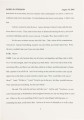
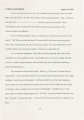
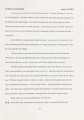
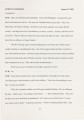
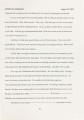
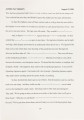
Show JAMES PATTERSON u u t 15,2001 So, it was a happy day when we left there. We left our camp. And we had to go there by boat because we were an island by ourselves. We got aboard a train and went down so far, and the marines just took over. And they had the rails blocked and they stopped where the marines had places. "Well, you're free now." We didn't know that President Roosevelt had died, and about President Truman. All this news was just news to us. We didn't know what was going on. We had no contact with the outside world. So they took us from there up to Yokohama and then flew us back to the Philippines. We had a REPO depot there until they kind of got us back in shape. I weighed ninety pounds when I got back down in camp. So we were assigned to a hospital area where you had blood transfusions, and everything. Everybody had BeriBeri, Schistosomiasis, dysentery, and heart troubles. So they tried to help us out the best they could. Then they put us on hospital ships and sent us back to the United States. Here, they started putting weight on us and getting us back in shape. I put on, I guess, about ninety pounds in a matter of thirty days. Of course, they gave us quite a ration of food. But after we got back here to the states, and all through all of that down there, a lot of the guys got out. But I decided-I didn't know how my health was going to be after going through all that, so I said why take a chance of getting out, and then you can't do nothing, and you have nothing to fall back on. I figured the service would take care of you. So they did let us stay in. But they could have done more for us, too. It was like a 12 |
| Reference URL |
https://collections.lib.utah.edu/ark:/87278/s6cz56g7/1022390 |