| OCR Text |
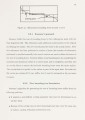
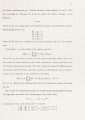
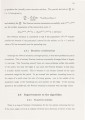
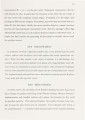
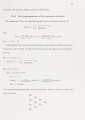
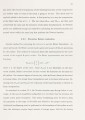
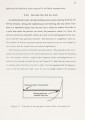
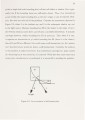
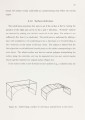
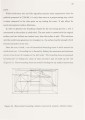
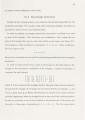
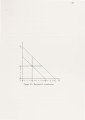
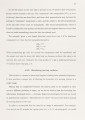
Show 1 to produce the (usually) more accurate solution. The partial derivatives ~ for 1 = 1, 2 are given by m n = L L[Pl · Vi,j]B:,k(u)Bj,k(v) i=O j=O and similarly for~· The Newton iteration terminates successfully, and u(P+l), v(P+l) are the surface parameters of the intersection point, if The Newton iteration is considered to fail if the parameters u(P), v(P) wander outside the bounds of the parametric interval for the surface, or if p > 1 and the value of E1 has increased over the preceding step. 2.5.1 Boundary considerations Although the Newton iteration converges quickly, it does have problems at patch boundaries. This is because Newton iteration occasionally diverges before it begins to converge. This 'bouncing around' does not cause problems within the middle of the patch, but near the edges it can cause the Newton iteration to fail when it actually should succeed. This is because it can bounce outside of the valid parameter range for the patch. To get around this problem, bounding boxes on the edges of a patch store two sets of staring guesses - one in the middle of the parameter range of the bounding box and another on the edge. If the starting guesses in the middle fail, the Newton iteration is restarted with the edge values. 2.6 Improvements to the algorithm 2.6.1 Numerical stability There is a snag in Sweeney's formulation for the two planes containing the ray: if the ray's origin vector a is colinear with the ray's direction of travel, r then the |