| OCR Text |
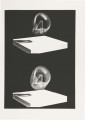
Show 2 of industrial and consumer design must make highly critical evaluations of how a model looks not only by itself, but also as it appears in its intended environment. To accomplish this, textures, reflection, and shadows must be included in the rendering process in order to produce images with enough detail to allow for aesthetic and critical judgement. Some comments in a recent panel by leading industrial designers help to illustrate the point. Fred Polito, of the internationally recognized design firm frogdesign, said: [Current] CAD systems cannot produce "photographic" images that unambiguously simulate various materials and finishes. Shortcomings stem from the fact that realism requires simulation of two distinct kinds of reflection: diffuse reflection, and specular (mirror-like) reflection which accounts for the appearance of gloss. Typical rendering software models only diffuse reflection . ... Despite claims to the contrary, no CAD system currently available models true specular reflection [8). Dave Royer, a leading designer for Ford l\1otor said: Although today's rendering algorithms simulate glossy surfaces well enough for animation, they give misleading impressions of actual surface geometry. This can be crucial in the case of an automobile's subtle surfaces. The specular reflection of the horizon on a car's surface, for instance, is a key design element as important aesthetically as the car's profile or any other line. Its proportions, even its apparent size, can change when specular reflection is missing. In the final analysis, a design cannot be properly judged aesthetically without specular reflection [8]. In addition to evaluating a design, higher quality images serve as an important communications tool for presenting a design to a wider audience. In this case the additional image quality helps ensure that the designer's vision of the object closely matches the perception of those the design is presented to. High quality image generation falls at the end of the design cycle- at the point where most (if not all) of the pieces of the design are in place, they are right side out, and can be placed in an environment to demonstrate their appearance. The basic design has been verified with interactive techniques, and it is time to make |