| OCR Text |
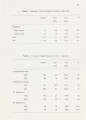
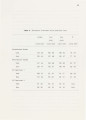
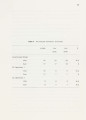
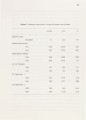
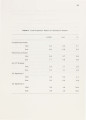
Show 62 additional overhead to model performance was less than 10 percent of the overhead for the unoptimized behavioral model. 4.3 Code Expansion Code expansion provides an estimate of the average number of host machine instructions that are necessary to model a single target machine instruction. In some ways this is a better measure of the efficiency of the modeling technique, since it is independent of the relative instruction rate of the host and target processors, although it is dependent on the "relative power" of the two machines' instruction sets. Machine instruction counts for the test programs and their models (on both the VAX 11 / 750 and Sun M68010 host systems) are given in Table 5. The standard host compilers were used to compile all of the simulation modeling programs. Dividing the number of host machine instructions in the modeling program by the number of MC68020 instructions in the original program yields the code expansion factor. As can be seen in Table 6, the unoptimized behavioral model results in code expansion factors between 6 and 12. In order to determine the fraction of code that is attributable to condition code modeling, all conditon code setting statements were stripped from the behavioral modeling code. This gives a lower bound for the efficiency that may be gained by adding a better condition code optimizer. Of course, this bound cannot be achieved for most programs, since without a minimal number of condition cod·e settings, the behavioral model cannot function. The lower bound gives an interesting basis for comparing the relative merits of the two condition code optimizers. As can be seen in Table 6, optimizer 1 decreases the size of the simple program by about 20 percent, while optimizer 2 decreases simple by approximately 50 percent. In comparison, the tour program is decreased 50 percent by optimizer 1 and 60 percent by optimizer 2. The code expansion |