| OCR Text |
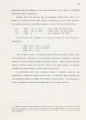
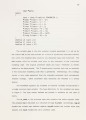
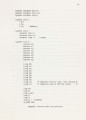
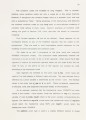
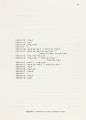
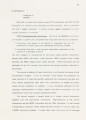
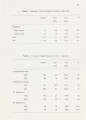
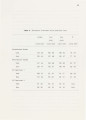
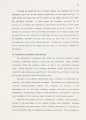
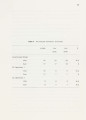
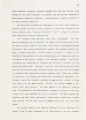
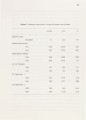
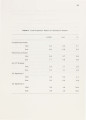
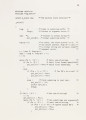
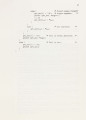
Show CHAPTER 4 RESULTS AND CONCLUSIONS Two measures of simulation efficiency were used to eva luate the MC68020 behavioral and performance models described in Chapter 3. 1. Si mul at ion overhead, the static ratio of host CPU time required to execute the simulation model, and the simulated target CPU time. 2. Code expansion, the ratio of the number of host machine instructions in the simulation model, and the number of original target machine instructions that are being modeled. 4.1 The Test Programs Three test programs were measured. The program simple consists of a simple incrementing loop that is executed 10,000 times. This minimal length loop is intended to exhibit "worst case" simulation overhead, insofar as the simulation overhead is inversely proportional to the basic block length. The program tour is a recursive solution of the Knight's Tour problem. Execution timings were measured for solutions of a five by five board and a six by six board. The generated code was identical for both solutions, and hence there was no difference in the code expansion of the two versions. The H program was taken from an article in Electronic Design News [8]. The program is a linked list insertion routine. This program was coded directly in assembly language. The simple and tour programs were coded in C and compiled (using the Unix (4.2BSD) C compiler on a Sun workstation) into 68000 assembler language. The modeling programs were compiled by the Unix (4.2BSD) portable C compilers on the Sun and Vax host systems. |