| Title |
Cecelia Siegal, Interviews with Jews in Utah, Accn 998 |
| Alternative Title |
Accn 998, Interviews with Jews in Utah, Cecelia Siegal |
| Description |
Transcript (26 pages) of interview by Lorraine Ferra with Cecelia Siegal on May 15, 1982 for the Interviews with Jews in Utah Oral History Project. |
| Creator |
Siegal, Cecelia, 1910-1999 |
| Contributor |
Ferra, Lorraine; Oral History Institute |
| Publisher |
Digitized by J. Willard Marriott Library, University of Utah |
| Date |
1982-05-17 |
| Date Digital |
2015-07-06 |
| Access Rights |
I acknowledge and agree that all information I obtain as a result of accessing any oral history provided by the University of Utah's Marriott Library shall be used only for historical or scholarly or academic research purposes, and not for commercial purposes. I understand that any other use of the materials is not authorized by the University of Utah and may exceed the scope of permission granted to the University of Utah by the interviewer or interviewee. I may request permission for other uses, in writing to Special Collections at the Marriott Library, which the University of Utah may choose grant, in its sole discretion. I agree to defend, indemnify and hold the University of Utah and its Marriott Library harmless for and against any actions or claims that relate to my improper use of materials provided by the University of Utah. |
| Spatial Coverage |
Salt Lake City, Salt Lake County, Utah, United States, http://sws.geonames.org/5780993 |
| Subject |
Jews, American--Utah--Interviews; Siegal, Cecelia, 1910-1999--Interviews; Jews--Social life and customs; Fasts and feasts--Judaism--Customs and practices; World War, 1939-1945 |
| Abstract |
Siegal (b. 1910) talks about her father's business, the American Fur company, and discusses the Jewish community in Salt Lake. Other topics covered include the celebration of Jewish holidays, her husband's ROTC experiences, Hitler, World War II, the Mormon community, and B'nai B'rith. 26 pages. |
| Type |
Text |
| Genre |
oral histories (literary works) |
| Format |
application/pdf |
| Extent |
26 pages |
| Language |
eng |
| Rights |
 |
| Is Part of |
Interviews with Jews in Utah collection, 1982-1988, http://archiveswest.orbiscascade.org/ark:/80444/xv70657/; Aileen H. Clyde 20th Century Women's Legacy Archive |
| Scanning Technician |
Niko Amaya; Halima Noor |
| Conversion Specifications |
Original scanned with Kirtas 2400 and saved as 400 ppi uncompressed TIFF. PDF generated by Adobe Acrobat Pro X for CONTENTdm display |
| ARK |
ark:/87278/s60k44dx |
| Topic |
Jews, American; Jews--Social life and customs; Fasts and feasts--Judaism; World War (1939-1945) |
| Setname |
uum_iju |
| ID |
904742 |
| Reference URL |
https://collections.lib.utah.edu/ark:/87278/s60k44dx |
| Title |
Page 7 |
| Format |
application/pdf |
| Setname |
uum_iju |
| ID |
904721 |
| OCR Text |
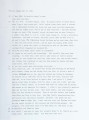
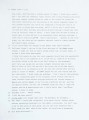
Show Cecelia Siegel p.6 He had lay-aways. But the merchandise remained in the store while the people paid on it. Because of the depression situation, the hard times. You just couldn 't trust people to take out a fragile thing like a fur coat and wear it and then not be able to pay for it. So he went in for a cash type of business. LF Do -- was many of the clientele jewish? CS Very small percentage of jewishpeople--in fact, my sister tells me that too-- that, the jewish people don't par ticurlary say, we'll patronize jewish merchants or jewish doctors or jewish lawyers. They go where they think they can get the best deal . And they are not influeneced by the religious persuasion of the people who own the place. LF So they didn 't feel the need the support each other. CS No , I never felt that in all the years that I worked for Dad. Oh, there were a certain number of jewish people who carne in, naturally it was a very fine fur store and top kno tch merchandise as very reduced prices and so they carne just because it was a good deal but actually not because Dad being a jew brought them in. LF It was mainly the hard times, then you 'd attribute it to, they had to get what they could get at the best price. CS I think allpeople felt that way very much. The conditions of the times was the prevailing reason to shop anything. LF How did the Jews at that time maintain a sense of community. CS Well, all during my teenage years, college years, they were very cohesive. They established a community center on East So. Temple . They bought it. It was called the Covenant House and it was the owners, or the estate of Curtin Wall , a mining magnate I believe, and all the jewish organizations met at this place. When the war came along, why they used to have many USO things. Now those were jewish oriented. There were -- at least during my growing up period -- there were two solid congregations. And my Dad- ~ LF What congregation did you belong to? CS He belonged to both of them . He was the president. When he first came to Salt Lake he was persuaded by a man by the name of Jack Finling to join the temple--that was Temple B'nai Israel. That's the reform congregation. And so we went in there and it was quite foreign to him because he was of more the conservative, laand a little bit towards orthodoxy and he just never could understand why they had the choir -- that was a nonjewish choir that sang. 1~ A nnn-l~wi~h rhnir at B'na Israel. |
| Reference URL |
https://collections.lib.utah.edu/ark:/87278/s60k44dx/904721 |